Part 5 · Analysis
How xAI Built Its Computing Infrastructure Around Nvidia
The Colossus project in Memphis assembled an enormous Nvidia-powered computing cluster at unusual speed. Its story shows why GPU scale depends just as much on networking, power and cooling.
 Harbour Creative Team
4 min read
Harbour Creative Team4 min read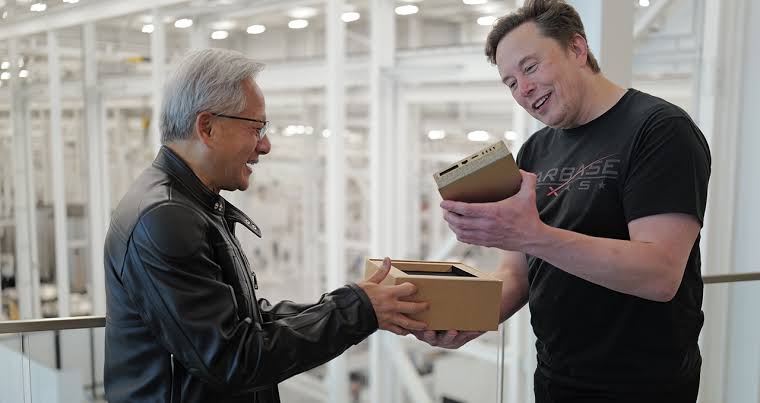
Part five of Nvidia: The Business and Its Partners.
The enormous scale of AI computing can be difficult to imagine until it is attached to a specific place. For xAI, the company founded by Elon Musk, that place is Memphis, Tennessee, where an industrial site was converted into the Colossus AI computing facility.
Colossus was built around large clusters of Nvidia processors and associated networking equipment. The project has become a case study in how fast a company can assemble computing power — and how much has to happen outside the chips themselves.
How the first cluster came together
In October 2024, Nvidia described an initial system of 100,000 Hopper GPUs at the Memphis site. Nvidia said its Spectrum-X Ethernet networking was used to connect the cluster and enable processors to communicate efficiently across the installation.
The announcement said the facility had been built in 122 days, unusually fast for an installation of this size. Nvidia and xAI framed speed as a defining achievement.
The first reported figure was a dated milestone, not a permanent measure of the facility's capacity. xAI subsequently described doubling to 200,000 GPUs and outlined ambitions to grow much further. Those ambitions should be distinguished from actual equipment installed and operating at any particular date.
| Milestone | Public account | Interpretation |
|---|---|---|
| 2024 initial cluster | 100,000 Nvidia Hopper GPUs | Nvidia-reported operating scale at launch |
| Subsequent expansion | 200,000 GPUs | xAI-reported expanded cluster |
| Further planned expansion | Ambitions for a much larger system | Not a verified count of GPUs already running |
Sources: Nvidia's October 2024 announcement and xAI's Colossus project page.
A data centre is a system, not a warehouse of GPUs
Large AI models are trained by splitting calculations across many processors. Those processors exchange information constantly. If the network cannot move data efficiently, expensive accelerators spend time waiting rather than performing useful work.
Nvidia's Spectrum-X networking is therefore an important element in the Colossus relationship. A list of GPU purchases alone cannot explain what makes the facility work.
Power and cooling are equally important. Thousands of processors demand substantial electricity and produce heat. Operators must plan power distribution, cooling equipment, backup systems, maintenance access and the local infrastructure needed to support long running workloads.
These practical constraints help explain why headline GPU counts do not translate automatically into equal performance across different installations.
Why xAI chose to build so much itself
xAI develops the Grok family of AI models. Owning or tightly controlling a computing facility can give a developer influence over scheduling, hardware configuration and the speed at which new clusters are added.
There are trade-offs. Direct infrastructure development demands capital, experienced engineering teams and responsibility for disruptions and equipment utilisation. Cloud rental may reduce initial construction exposure but create dependence on another operator's pricing and capacity.
The xAI project shows that the route chosen by an AI company can shape the supplier's commercial relationship as much as the identity of the GPU manufacturer.
Nvidia's role goes beyond supplying silicon
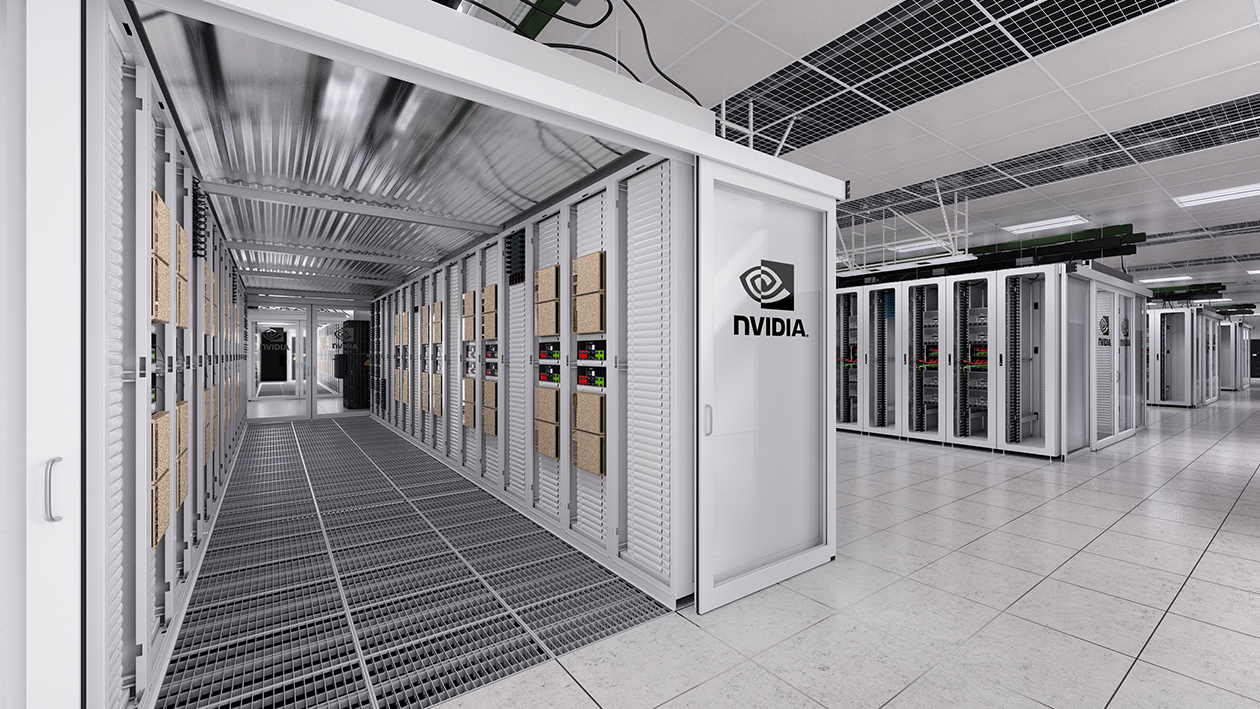
Nvidia-powered AI clusters depend on a full computing stack, including software and high-performance networking.
Nvidia supplied key hardware and networking technology to Colossus and publicly worked with xAI on the installation. The relationship also links to Nvidia software tools that developers use to train and operate models across large GPU fleets.
In May 2026, Nvidia listed xAI among AI laboratories planning to adopt its Vera CPUs for agent-focused workloads. A company being listed as a prospective adopter does not establish the quantity purchased or the date of deployment.
It is also worth distinguishing xAI's announcements about GPU scale from Nvidia's financial accounting. The public record does not provide a reliable Nvidia revenue figure attributable to xAI alone for this project.
The exposure on both sides
For xAI, large computing investment brings questions about future model performance, paying customers and the cost of running the facility. For Nvidia, large installations can bring significant demand while making it important that customers' financing and development schedules remain sustainable.
As with other AI infrastructure partnerships, publicly stated plans may be updated. That risk is not a prediction that Colossus will fail; it is a basic part of examining any large industrial project.
The next chapters move from a focused AI laboratory to the cloud platforms — Microsoft, Meta, Amazon and Oracle — that bring Nvidia's technology to much larger groups of customers.
Reporting note: GPU quantities are attributed to the organisations that reported them. A planned or claimed capacity is not automatically a measurement of currently available computing. This article does not infer private contract values.
Sources and background: Nvidia on xAI Colossus and Spectrum-X, October 2024 · xAI Colossus project overview · Nvidia Vera CPU adoption announcement, May 2026
About this article
This article provides analysis and interpretation of available information. Sources and supporting material, where applicable, are linked within the article.
Found an error? Contact the editorial desk. See our editorial standards and corrections policy.
From the Harbour Creative Blogs archive
Keep exploring this story
Related reporting, people and places from our published coverage. These are editorial connections, not a popularity ranking.
Subject
AI infrastructure
The data centres, chips, electricity and investment behind advanced artificial intelligence.
Company
Nvidia
The chipmaker at the centre of global AI investment: its revenue, products, leadership, customers and commercial relationships.
Person
Elon Musk
The entrepreneur associated with xAI and its construction of large-scale AI computing infrastructure.