Part 5 · Analysis
The AI War Has Reached Your Electricity Bill.
The world's richest technology companies are racing to build artificial intelligence. Behind the chips lies a struggle over electricity, grid capacity and who pays for the infrastructure.
 Harbour Creative Team
12 min read
Harbour Creative Team12 min read
The Battle for AI Power — Part Five
Imagine a family opening its electricity bill.
The amount has increased again. Perhaps the explanation mentions transmission costs, fuel prices or infrastructure investment.
Nothing on the bill says artificial intelligence.
Yet somewhere on the same regional electricity network, a technology company may be preparing to connect a data centre with the power requirements of a small city.
That new facility could require substations, transformers, transmission lines and generating capacity. Some of the equipment might take years to manufacture and install.
And someone must pay for it.
This is becoming one of the most consequential questions in the AI industry.
For years, the public has followed the race through announcements about faster processors, increasingly capable chatbots and extraordinary stock-market valuations.
But artificial intelligence cannot operate on software and investment capital alone.
It needs electricity. Enormous quantities of it.
And that requirement is moving the competition into an industry that operates at a very different speed from Silicon Valley.
The number that should change how we see AI
The International Energy Agency estimates that data centres consumed approximately 485 terawatt-hours of electricity worldwide in 2025.
Its updated 2026 outlook projects consumption reaching around 950 terawatt-hours by 2030.
That is almost a doubling in five years.
The estimate includes all data centres, not only those used for artificial intelligence. But the IEA expects demand from AI-focused data centres to grow considerably faster, roughly tripling over the same period.
This is not a distant technological possibility. It is an infrastructure requirement that companies and governments are already trying to accommodate.
And it creates a problem.
Technology companies can raise capital, purchase processors and start constructing buildings relatively quickly.
Electricity infrastructure is not so accommodating.
A new data centre may be ready for thousands of advanced processors before its regional network can supply enough power to run them.
Developing major grid infrastructure can require years of planning, equipment orders, permitting and construction.
That mismatch could become one of the defining constraints on AI development.
The question hidden inside a household bill
Electricity networks are shared infrastructure.
A household, factory, hospital and data centre may all depend on the same regional system, even if their individual connections differ.
When an exceptionally large customer arrives, the local utility may need additional generation, substations, transformers or transmission lines.
Those investments cost money.
Utilities typically recover approved infrastructure expenses through electricity rates, subject to regulatory oversight.
The critical question is which customers should bear which costs.
Suppose a technology company announces a facility requiring hundreds of megawatts of power.
A utility expands its network to accommodate the project. It orders expensive equipment, strengthens transmission connections and plans additional generating capacity.
Then the project is delayed, reduced or abandoned.
What happens to the investment already made?
If the developer's contractual obligations do not cover the associated costs, existing customers could be exposed to some of the financial burden.
This is often called cost shifting.
It is not automatic. The outcome depends on specific tariffs, contracts and regulatory decisions.
But the potential is real enough that American regulators are changing how they deal with major data-centre customers.
The AI race has become a question of consumer protection.
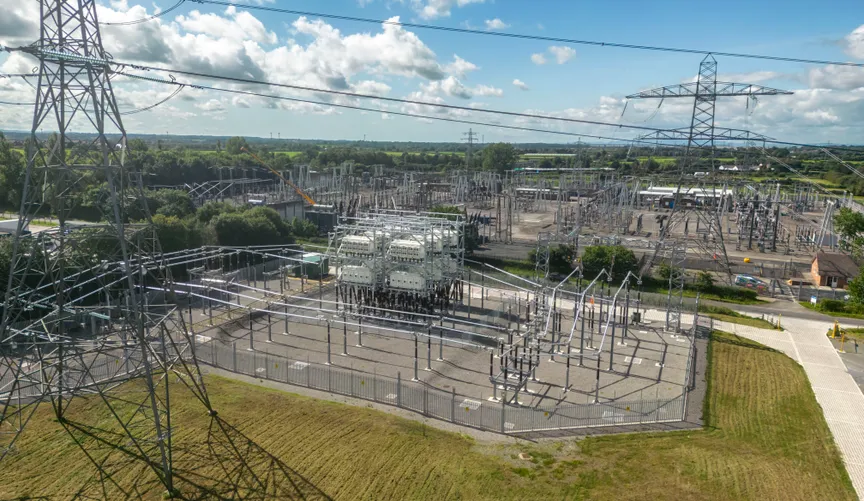
New data-centre connections may require substantial investment in substations, transformers and transmission infrastructure.
Wisconsin has already changed the rules
On 24 April 2026, Wisconsin's Public Service Commission announced major changes to a proposed special electricity tariff from We Energies.
The objective was explicit: protect existing electricity customers against inappropriate costs associated with new, very large loads.
The regulator extended the minimum initial contract term to 15 years.
It also lowered the electricity-demand threshold for the special tariff from 500 megawatts to 100 megawatts, bringing a broader range of large projects within the rules.
And it strengthened provisions governing responsibility for electricity generation and transmission investments.
What does that mean?
A developer seeking an enormous amount of power cannot necessarily expect the utility to build everything it needs and then walk away without substantial financial obligations.
The regulations are designed to make the new customer responsible for the commitments it creates.
In North Carolina, Duke Energy has also proposed special tariffs for large customers, including long-term commitments and minimum payments intended to reduce the risks that infrastructure costs will be passed to existing ratepayers.
These are not the kinds of contracts most households encounter.
They show that electricity regulators increasingly regard the AI buildout as an unusual financial challenge.
For utilities, dependable contracts can justify investment. For developers, they can improve the chances of obtaining a reliable connection. For households, the intended protection is that expenses attributable to enormous private facilities are not unfairly assigned to everyone else.
Those interests can align.
But only if the contracts are sound and enforced.
Elon Musk encountered a different problem
The struggle for power is already visible in Elon Musk's computing ambitions.
His Colossus infrastructure near Memphis, Tennessee, demonstrates how access to electricity can become as important as access to Nvidia's processors.
Gas turbines associated with xAI's infrastructure in nearby Southaven, Mississippi, have been the subject of a dispute over emissions and permitting.
Environmental groups alleged that the company and related entities were operating turbines without the permits required under clean-air laws. The company and government authorities disputed aspects of the legal position.
The controversy concerns more than the quantity of electricity the facilities need.
It concerns how that electricity is generated and who lives with the consequences.
Gas turbines can supply electricity while permanent grid infrastructure is developed. That may help a company bring substantial computing capacity online sooner.
But fossil-fuel power generation also produces emissions, and large installations can have noise and other local effects.
In October 2026, a federal judge rejected an attempt by the US government to halt the NAACP's lawsuit.
The decision allowed the dispute to continue. It was not a final judicial finding that every environmental allegation was true.
The wider tension, however, is clear.
A private company racing to develop advanced computing infrastructure encounters public rules about electricity generation, environmental protection and the interests of nearby communities.
Those rules can slow development.
They also exist because industrial activity affects people who may have no stake in the business itself.
Someone living close to a power facility does not automatically share its profits.
They may still experience the consequences of its operation.
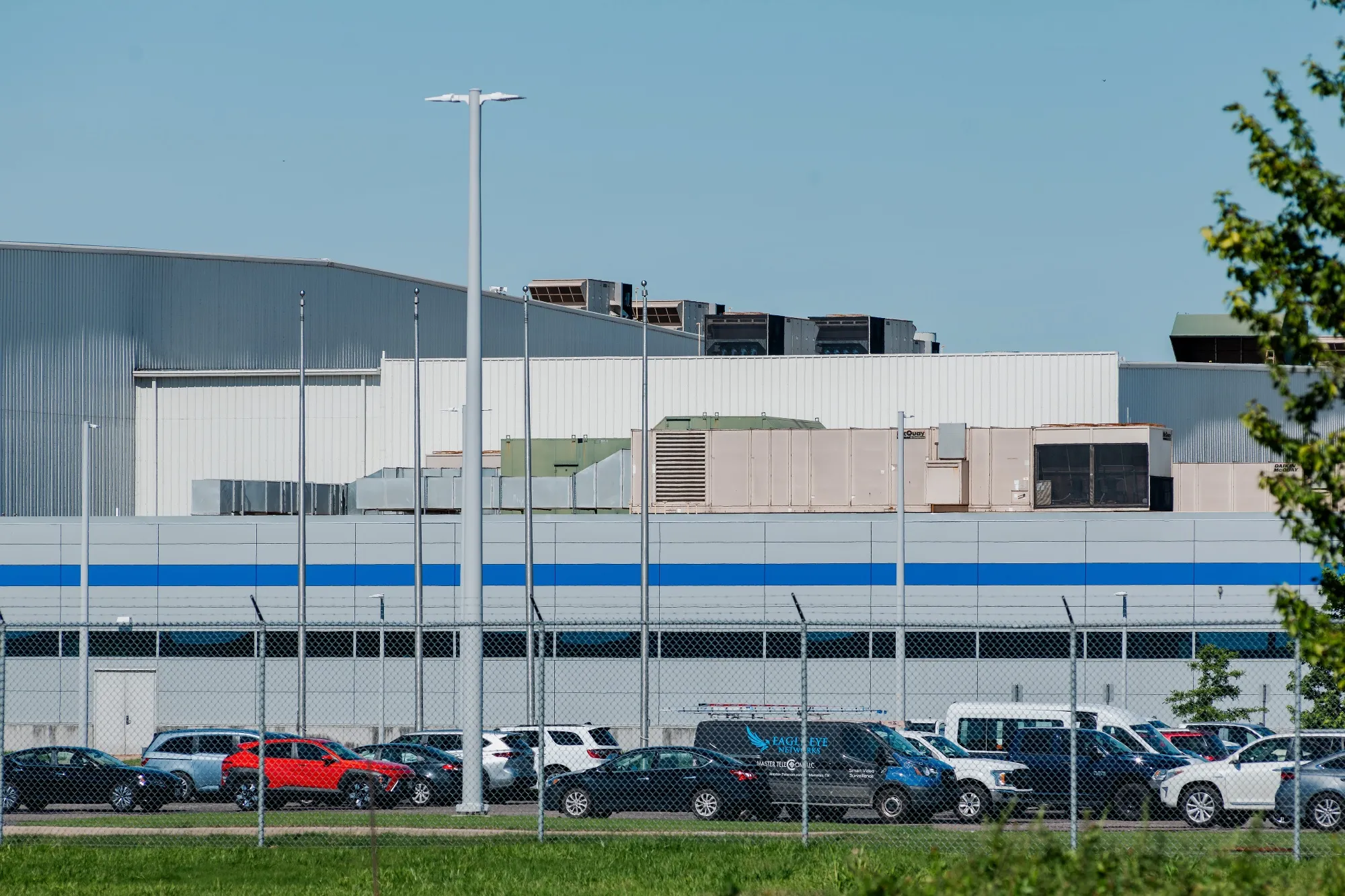
xAI's Memphis-area computing expansion has brought questions about electricity generation, permitting and community impacts into public debate.
The other side should not be ignored
It would be misleading to suggest that every new data centre inevitably raises household electricity bills.
Large customers can also provide real benefits.
A substantial new electricity contract can help finance additional generation and transmission. Investment in network capacity may eventually support other businesses and residents. Construction creates employment, and data-centre operators can contribute taxes and other economic activity.
If a developer pays an appropriate share of its costs, the expansion can be commercially useful to the wider region.
The effects also depend on location.
A very large facility in a region with abundant generation and available network capacity may present fewer problems than a smaller one in an already constrained system.
The issue is not simply how much electricity an AI model uses.
It is where, when and under what financial arrangements that electricity is supplied.
This makes location a strategic decision.
The best site for an AI facility may no longer be the location closest to a major technology hub.
It may be the site where reliable power is available at a predictable price.
The companies nobody expected to become AI power brokers
The AI boom made Nvidia a central supplier to the industry.
But Nvidia does not produce electricity.
Neither does a language model.
Behind every major computing installation lies another collection of industries: electricity generation, transmission, power electronics, cooling, construction and specialist equipment manufacturing.
That creates opportunities for businesses rarely mentioned in discussions about artificial intelligence.
Utilities may benefit from long-term power demand when they can finance investments responsibly.
Transformer and switchgear suppliers may see stronger demand.
Owners of sites with suitable electricity connections may gain valuable negotiating leverage.
Natural-gas operators, renewable-energy developers, energy-storage businesses and nuclear-power companies could all find new customers.
These opportunities are not guaranteed profits.
Utilities remain regulated. Manufacturing capacity can be difficult to expand. Construction projects face delays and cost overruns. Energy projects can meet environmental and political opposition.
But the strategic direction is worth noticing.
The next company holding up an AI expansion may not be a semiconductor manufacturer.
It may be the business that makes a transformer—or the utility that controls when the site can connect.
The lesson from the railroads
There is a useful historical parallel.
During the nineteenth century, railway construction changed where people lived, where factories operated and which towns became commercially important.
Railways did more than transport goods and passengers.
Their routes helped determine which businesses could reach markets and which locations became valuable.
A manufacturer might produce excellent goods and still struggle without reliable transportation.
The comparison with artificial intelligence is imperfect. Modern AI depends on digital networks and computing, not physical passenger and freight routes.
But one underlying principle is familiar.
A new technology's economic value often depends on infrastructure its most visible companies do not fully control.
The same principle shaped electrification itself.
Factories gained from electric motors and more flexible production, but widespread electrification depended on generating stations, equipment, distribution networks and substantial investment.
Now electricity is becoming a constraint on another technological shift.
The irony is difficult to miss.
Some of the wealthiest organisations building advanced intelligence are competing for capacity in infrastructure that has taken generations to develop.
Everyone wants power at once
Artificial intelligence is not the only source of rising electricity demand.
Electric vehicles, industrial electrification, manufacturing investment and conventional digital services also need capacity.
As the IEA has observed, congestion in grid connection queues and equipment supply chains is becoming a major obstacle to new energy and large-load projects.
Not every announced project will be built.
But the scale of development plans reveals how much economic activity depends on a physical system that cannot expand overnight.
In some places, new data centres may therefore compete for connections and infrastructure capacity with factories, housing developments and other businesses.
Competition does not always mean one project directly takes electricity from another.
It may instead mean longer connection queues, higher equipment costs or difficult decisions about which projects should receive priority.
Those choices matter.
They help determine where investment can happen—and where it cannot.
A government may offer generous incentives for AI investment, yet discover that its grid cannot accommodate the promised facilities.
A technology company may have billions ready for processors but still be waiting for a transmission connection.
Money can accelerate some constraints.
It cannot immediately remove all of them.
The political argument has already started
Governments want technological investment. Large data centres can create economic activity and strengthen a country's computing capabilities.
But public authorities also have duties to electricity customers, communities and existing industries.
The priorities do not always align.
A region may welcome a technology company's investment while disputing how much public infrastructure should be built around it.
A government may support new power generation while residents demand stricter environmental safeguards.
A utility may want a long-term commercial customer while its regulator insists that ordinary households not be left with the bill.
These disputes are not evidence that AI development should stop.
They are evidence that AI has become an infrastructure policy question, not simply a product competition.
And the consequences of poor infrastructure decisions may outlast today's leading AI companies or models.
The next contest may belong to whoever controls the connection
Return to Nvidia, Google, Microsoft, Amazon, OpenAI and Elon Musk's businesses.
They have different strengths. Some develop chips, some build models, and some control enormous cloud and consumer platforms.
Now imagine two companies acquire comparable AI processors.
Both have the capital, engineers and customers needed to operate.
One can obtain dependable electricity within eighteen months.
The other faces a connection delay of several years.
Which company has the practical advantage?
It may not be the company with the better model.
It may be the company whose computers can actually run.
That is why access to electricity, suitable land, generating capacity and grid connections belongs at the centre of the competition for AI leadership.
Not as an administrative matter delegated to contractors after the announcement.
As a strategic advantage.
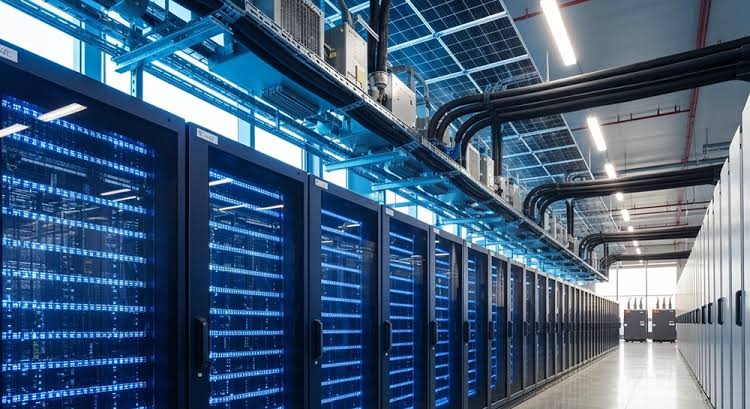
Advanced AI computing depends on the electricity, cooling and physical infrastructure needed to run machines continuously.
Who should pay for the intelligence we are building?
The public has been promised substantial benefits from artificial intelligence.
More productive businesses. Faster scientific research. Better tools for education and healthcare.
Some of those promises may prove worthwhile.
But the infrastructure has immediate costs.
Power stations must be financed. Transmission lines need construction. Transformers have to be manufactured. Communities may have to live beside industrial facilities.
Those costs do not disappear because the technology is exciting.
They must be allocated.
The question is whether companies pursuing enormous private commercial value should be responsible for the appropriate share of the infrastructure investments their projects require.
That is not an argument against AI.
It is an argument about how its expansion should be governed.
For most people, the AI race still looks like a contest involving chatbots and processors.
But the competition has moved into another part of ordinary life.
One measured in kilowatt-hours, utility contracts and long-term infrastructure obligations.
What happens when the world's richest technology companies can afford all the computing they want—but cannot secure enough electricity to use it?
The answer may decide who has power in the next phase of AI.
And it leads to the next investigation: who actually controls the physical infrastructure beneath the AI economy?
This is Part Five of The Battle for AI Power, a Harbour Creative Blogs series examining the companies, governments and infrastructure shaping artificial intelligence.
Reporting and sources
- International Energy Agency — Key Questions on Energy and AI, 2026
- International Energy Agency — Executive summary and data-centre electricity projections
- Wisconsin Public Service Commission — April 2026 data-centre tariff decision
- North Carolina Department of Justice — Response to proposed Duke Energy large-load tariff
- Reuters — Judge rejects bid to halt lawsuit concerning xAI's power plant, October 2026
- IEA — Electricity 2026: Grids
About this article
This article provides analysis and interpretation of available information. Sources and supporting material, where applicable, are linked within the article.
Found an error? Contact the editorial desk. See our editorial standards and corrections policy.
From the Harbour Creative Blogs archive
Keep exploring this story
Related reporting, people and places from our published coverage. These are editorial connections, not a popularity ranking.
Company
Nvidia
The chipmaker at the centre of global AI investment: its revenue, products, leadership, customers and commercial relationships.
Subject
AI infrastructure
The data centres, chips, electricity and investment behind advanced artificial intelligence.
Person
Elon Musk
The entrepreneur associated with xAI and its construction of large-scale AI computing infrastructure.