Part 4 · Analysis
Nvidia and OpenAI: Inside the Partnership
The companies announced a proposed 10-gigawatt infrastructure programme and up to US$100 billion in Nvidia investment. The scale is extraordinary; the commercial terms and delivery milestones matter even more.
 Harbour Creative Team
5 min read
Harbour Creative Team5 min read
Part four of Nvidia: The Business and Its Partners.
The relationship between Nvidia and OpenAI is among the most closely watched in the artificial-intelligence industry. One company designs the processors and systems required for modern AI infrastructure. The other develops large models and consumer and enterprise products that require extraordinary quantities of computing.
In September 2025, the companies announced a letter of intent to build at least 10 gigawatts of Nvidia-based computing capacity for OpenAI. Nvidia said it intended to invest up to US$100 billion in OpenAI progressively as new capacity was deployed.
Those numbers are large enough to become headlines on their own. But understanding the agreement means distinguishing its stated ambitions from committed spending, equipment delivered and revenue Nvidia has already earned.
What was announced
The companies described a programme intended to support the training and operation of OpenAI's next generations of AI models. It would involve millions of Nvidia processors and infrastructure built out in phases.
The initial announcement said the first gigawatt would be deployed in the second half of 2026 on Nvidia's then-planned Vera Rubin platform. The companies described the programme as a letter of intent, and Nvidia's investment as an intention to invest up to a stated amount.
That language matters. A letter of intent can establish a shared direction and a framework for subsequent agreements, but it is not evidence that the full investment has already been made or all equipment ordered and paid for.
Three different numbers
| Announcement | What it means | What it does not prove |
|---|---|---|
| At least 10 GW | Intended scale of AI computing infrastructure | That 10 GW has already been built |
| Up to US$100bn | Potential staged Nvidia investment | That US$100bn has already changed hands |
| Millions of GPUs | Projected computing needs across phases | That those GPUs have all been delivered |
Source: joint Nvidia–OpenAI announcement, 22 September 2025.
Investment is not the same as a product sale
The most complicated part of the proposed arrangement is its combination of capital and equipment. Nvidia may invest in a business that also needs the computing systems Nvidia sells. This creates several separate questions: how much Nvidia actually invests, the conditions of those investments, which entity buys the equipment and whether the resulting orders are ultimately profitable.
It would be misleading to treat a proposed investment as ordinary Nvidia product revenue. A capital investment and a sale are different events, even where they involve the same counterparties. It would also be incorrect to assume that OpenAI directly purchases every GPU used to serve its models.
OpenAI has relationships with cloud providers and infrastructure operators. Some equipment may be purchased and owned by those providers while the developer acquires access to computing capacity through contracts. The companies receiving invoices from Nvidia may therefore differ from the organisations most prominently featured in the announcements.
Why OpenAI wants this capacity
Frontier AI development consumes computing resources at multiple stages. Training requires large clusters to process data and update model parameters. Serving a model to millions of users brings ongoing inference demand. New approaches to reasoning and software tools can increase the amount of computing needed after a user submits a question.
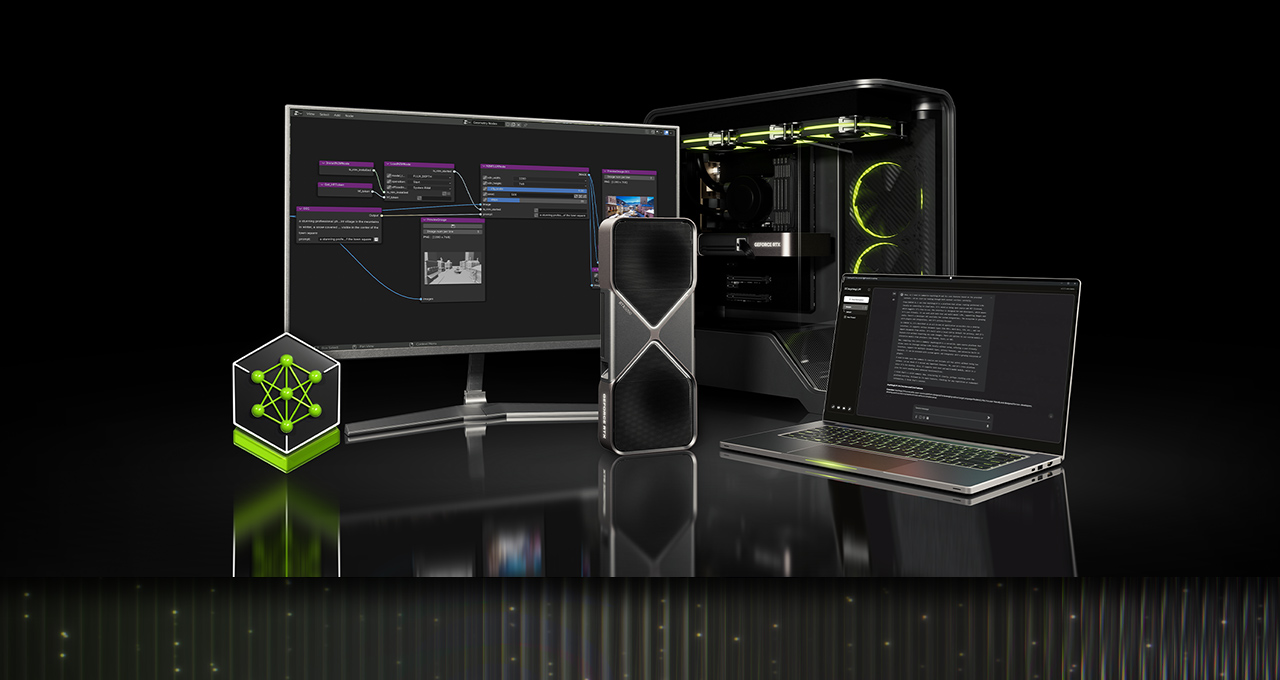
Large AI systems depend on processors, networking, storage, software and suitable power and cooling.
That is why a gigawatt figure is only one part of a credible project. Data-centre land, grid connections, cooling, networking, construction schedules and financing all matter. A project may have substantial funding or political backing and still encounter physical delays.
For Nvidia, the opportunity extends beyond processors. Its networking, integrated systems and CUDA software can form part of the design that links thousands of accelerators together.
The risk of circular expectations
Investors sometimes worry about situations in which a supplier invests in a company that then spends heavily on the supplier's products. That does not make the relationship improper by itself, but it complicates assessments of independent demand.
A useful analysis asks whether OpenAI can generate enough value from the computing capacity to justify its running costs over time, how much financing is required and whether the technology will remain competitive as new hardware generations arrive.
The public announcement does not answer those questions in full. In particular, it does not provide a verified account of every project, buyer, lender and final contract term that would be needed to model all cash flows.
What leadership change could affect
On 12 November 2026, Nvidia announced Jensen Huang's resignation and the appointment of Colette Kress as interim chief executive. The companies' relationship had been public and closely identified with senior leadership, so any transition naturally raises questions about large financing commitments.
But a change of Nvidia chief executive does not itself cancel an agreement or establish that planned investments will be reduced. The responsible approach is to watch subsequent company filings, revised terms, actual infrastructure milestones and disclosures about investment execution.
The Australian connection
Australian businesses typically encounter OpenAI models through products and APIs rather than building their own giant GPU clusters. The cost and availability of those services can nevertheless depend on capital investments, power costs and competition among cloud providers.
The Nvidia–OpenAI announcement illustrates how large computing infrastructure projects link hardware manufacturers, AI developers, utilities, builders and financiers. It also shows why their relationships cannot be understood by counting GPUs alone.
The next part follows a different model: xAI's concentrated construction of its own huge computing infrastructure in Memphis.
Reporting note: This article distinguishes a publicly announced letter of intent from completed capital expenditure, GPU deliveries and financial statement revenue. Where milestones have not been independently documented, they are not presented as complete.
Sources and background: OpenAI and Nvidia's September 2025 announcement · Nvidia investor announcement, September 2025 · Nvidia FY2026 Form 10-K · Nvidia CEO transition, November 2026
About this article
This article provides analysis and interpretation of available information. Sources and supporting material, where applicable, are linked within the article.
Found an error? Contact the editorial desk. See our editorial standards and corrections policy.
From the Harbour Creative Blogs archive
Keep exploring this story
Related reporting, people and places from our published coverage. These are editorial connections, not a popularity ranking.
Subject
AI infrastructure
The data centres, chips, electricity and investment behind advanced artificial intelligence.
Company
Nvidia
The chipmaker at the centre of global AI investment: its revenue, products, leadership, customers and commercial relationships.
Company
OpenAI
Artificial intelligence research, commercial AI services, compute infrastructure and strategic partnerships.