Part 7 · Analysis
Meta's Relationship with Nvidia and Its AI Plans
Meta has committed to a multiyear rollout involving millions of Nvidia GPUs, new CPUs and networking systems. Its dependence on computing infrastructure reflects the economics of both AI and its existing platforms.
 Harbour Creative Team
4 min read
Harbour Creative Team4 min read
Part seven of Nvidia: The Business and Its Partners.
Meta is one of the technology companies with the largest and most varied requirements for computing infrastructure. Its services reach billions of people through Facebook, Instagram, WhatsApp and other products. Artificial intelligence is used not just in emerging chatbots, but in recommendation systems, advertising and the ranking of content across those platforms.
In February 2026, Meta and Nvidia announced a new multiyear relationship to support both AI training and inference. The scale of that announcement matters, but understanding its business significance requires looking beyond the names of the two companies.
What Meta and Nvidia announced
Nvidia said the collaboration would encompass millions of Blackwell and Rubin GPUs, together with deployment of Nvidia CPUs and Spectrum-X networking technology. The companies described a multigenerational programme across Meta's data centres, cloud-connected systems and wider AI infrastructure.
The breadth is important. Nvidia's revenue opportunity is not confined to one processor design. Modern AI installations contain GPUs, CPUs, networking equipment and supporting software that need to operate together.
Meta said the work would improve the performance and efficiency of its infrastructure. Those are company expectations. The announcement does not itself provide a measured financial return from the full proposed deployment.
The infrastructure behind social media
Meta's AI computing supports both its established platforms and newer models and products.
The commercial logic is different from that of a startup which runs a single AI product. Meta's recommendation systems already influence how people interact with content and advertising. Better models can potentially improve engagement, help advertisers reach customers or make new products possible.
Those benefits are difficult to isolate from other factors in Meta's financial performance. An infrastructure announcement is not a disclosure that a particular GPU purchase will generate a specific amount of advertising revenue.
Meta also develops AI models and uses large compute clusters to train them. Inference then becomes a recurring operational cost as models serve users. Training and inference demand different balances of performance, latency, memory and networking, so the same architecture may not be optimal for every task.
A partnership across several hardware generations
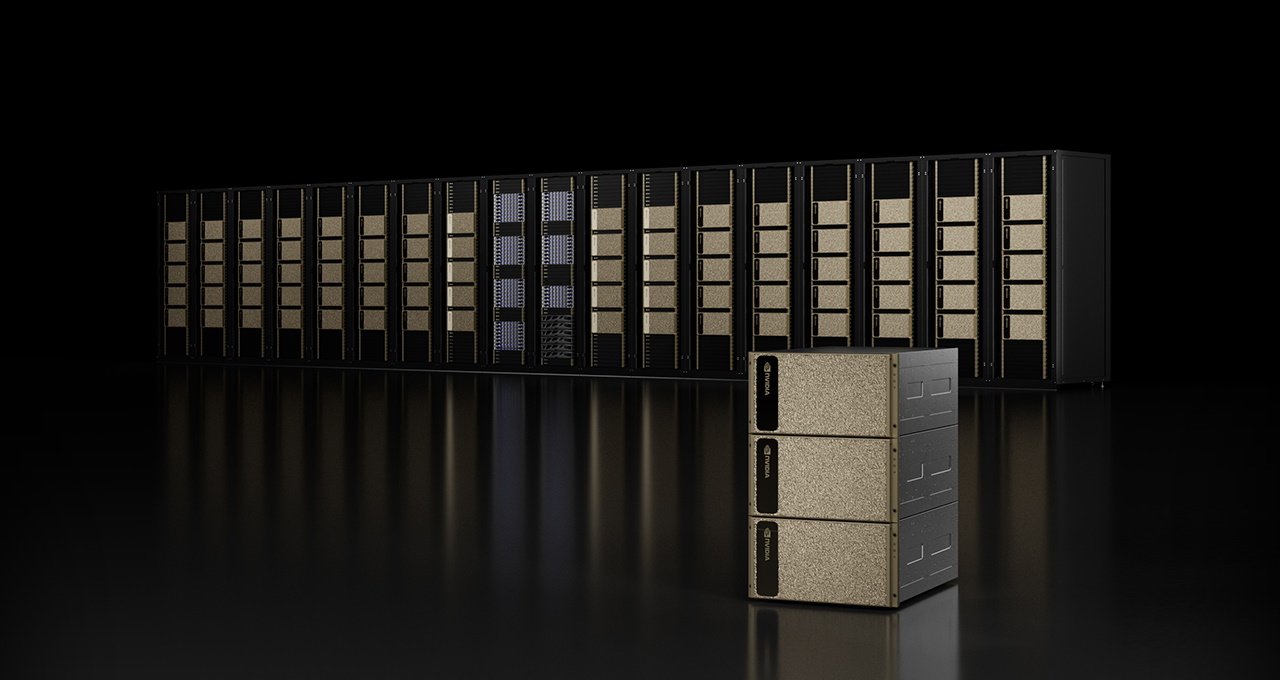
The public partnership spans several generations of processors and networking rather than a single one-off delivery.
The February statement described Meta's adoption of Nvidia Grace and planned deployment of Vera CPUs, as well as the GPU platforms. It also named Spectrum-X Ethernet technology for networking.
That matters because Meta has strong incentives to optimise the entire data centre: faster processors alone may not reduce the cost of a system that wastes time moving data, scheduling workloads or waiting for other resources.
At the same time, every generation introduces procurement and migration questions. Organisations have to decide how long existing equipment remains useful, whether new systems justify higher capital spending and how software will move between platforms.
Where independence enters the picture
Meta is not committed to avoiding every alternative to Nvidia. A very large buyer can pursue internal hardware design, adopt new software approaches or negotiate with competing suppliers, even while expanding a partnership with Nvidia.
Those options are not evidence of a complete switch. A bespoke accelerator may suit a narrow workload while Nvidia hardware remains important for research and more general-purpose tasks. The balance can change over time.
Nvidia therefore benefits from Meta's scale but must continue to offer performance, reliability and software support that justify investment.
Is Meta one of Nvidia's largest direct customers?
The FY2026 10-K states that two unnamed direct customers represented 22 per cent and 14 per cent of total revenue. The filing does not identify either by name.
The public Meta–Nvidia announcement cannot be used to attach those percentages to Meta. Equipment may be supplied through system builders or other purchasing arrangements. A company can be strategically important to Nvidia without being the entity booked as the direct customer for every transaction.
This is precisely why publicly named partnerships and customer concentration figures must be kept separate.
What Australian readers should take from it
An Australian business using Meta's advertising products or AI features may never make a conscious choice about Nvidia hardware. Yet the cost of Meta's computing could influence the economics of those services and the pace at which new capabilities appear.
The relationship shows how Nvidia can be commercially embedded in products consumed by billions of people without being visible to those end users.
The next part examines two cloud operators, Amazon and Oracle, that make Nvidia-powered infrastructure available to outside customers while managing their own distinct economics.
Reporting note: Multiyear deployment commitments and technology plans are attributed to Meta and Nvidia. They should not be read as a list of completed purchases or a verified ranking of Nvidia's direct customers.
Sources and background: Meta announces Nvidia infrastructure partnership, February 2026 · Nvidia outlines Meta's multiyear deployment · Nvidia FY2026 Form 10-K
About this article
This article provides analysis and interpretation of available information. Sources and supporting material, where applicable, are linked within the article.
Found an error? Contact the editorial desk. See our editorial standards and corrections policy.
From the Harbour Creative Blogs archive
Keep exploring this story
Related reporting, people and places from our published coverage. These are editorial connections, not a popularity ranking.
Subject
AI infrastructure
The data centres, chips, electricity and investment behind advanced artificial intelligence.
Company
Nvidia
The chipmaker at the centre of global AI investment: its revenue, products, leadership, customers and commercial relationships.
Company
Meta
The owner of Facebook, Instagram and WhatsApp, and a major investor in AI and computing infrastructure.