Part 8 · Analysis
The AI Bubble: Who Is Holding Up the World's Most Expensive Technology Race?
An Nvidia leadership crisis exposed a larger question: when AI investors, suppliers and customers finance one another, how much of the boom rests on lasting demand — and how much on expectations?
 Harbour Creative Team
22 min read
Harbour Creative Team22 min read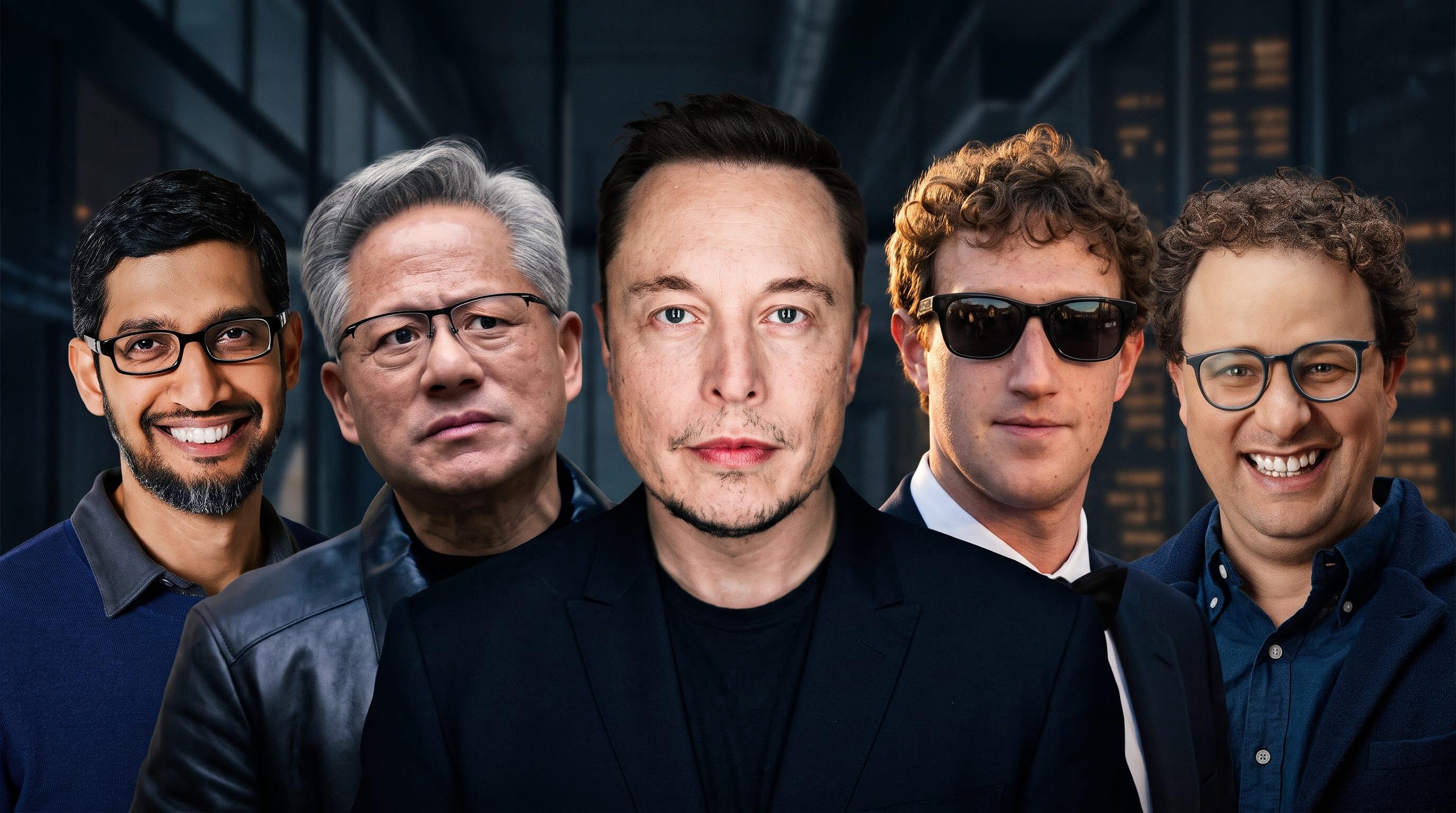
The Battle for AI Power — Part Eight
Reporting cutoff: 12 November 2026. All financial amounts are in US dollars unless otherwise stated. This analysis distinguishes reported allegations, completed funding, planned expenditure and contractual commitments.
The artificial intelligence industry has learned to tell its story in enormous numbers. Tens of billions of dollars in financing rounds. Hundreds of billions in future cloud contracts. Gigawatts of proposed computing capacity. Chip orders so large they become national economic stories. Every new commitment is presented as evidence that the next technological era is arriving faster than expected.
Then one man's future became uncertain.
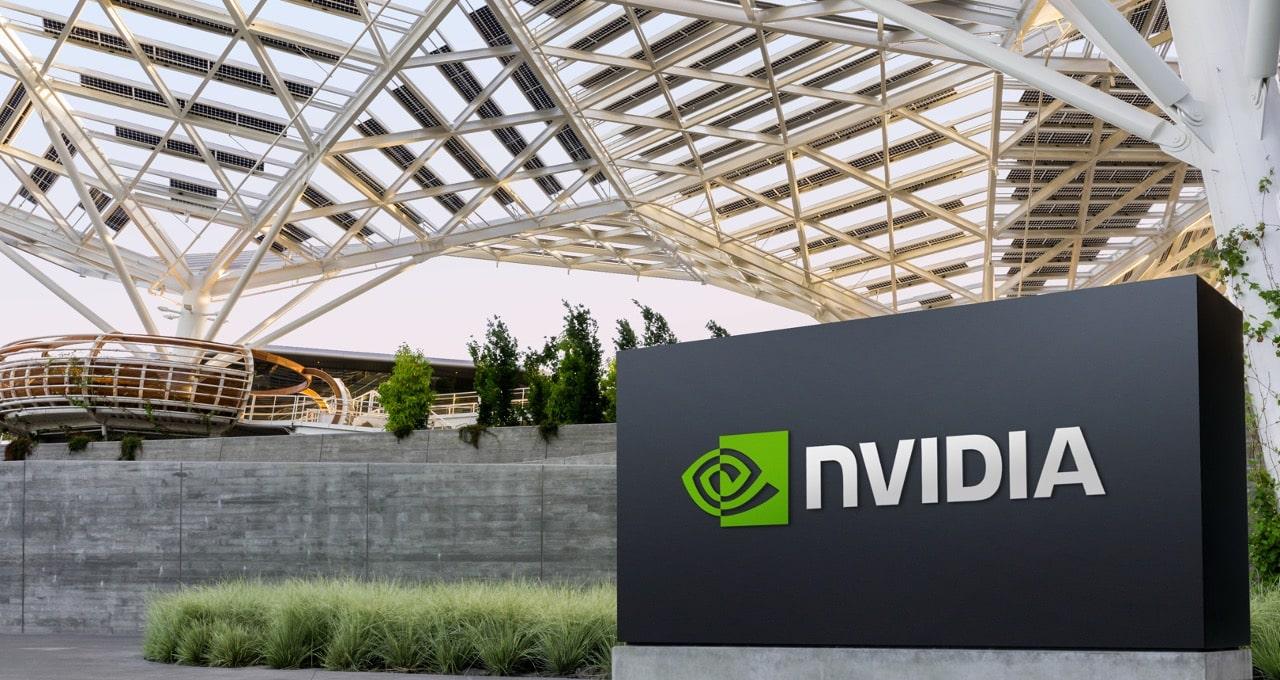
Nvidia's board announced an independent investigation on 8 November 2026 after reports that its founder and chief executive, Jensen Huang, had been targeted by a foreign-intelligence effort. It said it had no reason to believe national security or company secrets had been compromised and expressed confidence in Huang and his leadership team. Days later, Reuters reported that directors were considering his future as allegations concerning personal relationships intensified. The company had not announced a completed removal in the information reviewed for this article. The allegations and national-security suspicions must not be confused with established misconduct. Nvidia's board statement provides the narrowest reliable account of what the company had formally confirmed; Reuters describes the subsequent leadership reporting.
The immediate drama is about governance, succession, credibility and the obligations of a board. The larger story is about a commercial system that has become exceptionally concentrated. Nvidia sells the machinery used by numerous AI laboratories, cloud providers and data-centre operators. Some of those customers raise money from investors that also own Nvidia. Nvidia itself invests in companies buying its hardware. Cloud providers invest in model builders and then charge those model builders for computing capacity. An increase in one company's spending can appear as revenue at another company, even when it has yet to produce an equivalent stream of end-customer profit.
Does that make the AI boom a bubble? Not necessarily. But it makes the question harder, and more important, than a comparison between stock-market prices and today's chatbot subscriptions.
1. Can one scandal bring down an industry leader?
A chief executive can be indispensable to a company's identity without being indispensable to every part of its operations. Nvidia has engineers, customer relationships, intellectual property, a large software ecosystem and long supply chains that do not vanish because its founder faces scrutiny. Orders for computing equipment are generally driven by capacity plans made months or years in advance. A leadership crisis does not automatically cancel those plans.
But a founder's unusually prominent role can still affect investor expectations. Huang has spent decades selling customers and investors a long-term vision of accelerated computing. He has been unusually central to product launches, relationships with major cloud companies and the interpretation of Nvidia's strategy. Removing that public face would create uncertainty over continuity, not necessarily over the technical quality of Nvidia's products.
Four distinct risks should be separated. The first is legal and regulatory exposure: what investigations actually find and whether authorities establish any violation. The second is governance: whether directors can manage conflicts and provide credible independent oversight. The third is succession: whether a leadership transition can preserve strategic relationships and execution. The fourth is valuation: whether investors have priced a company as though its exceptional growth will continue with little interruption.
Those risks can interact, but none proves the others. A fall in share price is not proof of wrongdoing. Allegations against an individual are not proof of industrial espionage. And an investigation is not the same as an adverse finding.
The danger for a highly valued company is that its share price can be sensitive to the difference between extraordinary expectations and merely strong results. The business can remain profitable while investors become less willing to pay the same multiple of its future earnings.
For Nvidia, this distinction is unusually important. Its second-quarter fiscal 2027 results showed $96.2 billion in revenue, including $89.0 billion from data centres, and a 75% gross margin. These are real reported business results, not investment pledges. Yet even exceptionally profitable suppliers can face share-price declines if buyers reduce future expansion or rivals alter market economics.
The correct question, then, is not whether one scandal can destroy artificial intelligence. It is whether a leadership shock at a central supplier can lead investors to reconsider other vulnerabilities that were already there.
2. The difference between an AI revolution and an AI bubble
An economic bubble is not defined by a technology being useless. It is a period in which prices or investment decisions can become detached from realistic future cash returns. Bubbles often begin with a genuine innovation. The excitement attracts capital; capital helps finance infrastructure and adoption; rapid adoption justifies further investment. The difficulty emerges when valuations and commitments implicitly require growth to continue at a pace that cannot be sustained.
The internet provides a useful comparison, but not a template. The dot-com crash destroyed enormous market value while networks, software and online commerce continued to develop. Railways and telecommunications also endured periods in which genuinely valuable infrastructure was built with financing terms that proved unsustainable for some investors.
AI could follow a different path. The technologies, market structure and corporate balance sheets are different. Some companies financing today's buildout already operate profitable businesses on a global scale. Microsoft's September-quarter revenue was $92.3 billion; Meta's was $64.6 billion. That makes a simple analogy with speculative, pre-revenue startups misleading.
There are also companies for which the financing problem is much sharper: infrastructure providers borrowing heavily to acquire equipment, secure power and build facilities before a full stream of customer payments arrives. Their exposure is not identical to that of a cash-rich software platform.
The warning from the International Monetary Fund's October 2026 Global Financial Stability Report was not that AI is worthless. It was that weaker or less durable expectations for AI profitability and investment could trigger asset-price corrections, amplified by leverage and concentrated exposures.
An AI bubble, if one exists, would therefore be about the price and financing of future growth, not simply whether AI models work.
An explanatory model, not a prediction
How a boom can become a bubble
Expectation
Investors expect rapidly rising future AI revenue and profits.
Capital
Higher valuations and financing support more data-centre construction.
Commitments
Cloud companies and labs enter long-term power, chip and capacity agreements.
Stress
If utilisation or prices disappoint, cash returns may fall short of fixed costs.
Transmission
Equity values, lending conditions, equipment suppliers and new orders can be affected.
Three questions matter more than a dramatic stock chart: Who is paying for the equipment today? Who is obligated to keep paying when conditions change? And which customers eventually generate enough outside revenue to make the arrangement work without further rounds of financing?
3. The money does not move in one direction
Take Microsoft and OpenAI. Many descriptions reduce their relationship to a technology company investing in a startup. The actual commercial arrangement is far more complicated.
In its Form 10-Q for the quarter ending 30 September 2026, Microsoft disclosed an approximately 24% interest in OpenAI on an as-converted basis. It said it had made $13.0 billion in total funding commitments, of which $12.0 billion had been funded. In the same quarter, it recorded $10.0 billion in revenue from commercial arrangements with OpenAI, including revenue-sharing payments, and disclosed $7.2 billion in related accounts receivable at quarter-end.
That deserves to be read slowly. The equity interest is an ownership position. Funding commitments represent an obligation to invest, not automatically cash already paid. Revenue from commercial arrangements is an accounting figure for a particular quarter, inclusive of revenue sharing; it is not simply the cash OpenAI paid Microsoft for Azure usage. Accounts receivable represent amounts owed. None of these numbers should be added together to create a fictional total of 'money circulating'.
Microsoft's own filing identifies OpenAI as a related party for accounting purposes. That is a disclosure category, not an accusation of impropriety. The disclosure matters because readers can see that financing, ownership and revenue coexist in one consequential relationship.
This is a central feature of the AI economy: capital can move toward a model developer and, through legitimate commercial purchases or revenue-sharing arrangements, support revenue at a technology partner. That can be entirely rational if customers ultimately pay enough for the developer's services. The risk arises if future revenue assumptions are weaker than the long-term obligations taken on to create the capacity.
An investor should ask not only how much revenue a cloud company reports from an AI partner, but what proportion is exposed to that partner, whether payments arrive as scheduled and what happens if the partner changes suppliers or slows spending.
Original research visual · November 2026
Follow the money
Different forms of connection must not be confused. Select a relationship to inspect the transaction and its original source.
Documented relationship
Microsoft disclosed an approximate 24% interest and $10.0bn in quarterly commercial-arrangement revenue, inclusive of revenue-sharing payments.
Read source documentThe same questions apply elsewhere, but the transactions are not interchangeable. Amazon's investment in Anthropic is not the same as a cloud-capacity reservation. Nvidia buying shares in CoreWeave is not the same as Nvidia selling GPUs to CoreWeave. And ownership of xAI by SpaceX is not equivalent to either arrangement.
That distinction is the beginning of serious analysis.
4. Nvidia is selling the machines — and backing some buyers
In January 2026, Nvidia announced a $2 billion equity investment in CoreWeave, a specialist cloud provider whose infrastructure uses Nvidia systems. Nvidia's statement also described an expanded collaboration aimed at accelerating the construction of AI factories.
There is a straightforward commercial logic. A chip supplier wants capable infrastructure providers to finance, install and operate more of its products. A cloud provider wants enough capital and predictable hardware access to satisfy customer contracts. Equity financing can align those objectives.
But the arrangement complicates how observers interpret demand. When a supplier invests in a customer and that customer expands purchases from the supplier, the supplier's revenue may still be genuine. The financial relationship nevertheless deserves scrutiny: How much of the buying programme depends on fresh financing? What is the customer's own cost of capital? And how much demand ultimately comes from unrelated end users?
Nvidia also appeared as a strategic investor in xAI's $20 billion funding round announced in January. xAI said it intended to expand its computing infrastructure, while identifying other investors including Fidelity, Qatar Investment Authority, MGX and Cisco Investments. The company did not break out every investor's contribution in that announcement. An analyst should not assume an undisclosed individual amount.
At the same time, one should resist the suggestion that all of Nvidia's sales are supported by investors returning the company's own money to it. Nvidia reported enormous actual revenue and profits across multiple product and customer categories. Its results show a functioning and fast-growing business. The question is how durable the next increments of infrastructure demand will be, not whether the current business exists.

AI infrastructure requires long-lived commitments to chips, buildings, power, cooling and networks. Photograph supplied for this feature.
5. CoreWeave: a useful place to test the theory
CoreWeave is particularly revealing because its financial figures show both extraordinary demand and the stresses of scaling.
On 10 November 2026, the company reported third-quarter revenue of approximately $3.7 billion, a $132.5 billion revenue backlog, and plans for $37 billion to $39 billion in 2026 capital expenditure. It described approximately $9 billion of expected customer prepayments and deposits over the next three months, and several new debt-financing arrangements. The company expected higher revenue and operating income than it had previously forecast.
One interpretation is positive: large customers need capacity, prepayments help fund construction, and a contracted backlog creates visibility. Another is more cautious: the greater the dependence on future contracts, financing markets and a relatively narrow category of buyers, the more consequential a delay or renegotiation becomes.
A backlog is not the same as cash in the bank. Annualised run-rate revenue is not recognised revenue. Adjusted operating income is not net profit. Capital expenditure guidance is not expenditure already completed.
Reuters reported that CoreWeave carried $46.9 billion of total debt at the end of September and was targeting adjusted profitability in the first half of 2028. Those figures should not be treated as a guarantee of failure or as evidence that the backlog will be realised exactly as expected. They reveal why the relationship between financing, utilisation and cash generation must be measured carefully. Reuters, 10 November 2026.
Imagine two outcomes. In the first, customers use all the capacity they have contracted, newer chips make inference cheaper, and spending by businesses rises sufficiently to cover infrastructure costs. Debt becomes easier to service. In the second, model efficiency or competition reduces the price customers will pay, facilities are less heavily used, or new financing becomes more expensive. The same infrastructure can still be technically impressive while its economics become uncomfortable.
Neither outcome should be asserted as inevitable. The point is to identify the variables that separate them.
6. Google, Anthropic and Amazon: rivals who also need one another
Microsoft and Nvidia are not the whole system. Alphabet, led by Sundar Pichai, offers a different approach: own the model, own a major cloud platform, design custom chips and distribute AI through products already used by billions.
Google develops Gemini and Tensor Processing Units, or TPUs, while selling cloud services to outside developers. That does not make Google independent of every supplier. Broadcom supplies important custom-chip technology and components. In April 2026, Google and Anthropic announced expanded TPU access. Broadcom's filing described roughly 3.5 gigawatts of planned future capacity accessible through Broadcom starting in 2027, with utilisation dependent on Anthropic's continued commercial success.
The phrase 'dependent on commercial success' is easy to overlook. It is a reminder that a contract announcement and eventual fully used infrastructure are different events.
Anthropic's position is distinctive because it operates across several cloud platforms, including competitors. In April it announced a major extension of its relationship with Amazon: Amazon would invest $5 billion immediately and potentially up to $20 billion more; Anthropic described more than $100 billion of planned AWS technology commitments over ten years, associated with up to five gigawatts of capacity. The headline numbers are substantial, but one is immediate equity financing, another is potential future investment, and the third is a long-term commercial commitment.
It would be misleading to add all three and announce that Anthropic had received the sum in cash. It would also be misleading to dismiss the arrangements as meaningless. The companies are making decisions about equipment, energy and capacity that will shape the next decade.
Across Microsoft, Amazon, Google and Anthropic, rivals are simultaneously financing models, competing for cloud customers and supplying the infrastructure through which other models are served. That is not automatically a circular scheme. It is an increasingly interdependent industry where commercial transactions must be analysed individually.
7. Elon Musk's attempt to build a different kind of AI empire
Elon Musk's xAI is another test of the idea that AI firms can operate independently. xAI built its computing infrastructure around the Colossus programme, raised outside capital and developed the Grok model. It used X as a significant distribution channel and drew strategic investment from Nvidia.
In February 2026, Reuters reported that SpaceX acquired xAI, combining a space and defence contractor with an AI developer. The reported transaction valuations were enormous. Yet a valuation in a corporate transaction is not the same as annual revenue, cash flow or money transferred into new data centres.
The strategic attraction is understandable. Ownership can bring computing, distribution, research and financing under a smaller number of decision-makers. The risk is that several capital-hungry businesses can also become more closely tied to one another's fortunes. A company combining valuable assets does not eliminate the need to fund the next round of construction or find customers willing to pay for the models.
This is where the personalities matter without becoming the story. Musk, Huang, Pichai, Nadella and Zuckerberg have different strategies and control structures. Some hold dominant influence inside founder-led organisations; others manage large established public companies. But their personal authority interacts with financial risk only through governance, funding decisions, product execution and investor expectations.
The central analytical mistake is to describe all the companies as though they share one identical business model simply because they compete in AI.
8. What Meta reveals about spending from a profitable business
Meta offers an instructive contrast to a heavily financed infrastructure specialist. Its third-quarter 2026 results showed $64.6 billion in revenue, while capital expenditure including finance-lease principal payments reached $34.91 billion for the quarter. The company projected $135 billion to $145 billion in 2026 capital expenditure. Those are historic amounts of investment, but they are being made by a company with a vast advertising business and considerable financial resources.
Mark Zuckerberg's case for the expenditure includes improving recommendations, advertising performance, product experiences and future AI services. The presence of a highly profitable existing business changes the funding equation. It does not answer whether every additional data centre will produce a satisfactory incremental return.
The correct calculation is not simply capex divided by AI tokens produced. Hardware serves multiple tasks, from advertising recommendations to model development and product delivery. Moreover, a lower cost per token may increase usage without increasing revenue per token; profit depends on prices, utilisation, costs and the value created for customers.
That is why Meta's reported internal token consumption, explored in Part Seven, is an interesting operational indicator but not a disclosed accounting expense. Usage is measurable. Return on investment takes a separate investigation.
9. Nvidia's argument: AI factories are becoming productive assets
The most persuasive challenge to bubble scepticism comes from the companies building and using the infrastructure. Nvidia argues that a data centre is becoming an 'AI factory': a facility producing tokens that customers use for commercially valuable work.
At GTC in March 2026, Huang presented the economics of token production, cost efficiency and computing throughput. His argument is that cheaper and more capable infrastructure enables more inference, broader demand and additional productive applications.
Primary source · March 16, 2026
Nvidia's own case for AI factories
At GTC, Jensen Huang explained how AI factories maximise tokens, power and profitability. This is Nvidia's commercial argument, not independent proof of investment returns.
YouTube may set cookies when you load the player.
This presentation matters because a strong investigation should confront the optimistic case on its own terms. If AI lowers business costs and improves products enough to create durable revenue, infrastructure can be justified even when the initial spending appears excessive. Efficiency improvements can increase adoption rather than merely reduce expenditure, a phenomenon familiar in other industries.
But three pieces of evidence are still needed to prove the strongest claims: real customer retention, margins after the full cost of operating infrastructure, and sustained demand after subsidies or unusual financing conditions fade. An investor presentation cannot substitute for those numbers.
Nvidia has strong financial results. Other providers report rising backlogs. Microsoft, Google, Amazon and Meta have large existing businesses. These facts weaken simplistic arguments that there is no value behind AI investment.
They do not settle how much investors should pay for future growth.
10. China is changing the price of entry
The next challenge may not come from a dramatic American corporate scandal at all. It may come from changing assumptions about how expensive useful AI must be.
Chinese laboratories including DeepSeek, Alibaba's Qwen, Moonshot's Kimi and Z.ai have broadened the competition in models whose weights can be downloaded and adapted. Open-weight does not always mean completely open source: licences, training data disclosure and commercial terms vary. But it can give developers alternatives to paying a leading American provider for every request.
The Center for Strategic and International Studies examined Chinese model progress in July 2026 and described meaningful competition across coding and agent tasks, while noting that capability, costs, openness and policy are different questions. Adoption data from the Interconnects Open Models Dashboard likewise show substantial download and derivative-model activity around Chinese open-weight families. Download counts are not evidence of revenue or a definitive measure of worldwide market share.
Chinese developers are part of a growing global ecosystem of alternative models and computing strategies. Photograph supplied for this feature.
Why does this matter to the bubble discussion? Suppose businesses can obtain adequate model performance at a much lower price, or run models on less expensive infrastructure. Customers gain options. Developers with high cost structures may lose pricing power. Equipment suppliers may face changes in product mix. And the projected returns on data centres built under earlier pricing assumptions could change.
But there is a counterargument. Cheaper AI might expand the market sufficiently that total computing demand still rises. Lower prices can enable applications that were previously uneconomic. Open models still require servers, networks, electricity and skilled operators. Some Chinese developers also face constraints in access to leading semiconductor technology.
A 'Chinese takeover' is therefore the wrong conclusion to assert. It treats a changing set of competitive pressures as a settled outcome. The serious question is whether model capability and pricing power are becoming more widely distributed, and what that means for the expected returns on Western AI infrastructure.
For an Australian business deciding whether to build on an AI service, these changes are practical rather than abstract. The relevant considerations include reliability, data residency, privacy, model evaluation, portability, vendor dependence and ongoing costs. It is not necessary to predict a geopolitical winner to make a better technology decision.
11. How a financial shock could travel through the system
Now return to Jensen Huang.
Imagine, strictly as a hypothetical scenario, a crisis that undermines confidence in the leadership of a pivotal AI supplier. Investors could revise its share-price valuation even if near-term orders hold. That revision might change risk appetite for other highly valued AI companies. More expensive equity financing could make some proposed infrastructure projects harder to justify. Lenders might require stronger collateral or more conservative customer assumptions. Some buyers could delay projects.
But each arrow in that chain is conditional. Share prices can fall while financing markets stay open. Contracts can be enforceable. Customers can continue buying because they have productive reasons to do so. Suppliers with substantial cash can fund investment internally. There is no mechanical rule that a governance scandal causes a market crash.
A more plausible system-wide risk involves several disappointments arriving together: weak end-customer monetisation, slower utilisation growth, falling AI service prices, higher financing costs and concentrated demand among a handful of very large buyers.
The IMF warning about concentrated exposures is relevant precisely because a problem at one institution can matter more when counterparties are financially and operationally tied together. Yet concentration is a measurable characteristic, not a synonym for inevitable collapse.
To understand the danger, distinguish three kinds of losses:
A valuation loss occurs when investors pay less for expected future earnings. It can happen even while earnings continue growing.
An operating loss occurs when income does not cover a business's expenses. It depends on the company's actual activities and accounting.
A funding shortfall occurs when cash due to lenders, suppliers or contractors exceeds available cash and accessible financing. It can threaten operations even when a company reports revenue growth.
A sharply falling stock price, a loss-making data centre and a genuine inability to refinance debt are three different situations. Confusing them turns analysis into theatre.
12. Five numbers worth following after this article
The AI debate produces so many headline figures that readers need a way to sort them.
First, recognised revenue. How much was earned in the reporting period under applicable accounting rules? Nvidia's quarterly revenue and Microsoft's commercial-arrangement revenue are meaningful figures, but they describe different activities.
Second, operating cash flow and free cash flow. After paying the costs of running a business and building its infrastructure, is cash being created or consumed? Adjusted metrics should be read alongside the company's reconciled statements.
Third, capital expenditure and lease obligations. New buildings, servers and energy arrangements can require substantial spending before full customer utilisation. Planned spending and completed spending should not be mixed.
Fourth, customer concentration and backlog quality. Who has promised to purchase capacity? For how long? How much is prepaid? What conditions allow contracts to change? A large backlog is valuable information, but it does not guarantee profit.
Fifth, actual model pricing and utilisation. Are companies able to charge enough per unit of AI work, after operating costs, to meet the returns assumed when infrastructure was financed? Lower pricing could increase demand or reduce margins, depending on the application.
These five measures do not yield a simple verdict. They make it harder to confuse announced investments with revenue, revenue with cash and technical progress with shareholder return.
13. Three futures, none of them simple
There are at least three plausible paths for the industry.
In one, model capabilities and adoption continue improving. Businesses identify applications with clear returns. Infrastructure becomes more efficient, new capacity fills and customers keep paying for services. Earlier investment proves worthwhile for many companies, though some competitors inevitably lose.
In another, AI usage expands but prices fall faster than expected. Consumers and businesses benefit from inexpensive intelligence. Model developers face pressure on margins, while specialised infrastructure providers must adjust their financial assumptions. The technology succeeds, but investment returns are uneven.
In a third, spending commitments and valuations have run ahead of end-market demand. Some developments are postponed. Credit becomes less freely available. A few exposed companies need to refinance, sell assets or restructure. More resilient incumbents survive and may acquire infrastructure at lower prices.
Elements of all three could occur simultaneously. A company may report record revenue while a particular facility loses money. A Chinese model could win developers without capturing proportional profits. An incumbent could gain market share during a correction, even while its stock price declines.
That is why the story cannot be reduced to whether Jensen Huang stays in charge, whether Musk builds more computing capacity, or which chatbot tops a benchmark this month.
The industry is an economic system, not a scoreboard.
The question beneath the money
In less than a decade, artificial intelligence has become the organising idea behind one of the largest industrial expansions in modern technology. Governments debate access to chips. Utilities plan new energy capacity. Investors finance facilities whose commercial life may extend beyond today's leading models. Companies that were once clearly suppliers or customers have become investors, partners, rivals and counterparties at the same time.
Some of this infrastructure will almost certainly have lasting use. That is not the same as saying every commitment will earn its expected return.
The Nvidia investigation reminds investors that the people leading these businesses matter, especially when authority and company identity are closely concentrated. But the more consequential vulnerability is structural: an industry whose financing assumptions depend on sustained growth, abundant capital, improving models and customers willing to pay.
The future may be extraordinary. The prices paid for that future can still be wrong.
The question worth asking is not simply who wins the AI race. It is who funds it, who gets paid along the way, who carries the losses if expectations change — and whether cheaper intelligence ultimately makes today's enormous bets look prudent or premature.
Sources and further reading
- Nvidia board statement, 8 November 2026 — official description of the independent inquiry and the board's stated position.
- Reuters, 11 November: Nvidia leadership uncertainty — reporting about a possible board decision, not a confirmed dismissal.
- Nvidia second-quarter fiscal 2027 results — revenue and margins.
- Microsoft September 2026 Form 10-Q — OpenAI equity, funding commitments, related-party commercial revenue and receivables.
- Nvidia and CoreWeave, January 2026 — investment and infrastructure relationship.
- CoreWeave third-quarter 2026 results — backlog, revenue, capital-expenditure plans and financing.
- Reuters on CoreWeave's debt and financing, 10 November 2026 — debt, growth and profitability target.
- Amazon–Anthropic April 2026 agreement — investment commitments and AWS infrastructure.
- Google Cloud–Anthropic announcement and Broadcom filing — TPU capacity and contract conditions.
- xAI January 2026 funding announcement and Reuters on SpaceX's acquisition — financing and corporate control.
- Meta third-quarter 2026 earnings — revenue, capex and management outlook.
- International Monetary Fund: Global Financial Stability Report, October 2026 — systemic risk, leverage and AI-related repricing.
- CSIS on Chinese AI models, July 2026 and Interconnects open-model adoption dashboard — capabilities and adoption, subject to measurement limitations.
- Official Nvidia GTC 2026 keynote — Nvidia's commercial case for AI factories, presented as a company perspective.
About this article
This article provides analysis and interpretation of available information. Sources and supporting material, where applicable, are linked within the article.
Found an error? Contact the editorial desk. See our editorial standards and corrections policy.
From the Harbour Creative Blogs archive
Keep exploring this story
Related reporting, people and places from our published coverage. These are editorial connections, not a popularity ranking.
Company
Nvidia
The chipmaker at the centre of global AI investment: its revenue, products, leadership, customers and commercial relationships.
Company
Google's search, cloud computing, AI models and its alternative to Nvidia processors.
Person
Jensen Huang
Nvidia's co-founder and former chief executive, whose leadership and departure feature in our technology reporting.