Part 10 · Analysis
Nvidia's Leadership Change and Its Commercial Relationships
Colette Kress has taken interim charge after Jensen Huang's resignation. Nvidia's immediate test is whether its engineers, customers, suppliers and partners can maintain continuity while the board chooses a permanent leader.
 Harbour Creative Team
5 min read
Harbour Creative Team5 min read
Part ten of Nvidia: The Business and Its Partners.
Jensen Huang was Nvidia's public face for more than three decades. He helped build the company from a graphics-chip specialist into a central supplier of the computing systems behind the AI boom. His resignation changes the leadership of a company whose partnerships, products and investment decisions now matter to technology businesses around the world.
On 12 November 2026, Nvidia announced that Huang had resigned as chief executive, president and board member. Finance chief Colette Kress became interim chief executive and retained her CFO responsibilities. The company also named Harvey C. Jones its first chair and began the search for a permanent chief executive.
The challenge is not simply who succeeds a high-profile founder. It is whether the organisation can preserve continuity while evaluating risks that stretch well beyond one person's reputation.
A company bigger than its founder
Nvidia's FY2026 revenue reached US$215.94 billion, with Data Center accounting for nearly 90 per cent. Its most important work now depends on large engineering teams, semiconductor manufacturing partners, cloud customers, software developers and complex supply chains.
Much of that activity cannot change overnight. Suppliers have production schedules; customers are developing facilities; and product roadmaps involve years of engineering work. A change at the top does not automatically stop those projects.
Yet senior leadership still matters in decisions over capital allocation, large commercial commitments, customer financing and how aggressively to develop new computing platforms.
The role Colette Kress inherits

Kress, Nvidia's longtime finance chief, is serving as interim CEO while the board considers a permanent successor.
Kress joined Nvidia in 2013 and led its finance organisation through an extraordinary expansion in revenue and capital-market attention. Before Nvidia, she held senior finance roles in the technology industry. Her knowledge of the business's finances and commercial relationships gives her a different experience from Huang's engineering and product-led public leadership.
The company's board statement emphasised that it expected customer commitments and the product roadmap to continue. That is a corporate intention, not a guarantee that all projects will proceed without disruption.
Recent reporting has described Kress as a pragmatic influence on large financing proposals. Such characterisations come from sources and interviews, not a complete public record of every internal decision. The board and investors will ultimately judge her performance from disclosed actions and results.
What happens to major partnerships?
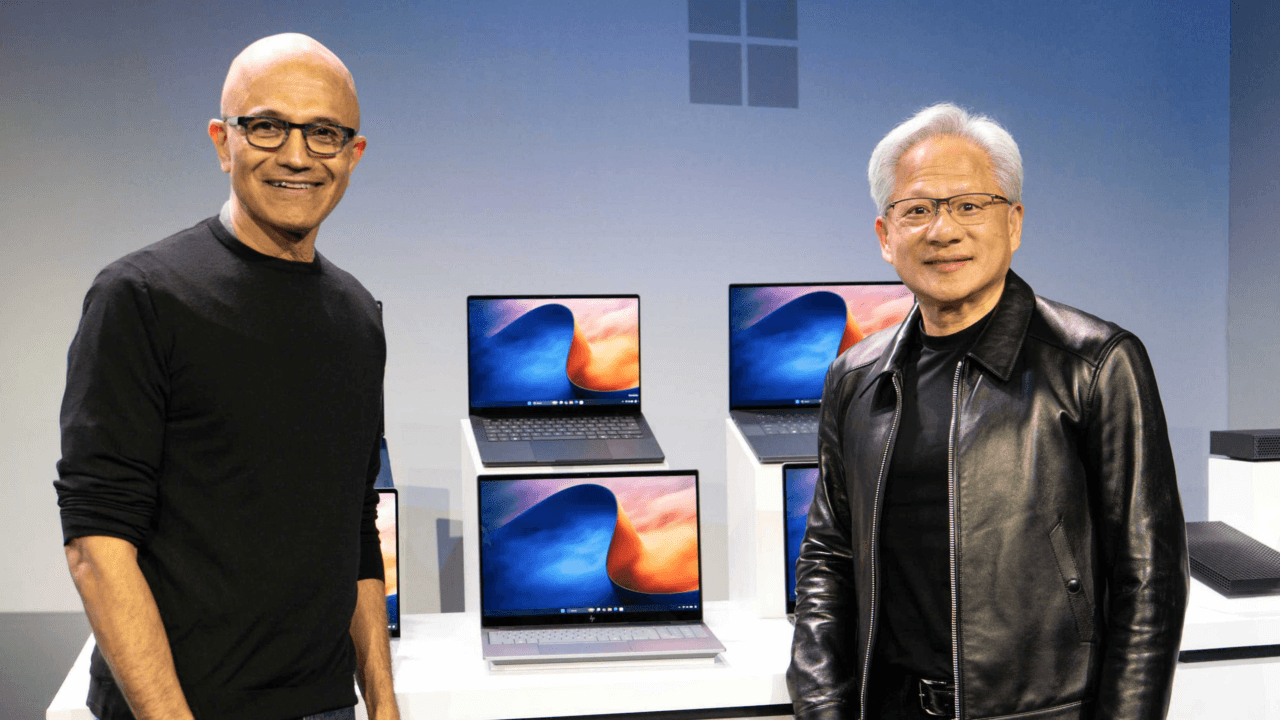
Commercial relationships span large cloud platforms, AI developers, manufacturing partners and software providers.
This series has examined Nvidia's ties with OpenAI, xAI, Microsoft, Meta, Amazon and Oracle. It has also explored the position of Apple's in-house silicon and Google's TPUs as examples of alternative approaches.
Those organisations are not one interchangeable customer category. Some operate clouds; some build AI models; some develop specialised processors; and many can play more than one role in a computing supply chain.
The implications of Nvidia's leadership change will therefore differ:
| Relationship | What business partners may watch |
|---|---|
| Major cloud operators | Product delivery, capacity, pricing and software support |
| AI model developers | Reliable access to compute and the terms of infrastructure finance |
| Manufacturers and system builders | Orders, component supply and production schedules |
| Enterprise and device partners | Product roadmaps, interoperability and long-term maintenance |
These are areas to monitor, not assertions that any named partner has changed its contract.
The financing question
Nvidia has publicly announced major infrastructure arrangements, including an intended investment of up to US$100 billion in OpenAI tied to a proposed 10-gigawatt programme. Companies also face substantial capital needs to build the power, data centres and networking required for AI.
Investors will ask whether any commitments change under new leadership. That is a reasonable question, but it would be misleading to state without evidence that Kress has cancelled specific agreements or that previously announced investment plans were fully funded and executed.
A proposed capital investment, a letter of intent and a recognised hardware sale are different financial events. Confusing them can create an exaggerated picture of both opportunity and risk.
The governance test
The circumstances surrounding Huang's departure have prompted scrutiny of corporate governance and security. Investigations and allegations must be distinguished from findings. The company's SEC filing establishes the personnel decisions; it does not itself resolve every allegation that has appeared in reporting.
The board faces decisions about succession, oversight and public communication. It also has to reassure employees and business partners without making promises that cannot be verified.
For long-term investors, governance is not separate from operations. Weak oversight can affect financing, legal exposure and confidence among customers. Strong controls, however, must be assessed by conduct and evidence rather than a change of job titles alone.
The Australian perspective
Nvidia's products reach Australian organisations through cloud providers, enterprise software, computers and technical equipment. Most businesses do not negotiate directly with the company's chief executive, but they can be affected if suppliers change prices, delivery schedules or product support.
The practical questions for an Australian customer remain familiar: will the service be available, is the technology suitable, can costs be controlled and are there workable alternatives?
Those decisions become more important when one supplier occupies such a central position in an expanding industry.
What this series has established
Nvidia's financial scale is unusual, but its business remains a collection of distinct relationships. It does not recognise all spending by every AI company as its own revenue. Its customers do not all purchase hardware directly. Announced infrastructure plans are not the same as completed projects. And competition may come from different systems, software methods and customer-designed chips.
Huang's departure puts a new leadership structure over those facts. The next phase will be measured in product deliveries, financial results, customer decisions and the board's choice of permanent CEO.
This concludes Nvidia: The Business and Its Partners. The wider story continues as Nvidia and the businesses around it disclose what happens next.
Reporting note: This analysis reflects public information available on 13 November 2026. It does not treat unproven allegations as established facts or forecast an outcome for Nvidia's leadership search.
Sources and background: Nvidia CEO transition statement, November 2026 · Nvidia Form 8-K on leadership changes · Nvidia FY2026 Form 10-K · Reuters on Colette Kress and Nvidia's leadership transition
About this article
This article provides analysis and interpretation of available information. Sources and supporting material, where applicable, are linked within the article.
Found an error? Contact the editorial desk. See our editorial standards and corrections policy.
From the Harbour Creative Blogs archive
Keep exploring this story
Related reporting, people and places from our published coverage. These are editorial connections, not a popularity ranking.
Company
Nvidia
The chipmaker at the centre of global AI investment: its revenue, products, leadership, customers and commercial relationships.
Person
Jensen Huang
Nvidia's co-founder and former chief executive, whose leadership and departure feature in our technology reporting.
Person
Colette Kress
Nvidia's longtime finance chief and interim CEO following Jensen Huang's November 2026 departure.