Part 3 · Analysis
Nvidia's Rivals May Not Need to Beat It. They Just Need It to Weaken.
Nvidia's biggest customers have spent years building alternatives to its chips. The real competition may be for freedom from dependence, not a single replacement.
 Harbour Creative Team
8 min read
Harbour Creative Team8 min read
The Battle for AI Power — Part Three
For years, the world's largest technology companies have been spending billions of dollars on Nvidia's processors.
Some have also been spending billions trying to need fewer of them.
That contradiction explains much of the competition now unfolding around artificial intelligence. Nvidia's customers helped finance its extraordinary rise, yet several are investing in technologies that could eventually reduce its influence.
Now, as an investigation involving chief executive Jensen Huang places the company under scrutiny, that long-running competition has taken on new significance.
The immediate question on Wall Street concerns Nvidia's leadership and financial outlook.
The more consequential question may be what its customers and competitors do next.
Nvidia does not have to collapse for the balance of power to change.
Selling to your future competitors
Consider Google.
The company has designed its own Tensor Processing Units, or TPUs, for years. These processors are built for machine-learning workloads and offered through Google Cloud.
Google still operates in an industry where Nvidia hardware plays an important role. But the existence of its own chips gives the company an alternative that many smaller AI businesses do not possess.
Amazon has followed a similar approach with Trainium, designed for AI training and inference within Amazon Web Services.
Microsoft has developed its Maia accelerator family.
These investments are not necessarily attempts to destroy Nvidia. They follow a more ordinary commercial calculation.
When computing becomes one of your largest expenses, controlling more of the technology behind it can improve efficiency, secure supply and strengthen negotiating power.
The uncomfortable part for Nvidia is that some of the companies purchasing its products are also among the organisations most capable of reducing their dependence on them.
And they have financial resources most semiconductor startups cannot match.
AMD's opportunity is different
Advanced Micro Devices occupies another position in this contest.
Unlike Google or Amazon, which can design hardware for their own cloud systems, AMD sells accelerators to outside customers. That makes it a more direct alternative to Nvidia.
Its opportunity is not simply to produce a faster chip. It must persuade major AI buyers that its hardware, software and networking solutions can support demanding workloads reliably and economically.
Nvidia's CUDA software ecosystem remains one of its strongest advantages. Developers have spent years building applications around it.
An alternative chip can look attractive on paper while requiring expensive changes to existing infrastructure.
But Nvidia's difficulties could change the conversation.
A company concerned about relying too heavily on one supplier may accept additional engineering work to establish a second source of computing power.
That would be a different sort of success for AMD.
Not the immediate defeat of Nvidia, but the gradual weakening of customers' dependence.
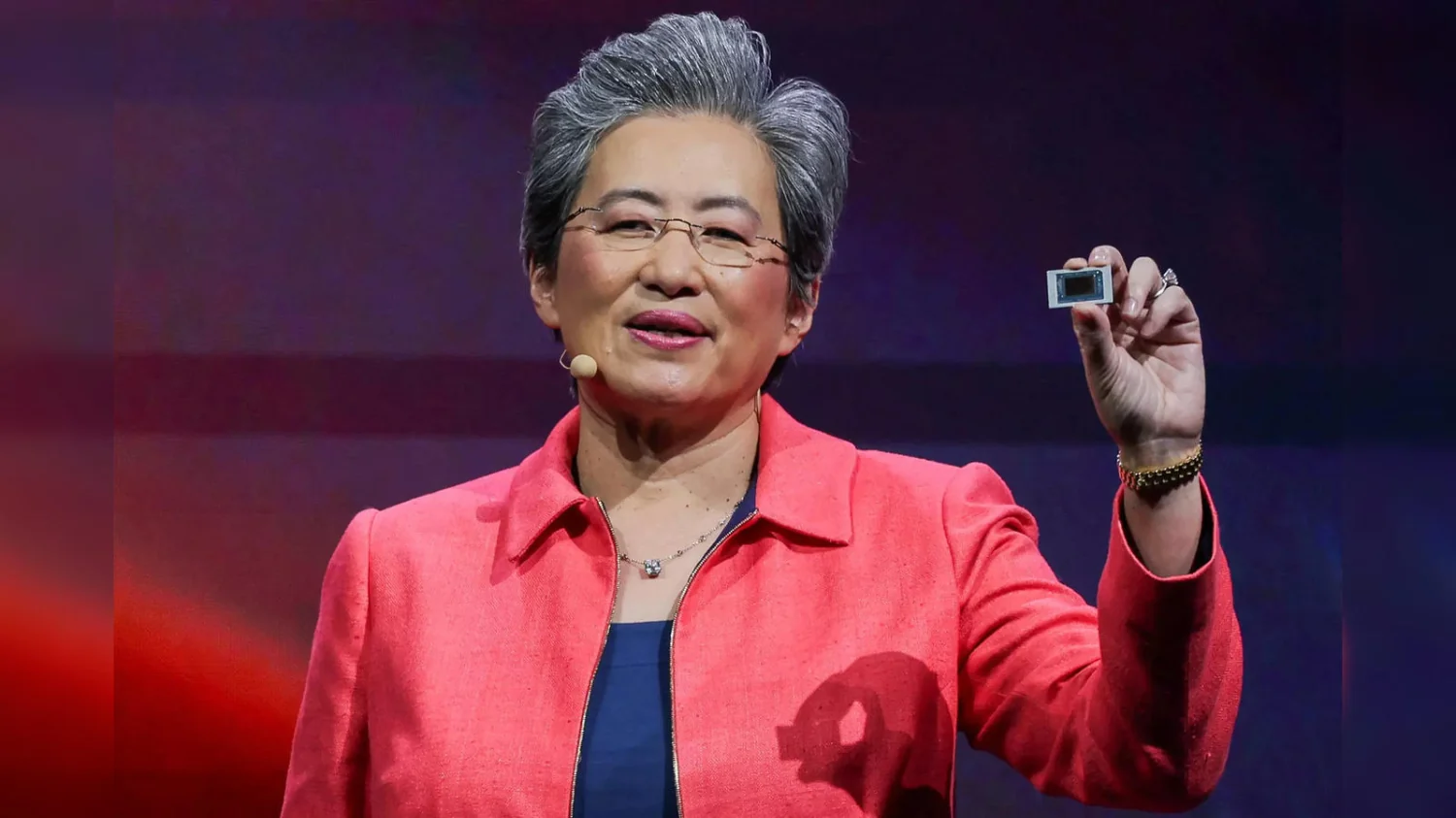
AMD competes for AI accelerator customers, but faces Nvidia's substantial software and infrastructure advantages.
Elon Musk is playing a longer game
Then there is Elon Musk.
For Tesla and xAI, AI computing is closely tied to the future of their businesses. Training models, developing autonomous systems and building robotics all demand substantial infrastructure.
Buying computing equipment from Nvidia has advantages. Its technology and software ecosystem are established, and deploying existing processors is considerably easier than building a new semiconductor factory.
But reliance on Nvidia also means depending on a supplier for an essential part of the production process.
Musk's proposed Terafab project represents an attempt to change that relationship.
In October 2026, he outlined plans for a semiconductor manufacturing venture involving Tesla and SpaceX, targeting volume production in the third quarter of 2028.
As Reuters reported, Musk explicitly warned that the timetable carried substantial uncertainty.
That caveat matters. Competitive semiconductor manufacturing requires specialised equipment, experienced engineers, reliable yields and complex supply chains. Announcing a factory is not the same as producing cutting-edge chips at scale.
Still, the direction of the plan is clear: Musk wants greater control over the infrastructure his businesses need.
There are at least two potential effects of stronger competition for Nvidia.
If alternative suppliers eventually push down accelerator prices, Tesla and xAI could purchase computing capacity more cheaply while they develop their own technology.
If the industry becomes more willing to finance alternative manufacturing, Terafab's ambitions may become more commercially relevant.
Neither outcome is guaranteed. And there is no evidence Musk caused, anticipated or had any involvement in Nvidia's current controversy.
What matters is the overlap between his long-term strategy and an industry increasingly interested in reducing dependence on one supplier.
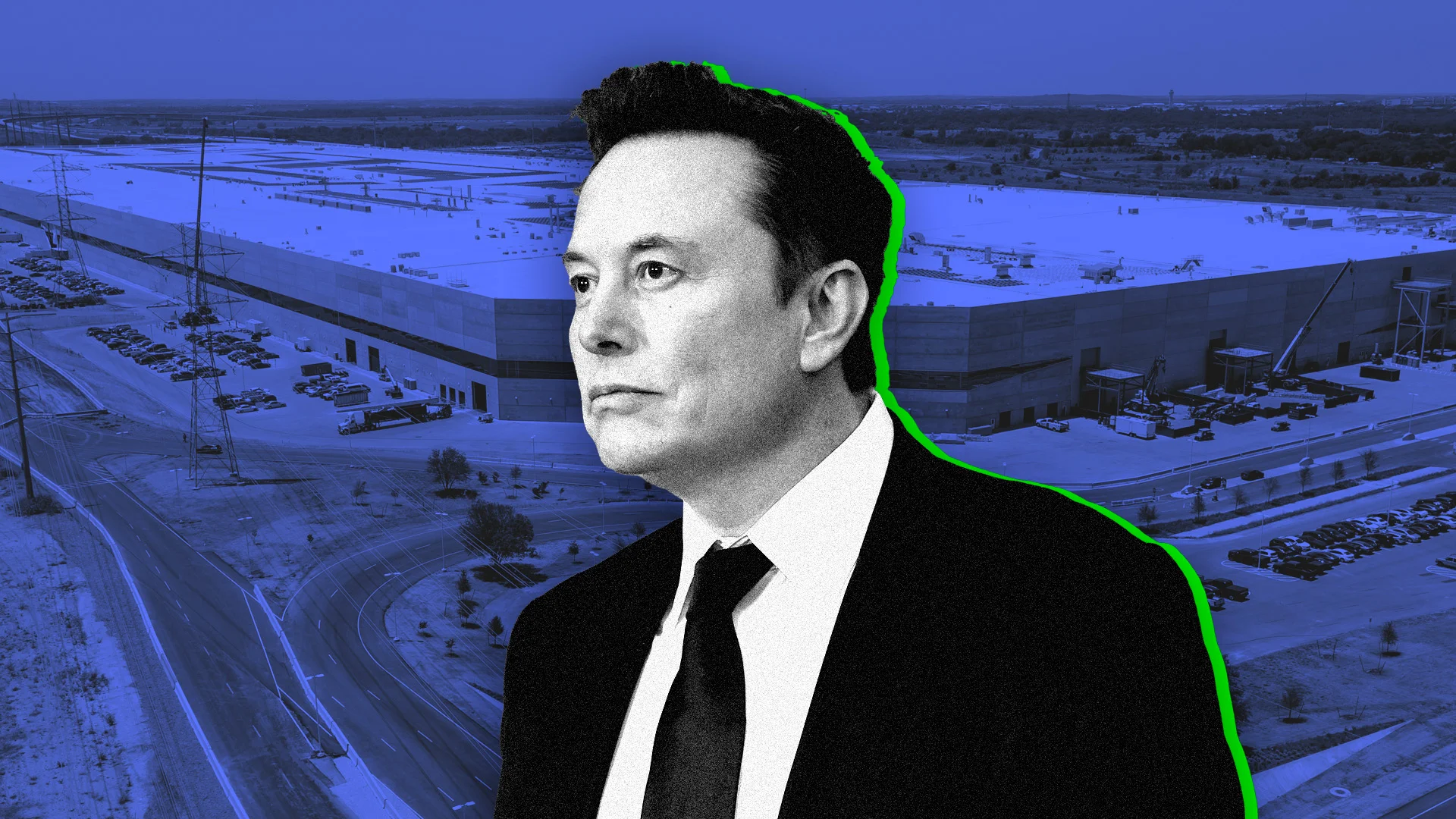
Terafab is a proposed manufacturing venture, not yet an operating alternative to Nvidia's established AI computing ecosystem.
A falling share price doesn't make chips cheaper
An important distinction can disappear when investors discuss Nvidia's market value.
The price of a share in Nvidia is not the price customers pay for Nvidia's processors.
A fall of hundreds of billions of dollars in market capitalisation does not remove the equivalent amount from Nvidia's operating cash. It does not automatically reduce demand, create new manufacturing capacity or force the company to offer discounts.
Chip prices depend on supply, manufacturing costs, customer demand, competing products and purchasing agreements.
Even a company facing reputational difficulties may retain pricing power if its customers have few practical alternatives.
That is why the deeper contest is not happening solely on the stock exchange.
It is happening in procurement teams, engineering departments, data centres and semiconductor factories.
The manufacturer behind many competitors
Another company deserves more attention in this debate: Taiwan Semiconductor Manufacturing Company, or TSMC.
Nvidia designs its processors but relies on manufacturing partners to make them. AMD also depends heavily on external fabrication.
And many businesses designing their own AI chips rely on the same advanced semiconductor manufacturing ecosystem.
This creates a striking possibility.
Several companies could succeed in reducing Nvidia's dominance without reducing the industry's dependence on a relatively small group of advanced chip manufacturers.
Power would not necessarily disappear. It could move elsewhere in the supply chain.
For TSMC, growing competition among AI chip designers might translate into additional demand for its manufacturing capacity.
But that opportunity has limits. Available production, packaging, geopolitical tensions and the immense cost of expanding factories can constrain the whole industry.
Designing a powerful chip is not the same as being able to manufacture millions of them.
That difference may be one of the defining realities of the AI economy.
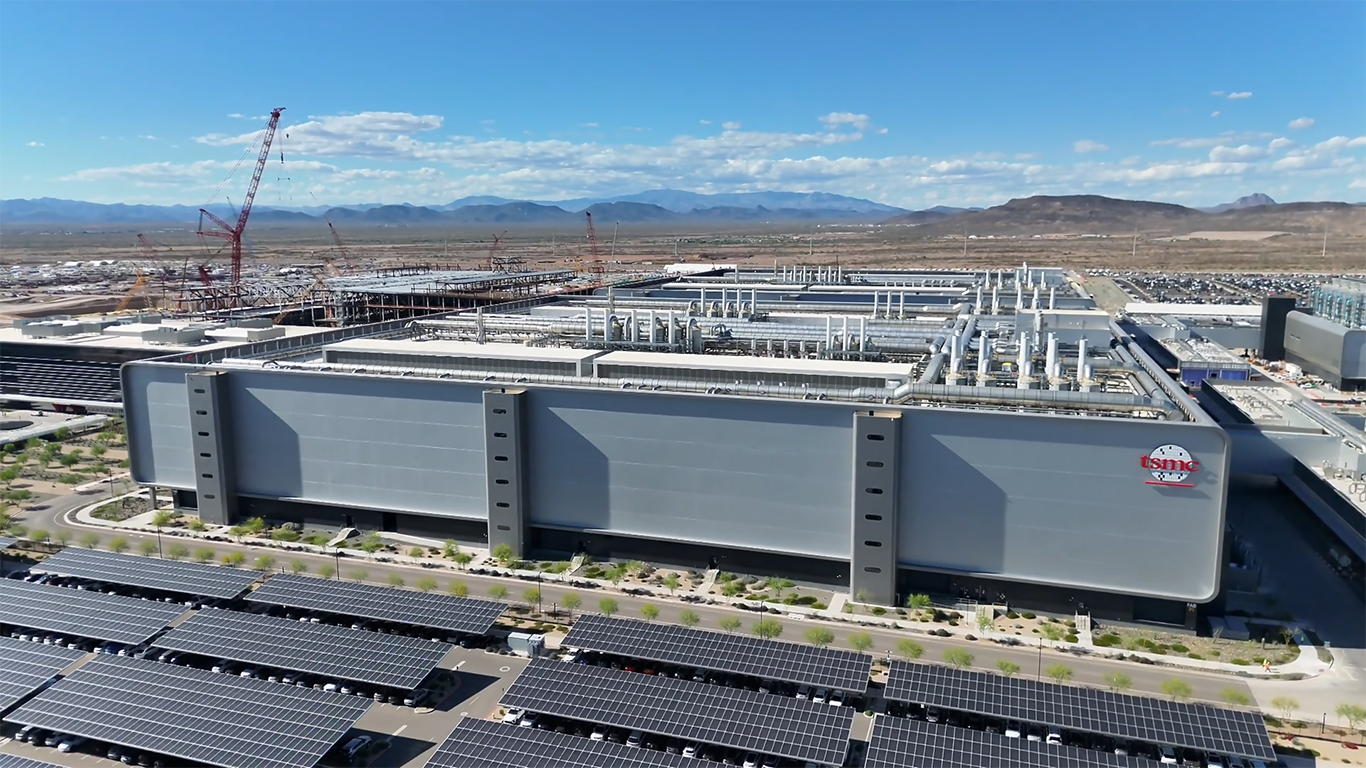
As more companies design their own AI processors, advanced manufacturing capacity remains a critical bottleneck.
We've seen a version of this before
Technology history offers a useful parallel.
For decades, Intel's processors and Microsoft's operating systems occupied influential positions in personal computing.
Then Apple began transitioning Mac computers away from Intel processors.
The move was not simply a contest over chip performance. Apple wanted greater control over power efficiency, hardware design and the relationship between its devices and software.
In 2020, it announced the Mac transition to Apple silicon, using its own processors across successive product generations.
Intel did not need to disappear for Apple's independence to become meaningful.
The lesson is not that Nvidia will follow Intel's exact trajectory. The markets and technological conditions are substantially different.
It is that customers sometimes become capable of building alternatives to their most important suppliers.
When those alternatives become practical, the commercial relationship changes.
Could anyone acquire Nvidia?
A sharp decline in a company's share price naturally attracts speculation about acquisitions.
In Nvidia's case, the obstacles remain enormous.
It is still valued in the trillions of dollars. Any attempt to acquire such a strategically important semiconductor company would require extraordinary financial resources and would likely face intensive regulatory and national security examination.
For Musk or another technology leader, owning Nvidia would provide access to processor designs, software, networking technology, intellectual property and relationships with major AI customers.
That makes the idea interesting as a hypothetical scenario, not an announced transaction.
There is also a commercial complication. Some of Nvidia's customers might resist depending on a supplier controlled by a company competing with them.
An acquisition intended to consolidate power could therefore weaken part of the business being purchased.
There is no established public acquisition proposal behind this speculation.
The more concrete development to watch is diversification.
The biggest change may happen without a collapse
The investigation into Jensen Huang remains unresolved. Nvidia's board has expressed confidence in him and said it has no reason to believe company secrets or national security were compromised.
The company's technology advantages have not vanished because investors have become concerned.
But the wider semiconductor industry was changing long before this controversy.
Google was building TPUs. Amazon was developing Trainium. AMD was competing for accelerator customers. Musk was discussing large-scale semiconductor manufacturing.
Their motivations and technical challenges differ.
What they share is a reason to control more of the computing they need.
Nvidia could remain an exceptionally successful company while losing some of the leverage that made its customers dependent on it.
The industry might not witness the destruction of a dominant supplier.
It might witness the redistribution of power among companies that once relied on that supplier.
The most important beneficiary may not be whoever replaces Nvidia. It may be the customer that finally gains the freedom to choose.
This is Part Three of The Battle for AI Power, an ongoing Harbour Creative Blogs series about the companies, governments and individuals shaping AI computing.
Reporting and sources
About this article
This article provides analysis and interpretation of available information. Sources and supporting material, where applicable, are linked within the article.
Found an error? Contact the editorial desk. See our editorial standards and corrections policy.
From the Harbour Creative Blogs archive
Keep exploring this story
Related reporting, people and places from our published coverage. These are editorial connections, not a popularity ranking.
Company
Nvidia
The chipmaker at the centre of global AI investment: its revenue, products, leadership, customers and commercial relationships.
Company
Google's search, cloud computing, AI models and its alternative to Nvidia processors.
Person
Jensen Huang
Nvidia's co-founder and former chief executive, whose leadership and departure feature in our technology reporting.