Part 4 · Analysis
Google Doesn't Need to Win Your Attention. It Already Has Your Life.
Elon Musk thinks Google could win the Western AI race. Its advantage may have less to do with chatbot benchmarks than with the services people have relied on for decades.
 Harbour Creative Team
11 min read
Harbour Creative Team11 min read
The Battle for AI Power — Part Four
Imagine opening your email tomorrow morning.
There is a flight confirmation from an airline. A bill from your electricity provider. A message from someone you haven't spoken to in years. Three applications for a job you advertised. A receipt for something you purchased last night.
Later, you open YouTube. You watch a documentary about China, a review of a car you might buy, and a video about a medical question you would rather not discuss with anyone.
You check Maps for directions. You search for apartments. You save photographs. You update a spreadsheet. You write something in a document and leave it unfinished.
None of this seems particularly remarkable. For millions of people, it is simply another day.
But consider where much of that information lives.
Google may provide the email, the search engine, the browser, the video platform, the maps, the photo library and the document storage.
For years, we have discussed these as separate products.
Artificial intelligence creates the possibility of something quite different: an assistant capable, with permission, of using information across those products to understand the circumstances of an individual person's life.
That possibility changes the competition over AI.
And Elon Musk appears to recognise Google's position.
The prediction from an unlikely competitor
On 19 March 2026, Musk made an unusually direct prediction on X:
Google will win the AI race in the West, China on Earth and SpaceX in space.
The statement was notable because Musk has significant interests in artificial intelligence through xAI, Tesla and his wider technology businesses.
It was not a detailed explanation of Google's competitive advantages. Nor should it be treated as proof that Google will eventually win.
But it raises an interesting question.
Why would someone investing heavily in AI publicly describe another company as a potential winner?
One explanation worth examining is that Google's greatest advantage may not be Gemini itself.
It may be everything surrounding Gemini.
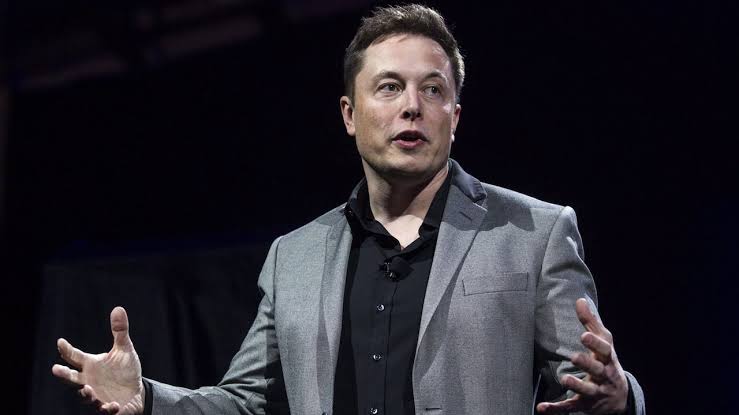
Musk's March 2026 prediction raised a question about distribution, infrastructure and Google's existing position in everyday digital life.
The company that was already there
Consider the historical sequence.
Google Search emerged in 1998. Gmail arrived in 2004. Google acquired YouTube in 2006.
Android became a major smartphone platform. Chrome became a widely used browser. Google Maps developed into everyday navigation infrastructure.
Then came Photos, Drive, Docs, Calendar, Keep, Google Cloud and an expanding collection of services used across personal and professional life.
These products were not all created as components of one AI strategy. They were developed or acquired for different business reasons over many years.
But the result is extraordinary.
A company that once helped people find information on the internet now provides many of the places where people create, store and organise information about themselves.
A search engine can hold a record of what someone asks. An email service can hold correspondence. A photo library can preserve parts of their past. A calendar can describe future commitments. A video platform can record viewing preferences. A document platform can contain projects, budgets and unfinished ideas.
Each source tells a different story.
The possibility of bringing them together creates something more personal than another search box.
It creates a technical foundation for a contextual assistant.
That doesn't mean Google has unrestricted access to every person's information or that Gemini automatically uses every product. Permissions, settings, availability and privacy rules matter.
But for people who choose to connect these services, the underlying information may already be there.
For a competing AI developer, recreating that position would be an enormous undertaking.
January 2026: the announcement that deserved more attention
On 14 January, Google introduced a beta feature called Personal Intelligence.
Its premise was straightforward: allow eligible users to connect Google services so Gemini could answer questions with context from their own information.
Rather than asking an AI assistant for general advice about travelling, users could let it consider previous trips, photographs or booking information.
Rather than searching manually for vehicle details, someone could ask Gemini to locate relevant information in connected emails or pictures.
Google described two strengths: finding specific details and reasoning across different sources.
On 22 January, the company brought Personal Intelligence into AI Mode in Search for eligible subscribers who opted in.
That second development deserves particular attention.
Search has traditionally helped people find information outside themselves. Personal Intelligence allows a search experience to incorporate parts of a person's own history.
A restaurant search can already offer recommendations using location, reviews and public information.
A personalised assistant could also draw on relevant preferences or previous activity, when connected information is available and the user has consented.
The shift sounds small. It isn't.
The search engine begins moving from answering a general question to answering it in the context of a particular life.
Google publicly announced the feature, described its limits and presented it as a product improvement. It was not a covert roll-out.
Its strategic implications, however, reach beyond the usual contest over which model scores highest on a benchmark.
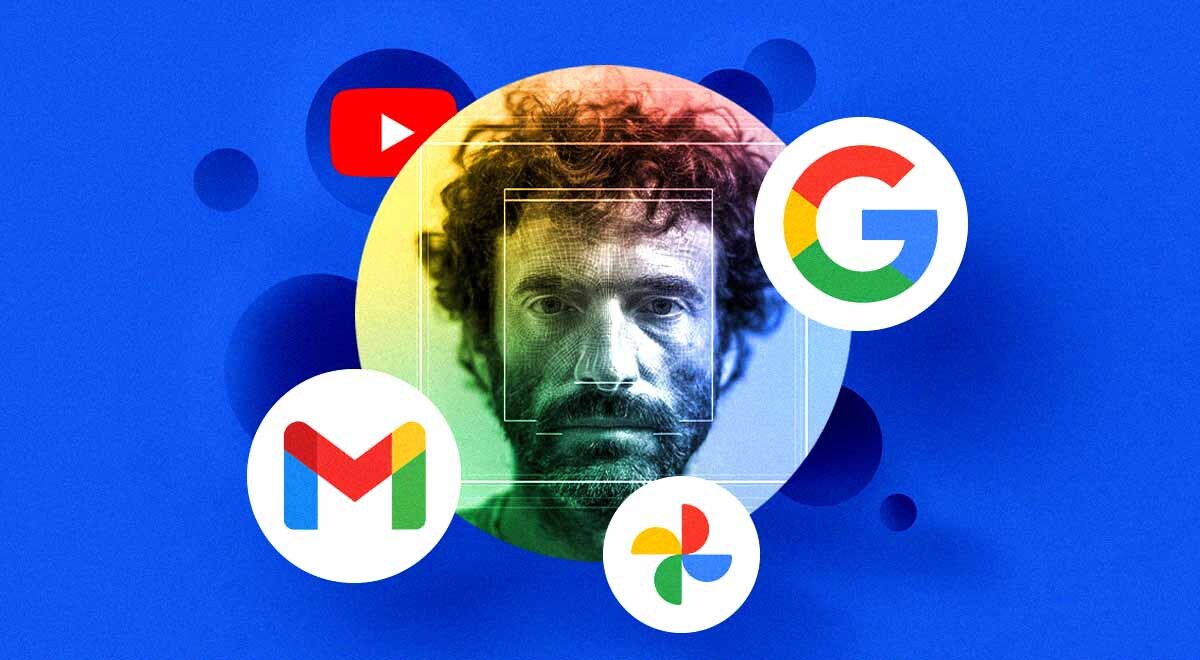
Google's Personal Intelligence is an optional feature intended to draw on connected personal information for more relevant answers. Availability and capabilities vary.
The difference between knowing the world and knowing you
Suppose two AI assistants have comparable reasoning capabilities.
The first has access to public information and whatever details you supply in a conversation.
The second, with permission, can use relevant calendar entries, emails, travel records, documents and preferences.
Ask both to plan a holiday.
The first may produce an excellent itinerary.
The second might take account of dates already in the calendar, identify existing reservations and adapt recommendations to the traveller's habits.
The second assistant does not necessarily have greater intelligence.
It has more relevant context.
And context can be difficult for a competitor to reproduce.
A company can build another language model. It can purchase compute, hire researchers and launch an application.
Persuading people to reconnect years of information and rebuild their routines in a new system is a different problem.
This does not mean the data is impossible to export. Google provides data portability tools, and competing assistants can integrate with external services where permitted.
The practical difficulty is restoring the relationships between years of records, applications, settings and habits.
That is one way dependence can emerge: not because a person is prohibited from leaving, but because staying is simpler.
The important distinction in the privacy terms
Google says Personal Intelligence is optional. Users choose which eligible services to connect and can manage or turn off their connections.
It also says it does not train Gemini's models directly on entire Gmail inboxes or Google Photos libraries for this feature.
These assurances matter.
But the details of how connected data is processed, used in responses, retained and used to improve models still deserve careful reading. Google's documentation distinguishes between underlying personal content and some information produced during interactions, such as summaries or inferences, subject to relevant settings.
This does not mean Google automatically reads every user's private emails to train its AI, or that all users have activated personalised access.
It means that consent and data-use controls are more complicated than a single yes-or-no question.
Someone may understand what it means to let an assistant find a booking in Gmail.
They may be less familiar with distinctions between a stored message, an extracted detail, an AI-generated summary and information saved from an interaction.
The categories can be treated differently.
As personalisation becomes more useful, users have more reason to examine exactly which features they enabled and whether the benefits justify those permissions.
The financial advantage underneath
Google is not entering the AI market as a startup searching for a business model.
Its parent, Alphabet, reported approximately $402.8 billion in revenue for 2025, including nearly $294.7 billion in Google advertising revenue.
Its 2025 annual filing also reported $164.7 billion of operating cash flow and $91.4 billion in capital expenditure, much of it associated with technical infrastructure.
The scale matters.
Google already operates large advertising, cloud and consumer-platform businesses. It has existing distribution, customer relationships, data centres and a long history of developing specialist computing infrastructure.
Its Tensor Processing Units also provide an alternative to relying solely on Nvidia accelerators for some AI workloads.
The company participates in several layers of the AI economy: processors, models, infrastructure, distribution and consumer services.
But it also faces an uncomfortable problem.
AI may disrupt some of the businesses that financed Google's rise.
If more people receive answers directly from AI systems rather than visiting websites or clicking conventional search results, the economics of online advertising could change.
Google's established position is an advantage, but transforming its most profitable products is not risk-free.
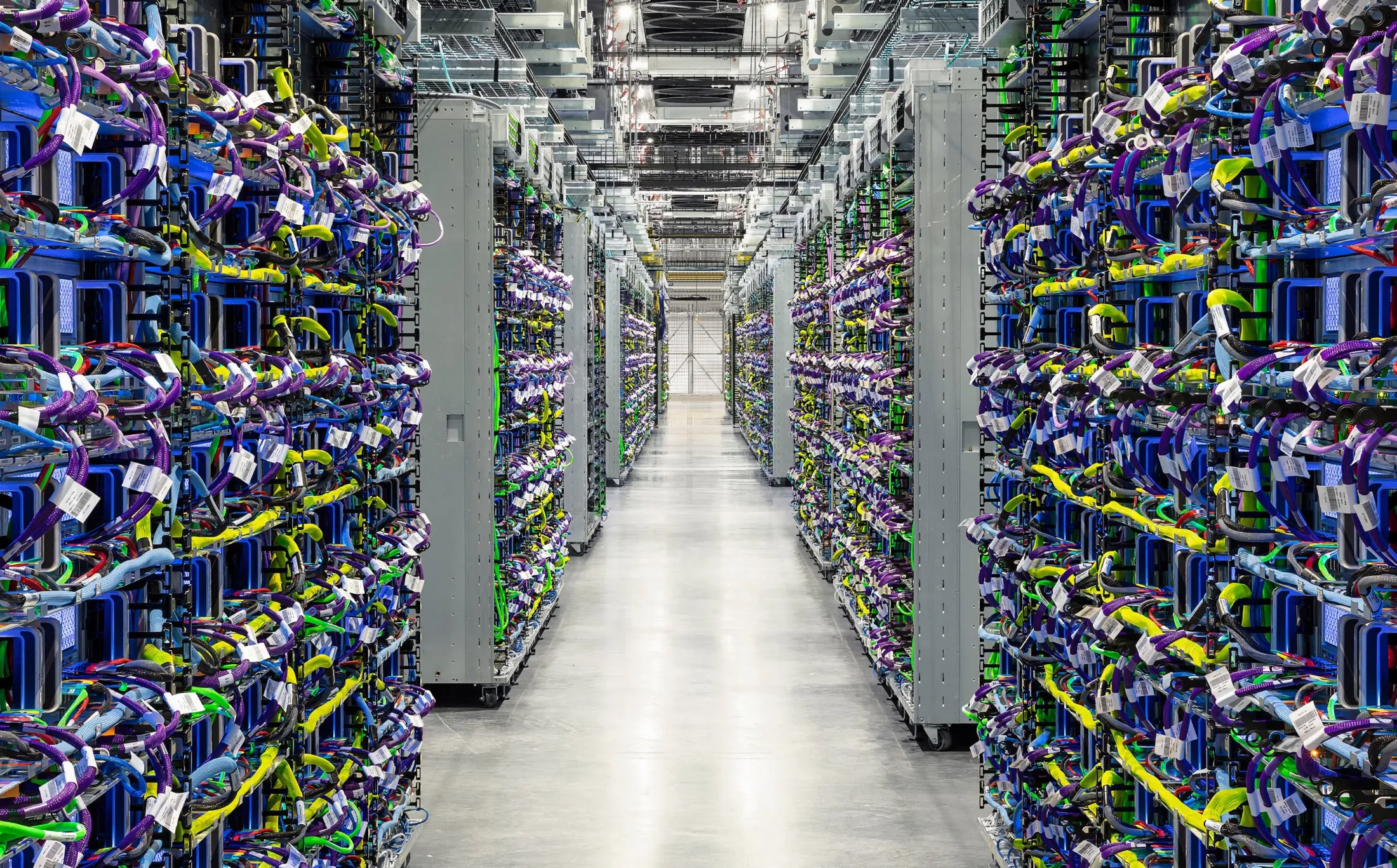
Google's AI ambitions are backed by its established cloud business, custom processors and substantial infrastructure investment.
The history we almost forgot
This is not the first time the route through which people encounter technology has mattered as much as the technology itself.
Microsoft's Windows became central to personal computing partly because software developers, computer makers and users built their work around it.
The browser competition of the 1990s showed how control over an established platform could influence which new products reached consumers.
Apple presents a different example. Its control over devices, operating systems and services lets it integrate new features across its hardware ecosystem. Its move from Intel processors to Apple silicon demonstrated the advantages of taking control of a critical layer of technology.
These are not identical cases. Google, Microsoft and Apple operate under different commercial and regulatory conditions.
But they share a recurring theme.
Owning a technology is valuable.
Controlling the routes through which people use it can be just as valuable.
That is why Google's AI position cannot be judged by model rankings alone.
Regulators have already noticed the distribution problem
In August 2024, a US federal court found that Google had unlawfully maintained monopolies in general search services and general search text advertising.
In September 2025, the court ordered remedies intended to improve competition in search. The US Department of Justice described restrictions on certain exclusive distribution agreements involving Google Search, Chrome, Google Assistant and Gemini.
Those findings involve specific markets and conduct. They do not establish that Gemini's integrations are unlawful or that every connection between Google services violates competition law.
They do show that distribution power is not simply a theory invented by AI commentators.
It has been central to legal disputes involving Google.
As assistants become more deeply embedded in browsers, devices and platforms, the relationship between established distribution and new AI services will remain important to regulators.
What happens when an assistant becomes too convenient to leave?
Imagine a future in which an assistant reliably finds documents, coordinates meetings, organises travel, recalls preferences and helps complete everyday work.
That could save people considerable time.
But suppose the assistant gets more useful as they connect additional services.
More documents supply context. More relevant history improves recommendations. More connected accounts allow the assistant to complete more tasks.
Eventually, the person is no longer choosing only which model gives the best answer.
They are considering whether to leave a system that already knows the structure of their digital routines.
Switching could mean transferring information, reconnecting applications and rebuilding preferences.
The potential benefit is significant. So is the possibility of dependence.
The concern is not that one company necessarily intends to control people's lives.
It is that convenience can gradually narrow the alternatives people seriously consider.
Why Musk's prediction matters
Musk's March statement should not be mistaken for an independent forecast of the eventual winner.
He is a competitor with his own commercial interests, and AI leadership depends on many uncertain technical, financial and regulatory factors.
OpenAI, Anthropic, Microsoft, Meta, Amazon, Chinese AI developers and smaller companies all have different advantages.
Google's scale does not guarantee Gemini will outperform rivals, win consumer trust or become the leading personal assistant.
People can choose competing services, control their settings and move between platforms.
Yet Musk's prediction points toward a factor that deserves more attention.
The AI race may be shaped not only by whichever laboratory develops the next impressive model, but by the companies already occupying important positions in people's daily lives.
For Nvidia, the foundation of extraordinary commercial power has been computing hardware and its surrounding ecosystem.
For Google, the opportunity is different.
It already provides many of the services through which people experience the digital world.
Now it is developing intelligence that can, with permission, work across them.
The question nobody asked when signing up
Most people did not create a Gmail account because they wanted Google to become their future AI assistant.
They did not upload holiday photographs to build a personalised intelligence system.
They did not watch videos, save contacts or write documents as a deliberate way to help one company compete in AI.
They simply used useful products.
Over time, those ordinary decisions created extensive digital histories.
Today, parts of those histories can become context for AI-generated answers when users choose to connect them.
The result could be extraordinarily useful.
It could also reshape the relationship between consumers and the companies providing their digital infrastructure.
For years, we have asked which company will build the smartest machine.
Perhaps we should also ask which company has already built the closest relationship with the person sitting in front of it.
The advantage may not be knowing everything about the world. It may be becoming the easiest system through which someone manages their own world.
This is Part Four of The Battle for AI Power, a Harbour Creative Blogs series examining technology, commercial incentives and the institutions shaping artificial intelligence.
Reporting and sources
- Elon Musk's statement on X, 19 March 2026
- Google — Gemini introduces Personal Intelligence, 14 January 2026
- Google — Personal Intelligence in AI Mode, 22 January 2026
- Google — Personal Intelligence overview and controls
- Alphabet — 2025 Form 10-K
- US Department of Justice — Search remedies announcement, September 2025
About this article
This article provides analysis and interpretation of available information. Sources and supporting material, where applicable, are linked within the article.
Found an error? Contact the editorial desk. See our editorial standards and corrections policy.
From the Harbour Creative Blogs archive
Keep exploring this story
Related reporting, people and places from our published coverage. These are editorial connections, not a popularity ranking.
Company
Nvidia
The chipmaker at the centre of global AI investment: its revenue, products, leadership, customers and commercial relationships.
Company
Google's search, cloud computing, AI models and its alternative to Nvidia processors.
Person
Elon Musk
The entrepreneur associated with xAI and its construction of large-scale AI computing infrastructure.