Tasmania’s AI Data Centre Deal Raises a Question: Who Decides Where the Money Goes?
Data centre operators would pay into community benefit funds but administer the funds themselves. Communities want to know how independent that process will be.
 Harbour Creative Team
3 min read
Harbour Creative Team3 min read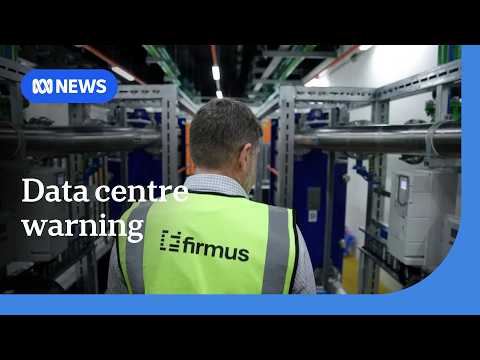
Tasmania wants companies building large AI data centres to contribute money to the communities hosting them. A new government statement sets the rate at $3,000 for every megawatt of contracted power each year. The more difficult question is what happens after that money is collected.
Under the proposal released on Friday, 13 November, each data centre developer would administer its own community benefit fund. The government is promising transparency and local involvement, but critics are questioning whether organisations responsible for major industrial developments should also control the process for distributing local benefits.
How the proposed scheme works
A company with 100 megawatts of contracted electricity would be expected to contribute $300,000 annually once its facility was operating. The formula applies to contracted capacity, not necessarily the precise amount of electricity consumed every hour.
For Firmus, which has outlined a 104-megawatt project at St Leonards, the indicated contribution would be $312,000 a year. Additional proposed facilities could increase the total, although planned capacity is not the same as operating capacity.
The Premier's earlier comments had suggested a single locally governed fund. Friday's document introduced a different structure in which individual developers would administer their own schemes.
That distinction matters because local residents and developers may have different priorities. A technology company might favour training programmes and local industry projects; residents may want independent environmental monitoring, better public services or infrastructure that serves them well beyond a data centre's working life.
What $3,000 per megawatt cannot answer
A community fund can support worthwhile work. It cannot by itself resolve the larger questions of electricity demand, water use, land planning or the opportunity cost of allocating capacity to one industry rather than another.
In Tasmania, energy supply is especially sensitive. Large computing installations need reliable electricity, while the state is also managing household demand and industrial development. The government says data-centre proponents must be connected to new renewable supply arrangements.
Residents will need more detail about how those arrangements work, who pays for required infrastructure and how compliance is measured.
Trust requires more than published accounts
The proposed funds would be subject to transparent governance and public reporting. But transparency is strongest when people can challenge a decision and see exactly how money has been allocated.
Independent local representation, published eligibility criteria, conflict-of-interest controls and periodic assessment could all affect whether the scheme earns public confidence. Those are questions to put to government and operators as the proposal moves towards implementation.
The attached ABC footage is earlier reporting on the data-centre debate. It shows why public accountability had become an issue before Friday's announcement.
Tasmania's decision could influence how other Australian states manage AI infrastructure. The test will be whether communities gain a meaningful role in decisions, or merely receive a new grant programme after the main industrial choices have been made.
Further reading: Original reporting.
About this article
This article provides analysis and interpretation of available information. Sources and supporting material, where applicable, are linked within the article.
Found an error? Contact the editorial desk. See our editorial standards and corrections policy.
From the Harbour Creative Blogs archive
Keep exploring this story
Related reporting, people and places from our published coverage. These are editorial connections, not a popularity ranking.
Subject
AI infrastructure
The data centres, chips, electricity and investment behind advanced artificial intelligence.
Local coverage
Tasmania
The state's energy, environment, fisheries and computing infrastructure debates.
Company
Firmus
The Australian data-centre business connected to Tasmania's AI infrastructure debate.