A New Field Test Could Change How Scientists Protect Tasmanian Devils
Researchers have developed a portable oral-swab test for devil facial tumour disease, offering the prospect of earlier detection without waiting days for a laboratory result.
 Harbour Creative Team
3 min read
Harbour Creative Team3 min read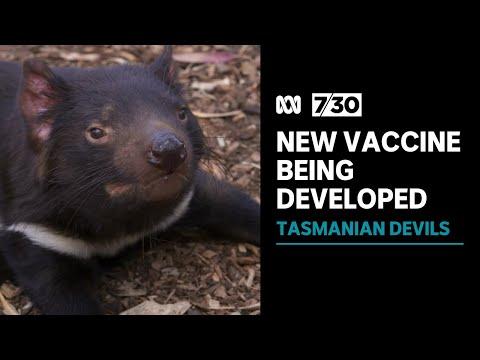
Tasmanian devils have been living with a disease unlike most cancers encountered in humans. Devil facial tumour disease can spread between animals through direct contact, including biting, and its impact on wild populations has been devastating.
Researchers in Tasmania have now developed a portable test intended to detect the disease from oral swabs. It offers the possibility of getting results in the field, without waiting for specimens to return from a laboratory.
Why early detection is so difficult
The disease causes tumours around the face and mouth, which can interfere with feeding. By the time a tumour is visible, an affected devil may already be seriously ill.
Monitoring has often relied on physical observations and laboratory analysis. This creates a delay between capturing or examining an animal and knowing whether disease has been detected.
In parts of Tasmania, populations have fallen by around 80 per cent since the disease spread. Those losses have changed conservation priorities, making reliable surveillance an essential part of protecting remaining animals.
What the new test changes
The team at the University of Tasmania's Menzies Institute for Medical Research has developed a field test based on samples collected by oral swab. The researchers hope it will identify infections before the most obvious symptoms appear.
Faster results could help scientists follow changes across populations, identify areas of concern and understand when different groups of devils need protection.
The important word is could. A test is not a cure. Researchers must continue to evaluate how accurately it detects disease, including the risk of false results and whether it works in the varied conditions of wild monitoring.
Why a vaccine is still a separate challenge
Some research teams are also investigating methods of vaccination. A good diagnostic tool may help assess the effectiveness of future prevention strategies, but it does not mean an approved vaccine is already available for widespread use in wild animals.
Cancer cells that spread between individuals create unusual biological challenges. Protecting a population may require a combination of monitoring, management and new treatments rather than a single technical solution.
The broader lesson
Many conservation projects depend on knowing what is happening to animals that are difficult to observe. Faster field diagnostics can make research more responsive and reduce time lost between collecting data and acting on it.
The embedded ABC report describes earlier efforts to develop a devil facial-tumour vaccine. It provides background to the scientific problem, but is not footage of the new portable test.
For a species that has lost so much of its population, earlier and more reliable information could become a valuable part of conservation work. Its real value will be measured as the testing is used and independently assessed.
Further reading: Supporting report.
About this article
This article provides analysis and interpretation of available information. Sources and supporting material, where applicable, are linked within the article.
Found an error? Contact the editorial desk. See our editorial standards and corrections policy.
From the Harbour Creative Blogs archive
Keep exploring this story
Related reporting, people and places from our published coverage. These are editorial connections, not a popularity ranking.
Local coverage
Tasmania
The state's energy, environment, fisheries and computing infrastructure debates.