Part 8 · Analysis
Nvidia's Business with Amazon and Oracle
AWS and Oracle are both expanding Nvidia-powered cloud infrastructure, but their product strategies, investment commitments and customers differ. The relationship is more complex than a simple order for chips.
 Harbour Creative Team
5 min read
Harbour Creative Team5 min read
Part eight of Nvidia: The Business and Its Partners.
Two of Nvidia's most important public cloud relationships are with Amazon Web Services and Oracle Cloud Infrastructure. Both operators use Nvidia technology to supply computing capacity to their customers, but they approach the market from different positions.
AWS runs an enormous and broad cloud business serving organisations of many sizes. Oracle has built its cloud infrastructure around a combination of enterprise computing, databases and increasingly large AI superclusters. Both see demand for more powerful AI computing as an opportunity for growth.
For Nvidia, they are routes to customers who might never purchase a GPU themselves.
Amazon: Nvidia as part of a larger cloud portfolio
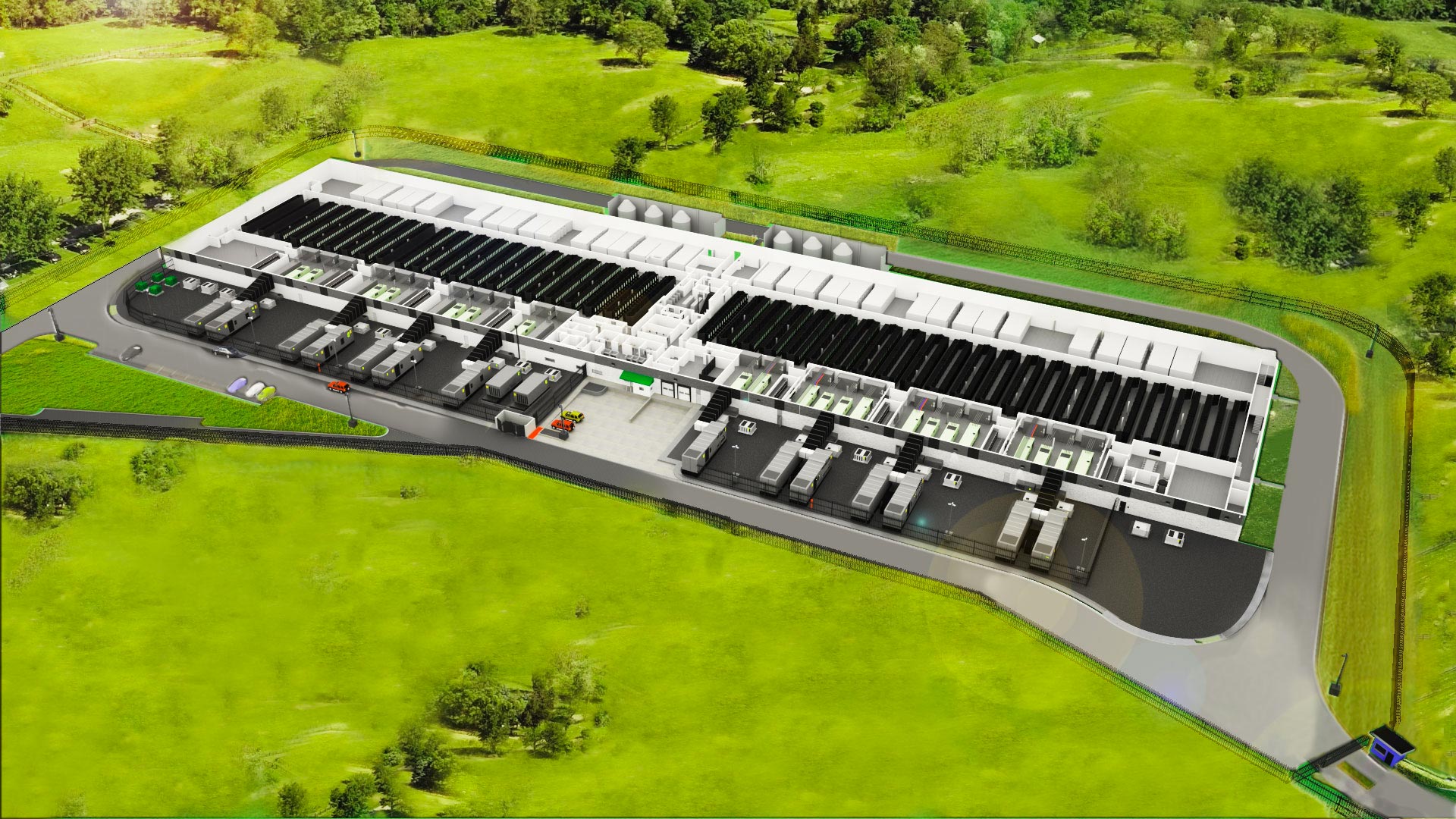
AWS provides GPU-based computing as a service, alongside a wide range of other cloud products.
AWS and Nvidia have worked together since the early era of cloud GPU computing. AWS offers Nvidia-powered instances for AI, research and high-performance workloads, including systems built around Nvidia's Blackwell hardware.
In August 2026, the companies announced plans for AWS to deploy two million additional Nvidia GPUs, alongside further collaboration on CPUs, networking and AI development tools.
That is a meaningful commitment of intent. It is not evidence that all two million GPUs were delivered by the announcement date or that Nvidia had already recognised revenue from the entire plan.
Cloud customers purchase virtual or dedicated computing capacity from AWS. The provider must decide how much hardware to procure, which regions to make it available in and how to price access so that assets are used profitably.
AWS also designs its own chips, including Trainium accelerators. Its work with Nvidia therefore coexists with an effort to diversify hardware supply and control the cost of workloads suited to its in-house systems.
Oracle: building specialised AI superclusters
Oracle's supercluster strategy combines specialised networking, processors and the infrastructure needed for large model workloads.
Oracle's recent announcements place more emphasis on extremely large installations for model training and inference. On 27 October 2026, Nvidia and Oracle announced plans to expand OCI Superclusters using Vera Rubin NVL72 systems to multi-gigawatt scale.
The companies also announced general availability of certain Vera Rubin and Vera CPU offerings on OCI and plans for additional configurations. Readers should distinguish offerings described as available from future capacity targets and product introductions.
Oracle's engineering challenge is not limited to installing Nvidia chips. It must deliver reliable networking, cooling, power, data transfer and support across an infrastructure footprint large enough to serve demanding customers.
Its public customer examples include OpenAI and other developers. Here again, the model developer using a cloud service need not be the same legal entity purchasing Nvidia systems.
The difference between GPU supply and cloud sales
The cloud operator takes on risks and responsibilities that are not identical to Nvidia's. It owns or controls facilities, manages customers, provides service guarantees and has to find profitable users for its hardware over time.
Nvidia can generate revenue from supplying hardware and related technology, but the timing of Nvidia's sales and the cloud provider's revenue from rented capacity may be very different.
For a cloud operator, a GPU that sits idle is an expensive asset. For an AI customer, a shortage of capacity can delay product development. For Nvidia, demand from large operators may create strong order books but also concentration and sensitivity to their spending plans.
A comparison of the public announcements
| Partnership | Published 2026 announcement | Important qualification |
|---|---|---|
| AWS and Nvidia | Plan for two million additional Nvidia GPUs | Delivery and recognised sales will occur over time |
| Oracle and Nvidia | Multi-gigawatt Vera Rubin expansion plan | Some services available; wider buildout remains planned |
Sources: AWS–Nvidia announcement on 26 August 2026 and Oracle–Nvidia announcement on 27 October 2026.
These numbers measure different things. A GPU count and electrical capacity are not comparable measures of completed installations, and neither should be converted into revenue without disclosed pricing and contract terms.
Why each cloud operator is a partial competitor
Both companies have incentives to reduce cost and negotiate supply. AWS develops in-house accelerators; Oracle may evaluate infrastructure economics across different products and service models. Neither relationship is guaranteed to remain unchanged simply because it has been announced in a press release.
At the same time, Nvidia's CUDA ecosystem, hardware roadmap and support for large workloads can make its platforms difficult to replace quickly.
This is the tension at the heart of the business: Nvidia's largest partners can also have reasons to build alternatives.
What matters to Australian organisations
An Australian business deciding between AWS and OCI is buying a cloud service, not generally contracting directly with Nvidia. The relevant costs include hourly compute pricing, network movement, data security, performance and the support required for its workloads.
The announcements help explain future capacity plans, but an actual buying decision should use current regional product availability and contract terms.
The next part turns to two companies with different strategies for reducing reliance on outside suppliers: Apple and Google.
Reporting note: The figures above are announced plans and capacity targets, not independent counts of delivered systems. No undisclosed customer revenue is inferred.
Sources and background: AWS–Nvidia expansion, August 2026 · Nvidia and Oracle, October 2026 · AWS Nvidia solutions overview · Nvidia FY2026 Form 10-K
About this article
This article provides analysis and interpretation of available information. Sources and supporting material, where applicable, are linked within the article.
Found an error? Contact the editorial desk. See our editorial standards and corrections policy.
From the Harbour Creative Blogs archive
Keep exploring this story
Related reporting, people and places from our published coverage. These are editorial connections, not a popularity ranking.
Subject
AI infrastructure
The data centres, chips, electricity and investment behind advanced artificial intelligence.
Company
Nvidia
The chipmaker at the centre of global AI investment: its revenue, products, leadership, customers and commercial relationships.
Company
Amazon
Amazon's cloud infrastructure and computing investments alongside its wider technology business.