Part 9 · Analysis
Apple, Google and the Alternatives to Nvidia
Google's expanding TPU business and Apple's custom silicon show why the AI chip market cannot be understood as Nvidia against everyone else. The right hardware depends on the workload and who controls the software.
 Harbour Creative Team
5 min read
Harbour Creative Team5 min read
Part nine of Nvidia: The Business and Its Partners.
Nvidia's rise has made one question especially important: who can offer credible alternatives to its processors? The answer depends on whether the buyer needs flexible computing for many kinds of models, a highly optimised accelerator for specific workloads, or chips designed around products that users already own.
Google and Apple illustrate two different answers. Google designs dedicated AI processors for cloud and internal computing. Apple develops systems tailored to devices and privacy-focused services. Neither strategy is simply a drop-in replacement for every Nvidia GPU.
Google's TPU strategy
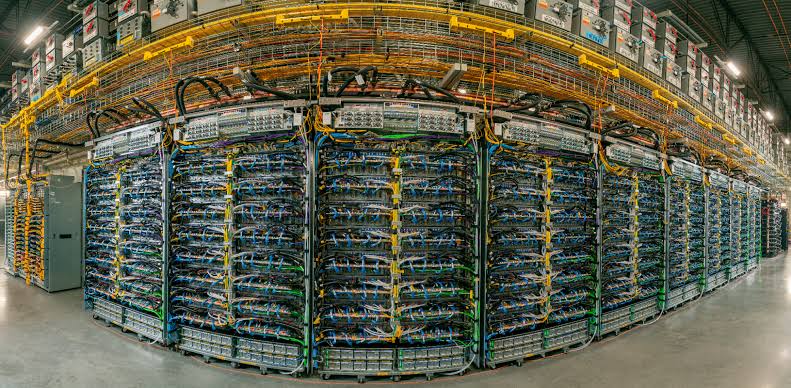
Google's TPUs are custom processors designed around the company's requirements for AI training and inference.
Google's Tensor Processing Units began as chips designed to accelerate machine-learning workloads inside its own infrastructure. Over time, the company has made TPU capacity available to outside organisations through Google Cloud.
In November 2026, Google described new variants of its eighth-generation systems for training and inference. It said the wider TPU business had grown to nearly 100 customers, including AI laboratories and other organisations.
That is evidence of a commercially meaningful alternative to Nvidia in certain environments. It is not proof that Google's chips outperform Nvidia across every workload, software framework or cost measure.
A buyer must assess model compatibility, performance per unit of spending, the availability of capacity and the effort required to adapt software. Nvidia has a long-established CUDA software ecosystem that can reduce friction for existing customers; Google offers its own software tools and integration with its cloud.
Why specialised chips can be attractive
General-purpose accelerators serve a broad range of tasks. Specialised chips aim to execute particular patterns of computation efficiently. When a large organisation knows exactly which models it will train or serve, hardware designed for those tasks can create savings in power, cost or performance.
But efficiency claims require careful comparisons. A chip may perform well on one benchmark and less well on another. Software maturity, memory capacity, networking and the full system's utilisation affect the results customers experience.
Google's public technical material describes the design choices behind its TPU systems. Those claims should be evaluated within the workloads and configurations used in its measurements rather than treated as universal rankings.
Apple's different approach
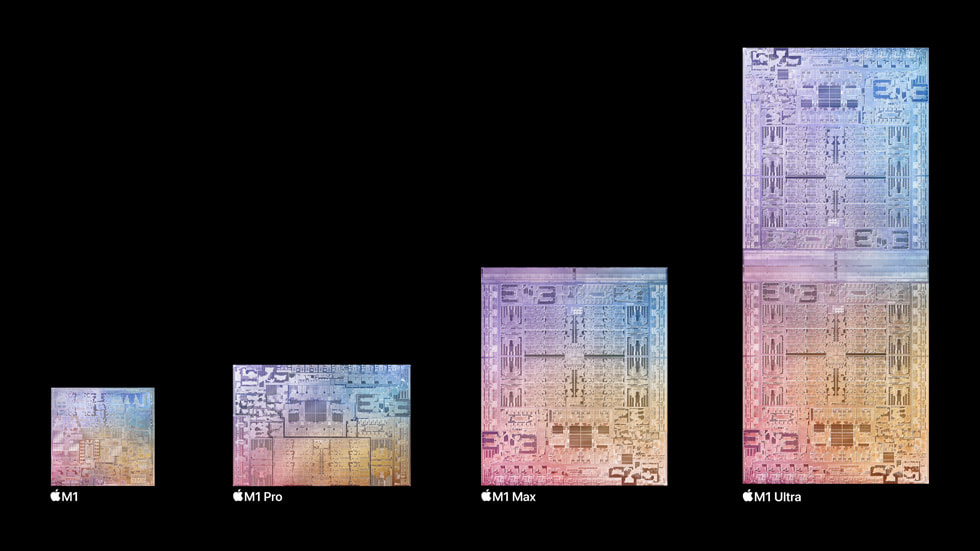
Apple's silicon strategy integrates hardware into the devices and services it sells rather than primarily renting general-purpose GPU clusters.
Apple has invested heavily in its own processors for iPhones, iPads, Macs and other products. Its AI strategy includes models designed to run directly on devices, where speed, energy use and privacy matter alongside raw computing throughput.
A technical report published in 2025 described an on-device model optimised for Apple silicon and a larger server model used through its Private Cloud Compute architecture.
Apple's server-side designs also rely on customised hardware and software. These systems illustrate why some companies choose a vertically integrated approach rather than relying exclusively on rented Nvidia-powered infrastructure.
It would be inaccurate, however, to claim that Apple never uses Nvidia hardware in any part of research or production. Public descriptions of particular Apple systems do not reveal every computing platform used throughout the company.
Three commercial models
| Company | Main advantage | Important limitation |
|---|---|---|
| Nvidia | Broad accelerated-computing platform sold through many partners | Customers may seek cheaper or specialised alternatives |
| Google TPU | Custom AI accelerators integrated with Google's infrastructure | Adoption depends on workload compatibility and access |
| Apple silicon | Tight integration with Apple products and privacy-oriented systems | Not primarily offered as a general-purpose cloud GPU substitute |
This is a comparison of business strategies, not a benchmark ranking.
Who actually competes with Nvidia?
Competition comes from several directions. AMD and other processor designers sell alternative accelerators; cloud operators build in-house chips; software teams find methods to use less compute; and some tasks can run efficiently on devices rather than giant data centres.
A system that reduces the number of expensive GPU hours required can be commercially important even if it never matches Nvidia's most powerful chip on every benchmark.
The effect on Nvidia will depend on which workloads move, how quickly organisations can adapt, the economics of competing platforms and whether demand for total AI computing continues to expand.
The implications for Australia
Australian organisations should focus on the cost and performance of the services they can actually purchase. Selecting an AI model or cloud platform based solely on a manufacturer's headline figures can lock a business into an expensive design that does not suit its needs.
Infrastructure competition may improve the range of choices. It can also introduce complexity, including the risk of applications being difficult to migrate between suppliers.
The next and final article examines whether Nvidia's commercial relationships can remain stable during a change of leadership, with major customers and rivals assessing the same shifting market.
Reporting note: Comparative claims refer to publicly described product capabilities and business approaches, not independent side-by-side testing. Availability and performance vary by region, model and software.
Sources and background: Google Cloud announces eighth-generation TPUs, November 2026 · Google TPU technical deep dive, April 2026 · Apple foundation models technical report, July 2025 · Nvidia FY2026 Form 10-K
About this article
This article provides analysis and interpretation of available information. Sources and supporting material, where applicable, are linked within the article.
Found an error? Contact the editorial desk. See our editorial standards and corrections policy.
From the Harbour Creative Blogs archive
Keep exploring this story
Related reporting, people and places from our published coverage. These are editorial connections, not a popularity ranking.
Company
Nvidia
The chipmaker at the centre of global AI investment: its revenue, products, leadership, customers and commercial relationships.
Company
Google's search, cloud computing, AI models and its alternative to Nvidia processors.
Company
Apple
Apple's devices, software, custom chips and place in the wider computing industry.