Part 3 · Analysis
Nvidia's Business Beyond AI
Gaming, professional graphics and automotive technology now account for a small share of Nvidia’s sales. They still explain how the company built its capabilities — and where it may grow next.
 Harbour Creative Team
5 min read
Harbour Creative Team5 min read
Part three of Nvidia: The Business and Its Partners.
Nvidia has become almost synonymous with the worldwide investment in artificial intelligence. Yet the company did not begin as an AI infrastructure provider. Its business was built through decades of work in computer graphics, software and the demanding engineering of processors that perform many calculations at the same time.
Those earlier markets have been pushed into the background by data-centre sales. That does not make them irrelevant. They explain how Nvidia developed its customer relationships, engineering capabilities and software ecosystem — and why the company can sell technology into industries whose needs differ considerably from those of an AI laboratory.
The scale of the other businesses
For the financial year ended 25 January 2026, Nvidia reported US$215.94 billion in total revenue. Data Center accounted for US$193.74 billion, or nearly 90 per cent of the total. The remaining markets are much smaller, but they are not insignificant companies in their own right.
| End market | FY2026 revenue | Year-on-year growth |
|---|---|---|
| Gaming | US$16.04 billion | 41% |
| Professional Visualization | US$3.19 billion | 70% |
| Automotive | US$2.35 billion | 39% |
| OEM and Other | US$619 million | — |
Source: Nvidia FY2026 Form 10-K. Percentage changes are rounded. The markets are distinct from Nvidia's two operating segments.
The figures show both a concentration of revenue and the resilience of the business outside Data Center. Gaming sales of US$16 billion would be material for many technology companies. For Nvidia, they now contribute only about seven per cent of annual revenue.
Gaming remains a real business
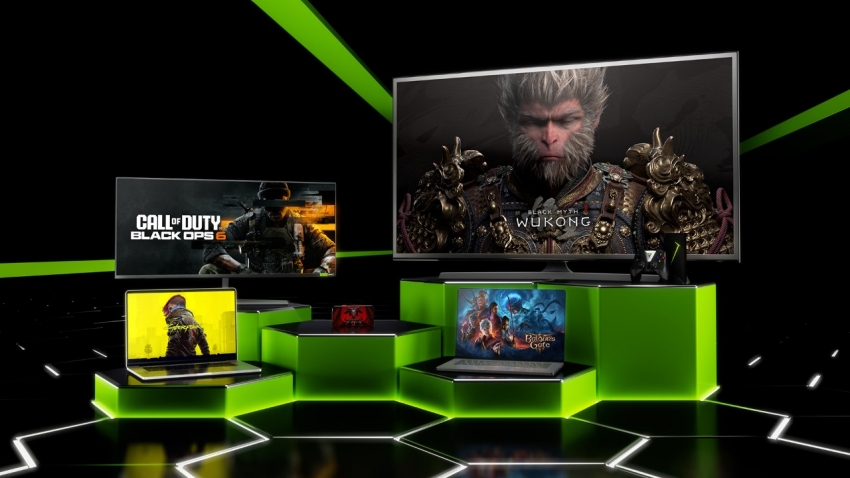
GeForce remains an important consumer product family, though it now supplies far less revenue than Data Center.
Gaming revenue is primarily associated with GeForce graphics products for desktop and laptop PCs, alongside the broader ecosystem of computer makers, add-in-board manufacturers and game developers.
These customers behave differently from cloud operators. An individual gamer may upgrade a graphics card when a new generation delivers enough improvement; a large PC manufacturer plans product lines and inventory around seasonal demand. Gaming spending is sensitive to household budgets and the attractiveness of new hardware and software.
Nvidia also has a relationship with games publishers and developers who optimise their products for its technology. Features such as real-time ray tracing and AI-assisted rendering can help distinguish its products, but those software partnerships should not automatically be counted as direct hardware purchases.
There is a technical connection to AI: the same broad principle of parallel computing that made GPUs useful for graphics also made them valuable for machine learning. The commercial markets are different, even where the underlying engineering knowledge overlaps.
Professional graphics and technical work
Professional Visualization serves design studios, engineers, researchers and other users of specialised computing and graphics software. Nvidia's RTX professional hardware and related software are used in applications requiring high-performance rendering, simulation and visualisation.
This market grew quickly in FY2026 from a comparatively small base. Growth was supported by demand for newer products and systems including DGX Spark, according to the annual report.
It is important not to confuse software compatibility with a sale. A designer using professional software may benefit from Nvidia acceleration without that software company's developer being Nvidia's paying customer. The eventual purchaser may be an employer, a workstation manufacturer or a systems integrator.
Automotive is measured over years
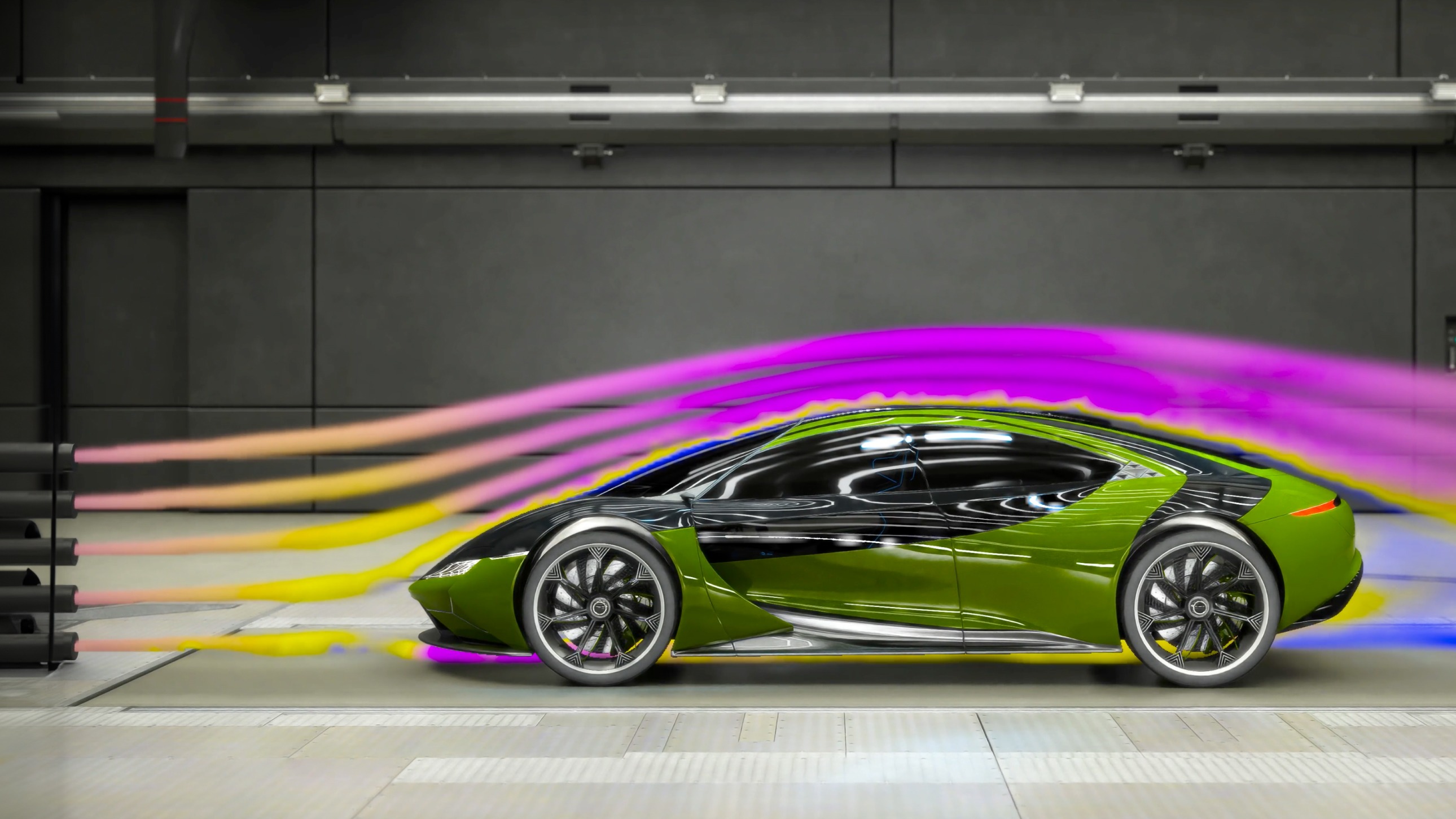
Vehicle technology must pass long development and safety processes before it becomes a production business.
Automotive contributed US$2.35 billion in FY2026. Nvidia supplies computing and software technology to vehicle manufacturers and companies developing driver-assistance and autonomous-driving systems. Unlike a consumer graphics-card upgrade, an automotive programme can spend years in engineering, validation and regulatory work before products reach buyers.
In March 2026, Nvidia announced work involving BYD, Geely, Isuzu and Nissan on vehicles prepared for advanced automated-driving systems. In October, it expanded its relationship with Mercedes-Benz.
Neither announcement means every planned vehicle is already on roads, or that the projected opportunity has appeared as recognised sales. Automotive partnerships can cover hardware design, software, testing and safety systems, with obligations that unfold over multiple model generations.
Why Nvidia keeps investing outside data centres
A company overwhelmingly dependent on one market faces risk if that market's customers reduce spending or move to alternative technologies. Nvidia's other businesses give it additional opportunities, although their present size means they cannot instantly offset a major contraction in Data Center.
These markets also create engineering feedback. Consumer graphics can influence rendering technology; professional workstations demand specialised software support; automotive customers require reliability and long-term product planning. The resulting capabilities are not identical, but they contribute to Nvidia's wider platform.
For Australian buyers, these differences are practical. A local game developer, an engineering consultancy and a vehicle manufacturer can all encounter Nvidia technology without taking part in the same purchasing chain.
The next question
Nvidia's diverse products explain why it has relationships with such different organisations. Its most visible AI relationships, however, often involve cloud operators and model developers — companies that may work with Nvidia through both direct purchases and shared infrastructure plans.
The next part examines one of those relationships: the announcements connecting Nvidia and OpenAI, what they promise, and what remains to be delivered.
Reporting note: Revenue refers to Nvidia's FY2026, ended 25 January 2026. Announced vehicle programmes are not counted here as completed shipments unless disclosed as such.
Sources and background: Nvidia FY2026 Form 10-K · Nvidia FY2026 annual report · Nvidia Hyperion vehicle partnerships, March 2026 · Mercedes-Benz and Nvidia, October 2026
About this article
This article provides analysis and interpretation of available information. Sources and supporting material, where applicable, are linked within the article.
Found an error? Contact the editorial desk. See our editorial standards and corrections policy.
From the Harbour Creative Blogs archive
Keep exploring this story
Related reporting, people and places from our published coverage. These are editorial connections, not a popularity ranking.
Company
Nvidia
The chipmaker at the centre of global AI investment: its revenue, products, leadership, customers and commercial relationships.
Subject
AI infrastructure
The data centres, chips, electricity and investment behind advanced artificial intelligence.