Why Big Tech Is Disguising AI as Cute Cartoons
Meta, OpenAI, and xAI are using adorable mascots to sell autonomous AI. Here is what this cutewashing trend means for Australian businesses.
 Harbour Creative Team
4 min read
Harbour Creative Team4 min read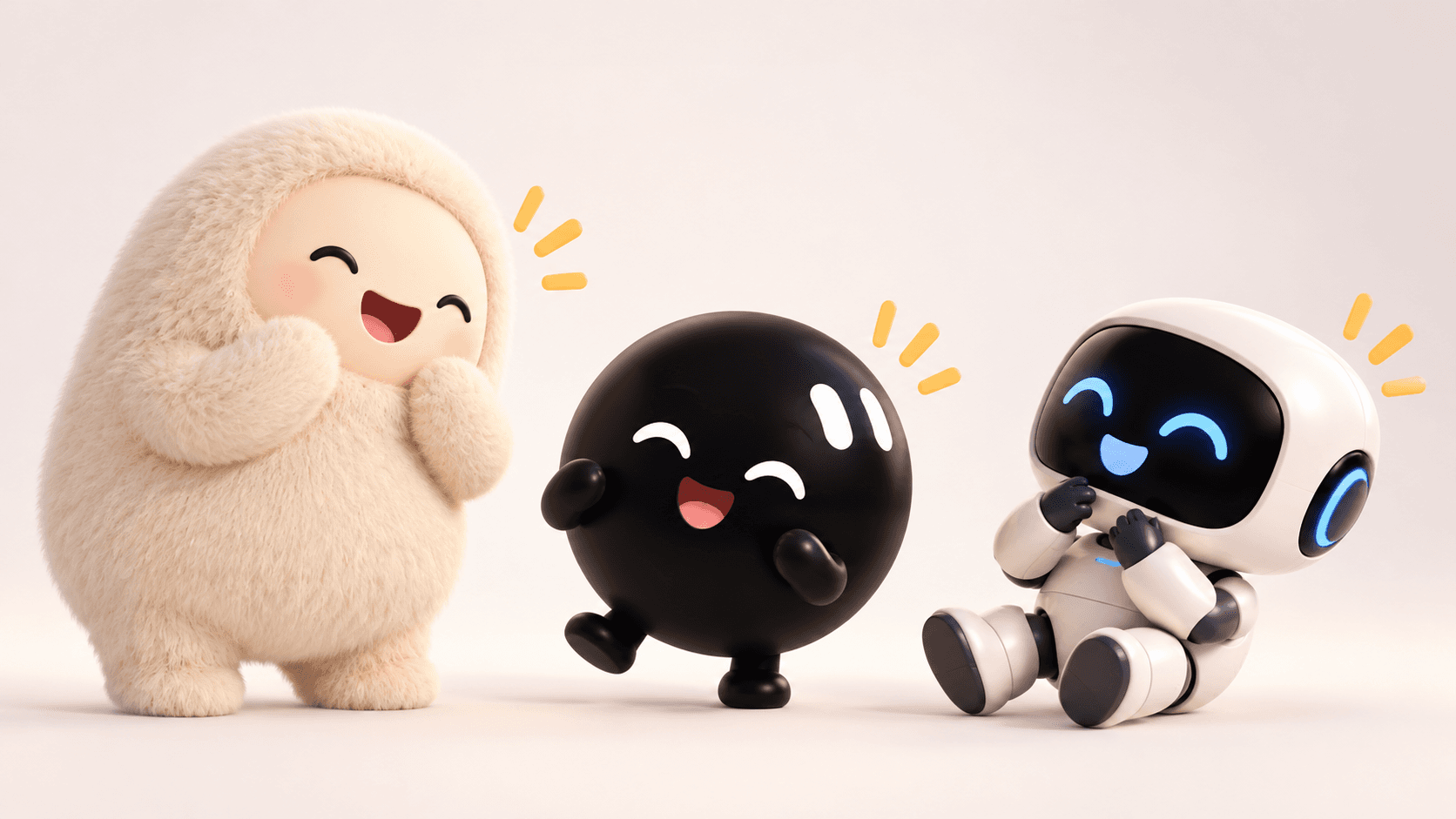
The trillion dollar tech giants have finally figured out how to convince you to hand over your private calendar, your email inbox, and your credit card details to a data hungry supercomputer. They simply slapped a pair of googly cartoon eyes on it.
If you have been watching the latest software updates roll out from Silicon Valley, you might have noticed a bizarre trend. The world's most powerful, intimidating, and complex artificial intelligence models are suddenly being rebranded as adorable, fluffy little sidekicks.
Meta recently launched "Muse," featuring a bouncy little monster affectionately nicknamed Jolly. OpenAI introduced "Dots," which are highly customizable, colorful little blobs with big expressive eyes. Not to be outdone, Elon Musk's xAI rolled out the "Grok Bot," yet another friendly looking blob designed to happily assist you with your daily tasks.
Why is an industry defined by cold, hard algorithms suddenly obsessed with cartoons?
The Psychology of Cutewashing
Designers are calling this new trend "cutewashing." It is a highly calculated branding strategy rooted in a psychological concept called "baby schema."
By giving these incredibly powerful AI agents large eyes, rounded features, and bouncy animations, tech companies are actively hacking our evolutionary biology. They want to trigger the exact same non threatening, nurturing response you feel when you look at a puppy.
The goal is to lower your natural skepticism. It is very hard to be terrified of a dystopian machine takeover when the machine taking over is a bouncy purple blob named Jolly who just wants to help you organize your grocery list.
What This Means for Australian Businesses
While consumers are busy laughing at the cute animations, business owners need to pay serious attention to what these mascots are actually doing behind the scenes.
These cute little blobs are not just chatbots. They are autonomous agents. We are rapidly entering the era of "agentic commerce," where consumers will simply tell their AI mascot to go find the best plumber in Sydney, compare three quotes, and book an appointment.
When one of these agents visits your business website, it does not care about your aesthetic branding or your clever marketing copy. It cannot see your website the way a human does. It only reads the underlying code.
If your site is slow, poorly structured, or confusing to navigate, the cute little bot will simply leave and book your competitor instead.
Preparing for the Agentic Era
If you want your business to be discovered by these new AI assistants, you can no longer rely on a cheap, outdated website. You need a digital presence built on a flawless technical foundation.
This is where partnering with a professional digital agency Sydney based team becomes an absolute necessity. You need the technical capabilities to ensure your website's data is perfectly structured for machine reading.
As one of the best web design agencies in Sydney, we understand exactly how this new landscape operates. We do not just build websites that look good to humans. We build comprehensive digital solutions that communicate perfectly with the autonomous agents of the future.
Do not let a cute cartoon blob cost you your next major client. Contact us today to future proof your digital strategy.
About this article
This article is published by Harbour Creative Blogs. Sources and supporting material, where applicable, are linked within the article.
Found an error? Contact the editorial desk. See our editorial standards and corrections policy.
From the Harbour Creative Blogs archive
Keep exploring this story
Related reporting, people and places from our published coverage. These are editorial connections, not a popularity ranking.
Person
Elon Musk
The entrepreneur associated with xAI and its construction of large-scale AI computing infrastructure.
Company
OpenAI
Artificial intelligence research, commercial AI services, compute infrastructure and strategic partnerships.
Company
xAI
The AI company developing Grok and the Colossus computing infrastructure in Memphis.