Part 2 · Analysis
Who Knew About the Sandpaper? Eight Years of Conflicting Accounts
From the 2018 Cape Town footage to Usman Khawaja's new memoir, the claims of Warner, Starc, the bowlers and former coaches do not tell one consistent story.
 Harbour Creative Team
8 min read
Harbour Creative Team8 min read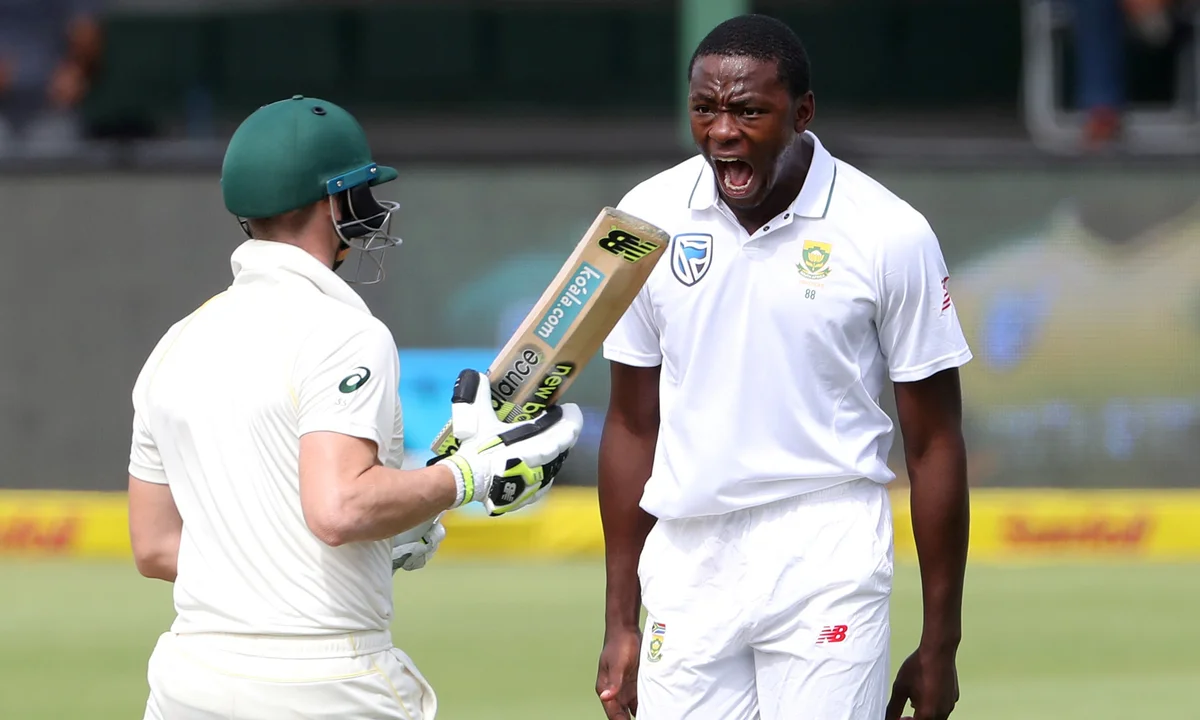
Sandpapergate: The Story That Won't Go Away — Part 2
Reporting cutoff: 12 November 2026. Accounts of events in 2018 are attributed to the speakers and sources identified below.
The most damaging part of the Sandpapergate controversy may be how little agreement there is, eight years later, about who knew what.
The incident itself is not in doubt. In March 2018, television cameras caught Australian batter Cameron Bancroft attempting to alter a cricket ball during the Cape Town Test against South Africa. Cricket Australia investigated, and Bancroft, captain Steve Smith and vice-captain David Warner were subsequently sanctioned.
What remains contested is the circle of knowledge around that incident. Was the sandpaper plan confined to three people? Did others know the ball was being artificially altered? Did some people have general knowledge of an aggressive ball-management culture without knowing of this specific method? And was the ball treated in the previous Test, as Usman Khawaja now claims?
These are separate questions, even when the public argument merges them into one.
March 2018: the camera catches Bancroft
At Newlands in Cape Town, images showed Bancroft handling a small object while fielding and trying to conceal it after umpires became interested. The object was subsequently identified as sandpaper. It was a direct incident witnessed by millions, not a later allegation based on recollection.
Cricket Australia's investigation produced sanctions for three players: 12 months for Smith and Warner and nine months for Bancroft. The governing body did not sanction the other players or coaching staff. The distinction between a sanction and a person's wider moral responsibility quickly became a source of debate.
The scandal changed Australia's leadership and public standing. Smith and Warner were removed from their leadership roles, and coach Darren Lehmann left his position after the tour. Lehmann was not found to have been part of the scheme.
2021: the bowlers answer the questions
Three years later, a renewed round of public debate prompted a joint statement from Pat Cummins, Mitchell Starc, Josh Hazlewood and Nathan Lyon. They denied knowing that a foreign substance had been taken onto the field at Cape Town to alter the ball until the footage appeared.
The scope of that denial is important. It addresses knowledge of a foreign substance and the specific Cape Town incident. It does not by itself answer every possible question about how a ball might have been managed on other occasions, nor does it prove or disprove a separate allegation about Port Elizabeth.
The players' statement remains relevant because it is a specific, on-record account from the bowling unit. ABC News reported Starc reaffirming that position this week.
November 2026: Khawaja's account goes further
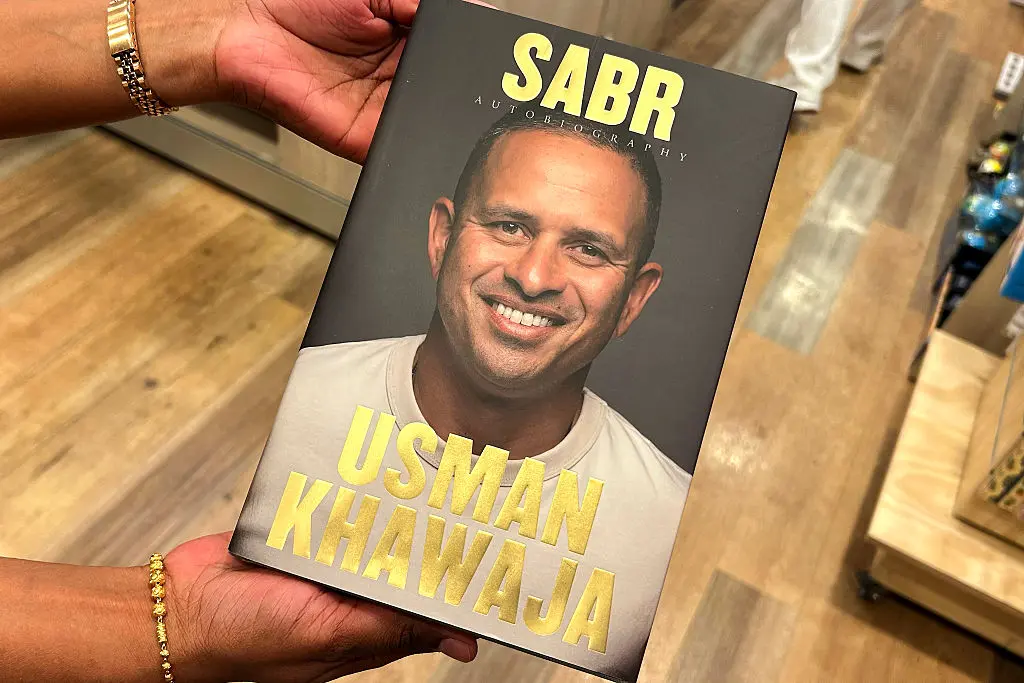
The release of Sabr: Finding My Way in Cricket and Life has reopened the dispute. In the passages examined by ABC News, Khawaja says sandpaper was used during the second Test in Port Elizabeth, the match before the Cape Town scandal.
He describes changes to the ball, reverse swing and the awareness of people in the dressing room. The implication is that the method was not a sudden invention of three individuals at Newlands.
But Khawaja's account does not provide independently verified evidence of every individual player's knowledge. His own language sometimes speaks of shared responsibility for a team culture and sometimes describes awareness of particular acts. The distinction is consequential.
The original finding and the memoir cannot both be treated as definitive. One is the outcome of the 2018 inquiry based on material gathered then; the other is a participant's newly published account, disputed by others.
The debate concerns what individual members of the 2018 touring party knew; appearing in a team photograph is not evidence of knowledge or involvement.
Warner: support from a sanctioned player
David Warner has given Khawaja his full public backing. He described the new account as accurate and criticised the original investigation as rushed and incomplete. He specifically questioned why Khawaja, who was in the dressing room, was not interviewed.
Warner's intervention is significant for two reasons. He was himself sanctioned for his role in the original scheme, and he has publicly challenged the completeness of the official inquiry.
But this backing should not be confused with an independently conducted reinvestigation. It is the perspective of another participant with a history closely tied to the event. It deserves to be quoted and scrutinised, like every other account.
ABC's reporting on Warner and Greenberg provides the relevant statements.
Starc: a direct rejection
Mitchell Starc has been clear that his recollection has not changed. He referred reporters back to the 2021 bowlers' statement and said he did not know of Khawaja's alleged earlier sandpaper use at Port Elizabeth.
It is tempting to frame this simply as Warner versus Starc. But the contradiction is more precise: Khawaja says knowledge was wider, while Starc maintains he was unaware of a foreign substance being used. What each person means by knowing matters.
A player noticing that a ball is reverse swinging is not proof the player knew the ball had been illegally altered. Equally, a refusal to name specific people does not establish that they were uninvolved. These are questions for evidence, not assumptions.
The coaches: Lehmann and Hick dispute the implication
Former coach Darren Lehmann has rejected suggestions that he knew of the plan. Former batting coach Graeme Hick has also strongly disputed Khawaja's broad language, saying that he was unaware of discussions about tampering in Port Elizabeth or Cape Town and only discovered the matter when it appeared on the screen.
The contradiction is direct. If a report says all staff knew and a named staff member says he did not, responsible reporting must present both claims and avoid deciding which memory is true without further substantiation.
Hick's comments, as reported by ABC News on 12 November, drew another sharp response from Warner. But a personal disagreement over a colleague's credibility does not answer the factual question about ball-tampering knowledge.
What about Smith and Bancroft?
Smith's role as captain and Bancroft's role as the player filmed tampering are established parts of the 2018 record. Their sanctions were served. Smith has previously acknowledged a failure to stop a plan he became aware of.
Khawaja's newly reported description of Smith distancing himself from the conversation overlaps with parts of Smith's earlier public account, but that overlap is not proof of the memoir's every detail.
At the reporting cutoff for this article, no new statement from Smith resolving the latest differences had been confirmed. Bancroft had not provided a comprehensive fresh account in response to the book.
It would be wrong to fill those silences with speculation about motives or guilt.
Cummins: a captain facing questions about the past
Pat Cummins occupies an especially complicated position because he was a player on the 2018 tour and is now Australia's Test captain.
The 2021 statement that he joined denied knowledge of a foreign substance being used at Cape Town. The latest controversy means reporters are once again asking whether Khawaja's account conflicts with that denial.
On 12 November, ABC News reported that Cummins planned to address the matter publicly on Friday, 13 November, at 9:30am AEDT, after reviewing Khawaja's claims. That scheduled response had not yet occurred when this article was prepared.
Cricket Australia chair David Boon has meanwhile publicly reaffirmed support for Cummins' leadership. That is an official expression of confidence, not an independent finding about what occurred in 2018. Reuters, 12 November.
What does the evidence actually establish?
A useful way to understand the dispute is to group the available material:
Documented event: Bancroft was filmed tampering with the ball at Cape Town in 2018.
Official historical decision: Cricket Australia's inquiry sanctioned Bancroft, Smith and Warner. Others were not sanctioned.
New disputed allegation: Khawaja says sandpaper was used in the preceding Test and knowledge or responsibility extended beyond the three sanctioned players.
Supporting account: Warner endorses Khawaja's version and criticises the investigation's thoroughness.
Contradictory accounts: Starc and former coaches have denied knowledge; the bowlers' 2021 statement remains publicly relevant.
Unresolved question: What independent evidence, if any, could reconcile the differing accounts about what happened before Cape Town and who understood the method being used?
A former player saying a ball behaved unusually is not independent proof of unlawful tampering. A published memoir is not the same as a reopened inquiry. Neither should be dismissed simply because the story is old.
Why the story persists
Sandpapergate was never only about the condition of a cricket ball. It became a debate about the kind of culture Australia had created in pursuit of winning, whether junior players were adequately protected and whether the people exercising authority took sufficient responsibility.
Khawaja's account has reopened those questions because it invites readers to reconsider whether the public explanation was complete. The replies from former teammates show that agreement has not followed.
There may never be a single account accepted by every participant. That is not an excuse to convert uncertainty into accusation.
The most useful next question is narrower: What action, if any, can Cricket Australia or the ICC take now?
Next in the series: Could Sandpapergate Lead to New Bans? What Happens Next.
Sources and further reading
- ABC News, 12 November — A detailed examination of Khawaja's memoir.
- Reuters, 12 November — Who said what as the autobiography revives Sandpapergate.
- ABC News, 10 November — Starc responds.
- ABC News, 12 November — Former batting coach Hick disputes the allegations.
- ABC News, 12 November — Cummins schedules a response.
- Reuters, 12 November — Cricket Australia chair backs Cummins.
About this article
This article provides analysis and interpretation of available information. Sources and supporting material, where applicable, are linked within the article.
Found an error? Contact the editorial desk. See our editorial standards and corrections policy.
From the Harbour Creative Blogs archive
Keep exploring this story
Related reporting, people and places from our published coverage. These are editorial connections, not a popularity ranking.
Subject
Sandpapergate
The 2018 Australian cricket incident, its consequences and the conflicting accounts that continue to emerge.
Person
Pat Cummins
Australia's Test cricket captain and a principal voice in renewed discussion of the 2018 ball-tampering scandal.
Person
David Warner
Former Australian Test vice-captain and a central participant in the public discussion of Sandpapergate.