Part 1 · Analysis
What Did Usman Khawaja Really Reveal in Sabr?
Australia's 2018 ball-tampering scandal is back in the headlines. A close reading of Khawaja's reported account reveals what he claims, what remains disputed and what his book is actually about.
 Harbour Creative Team
7 min read
Harbour Creative Team7 min read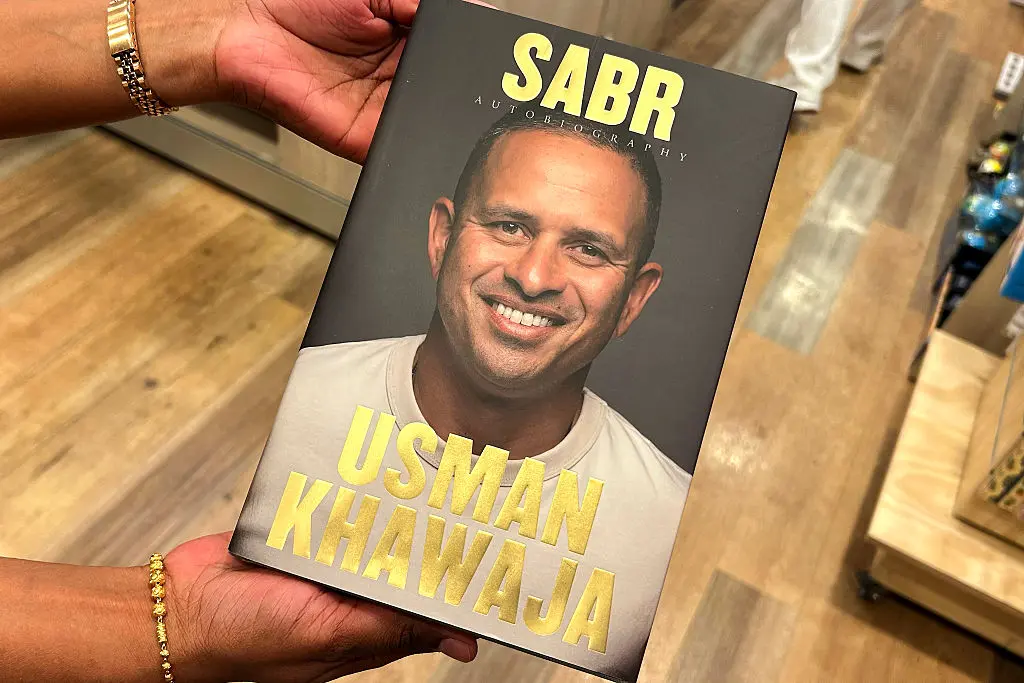
Sandpapergate: The Story That Won't Go Away — Part 1
Reporting cutoff: 12 November 2026. Accounts of events in 2018 are attributed to the speakers and sources identified below.
When Usman Khawaja's autobiography arrived in Australian bookshops on 10 November 2026, much of the attention fell on one chapter. It was not a celebration of a Test century or a reflection on his childhood. It was his account of the 2018 ball-tampering scandal that had already reshaped Australian cricket.
For eight years, the broad official explanation seemed settled. Cameron Bancroft had been caught using sandpaper to change the condition of the ball during the Cape Town Test against South Africa. Cricket Australia's investigation identified three players as knowing about the plan: Bancroft, David Warner and then-captain Steve Smith. All three received substantial bans. The rest of the side and coaching staff were not sanctioned.
Khawaja's new account challenges that understanding. But readers need to distinguish three things that are often run together: what he says happened, what other participants now say, and what an investigation actually established.
What is Sabr?
Sabr: Finding My Way in Cricket and Life is a 448-page memoir published by Penguin Books Australia on 10 November 2026. Its title uses the Arabic word for patience. The book covers far more than a single sporting scandal: Khawaja's childhood across Pakistan, Saudi Arabia and Australia, questions of identity and belonging, the challenges of elite cricket and the development of a career that would make him one of Australia's notable Test batters.
That context matters. A memoir tells a life from its author's perspective. It may include observations unavailable to outsiders, but it is not a sworn witness transcript or the findings of an independent inquiry. It deserves careful reading, not automatic belief or dismissal. Penguin's book information establishes the publication details and broader subject.
The allegation that changed the conversation
The controversy concerns Khawaja's account of how sandpaper was allegedly used during Australia's 2018 tour of South Africa. In previews and interviews, he rejected the idea that only the three players eventually punished knew what was occurring.
According to a detailed examination of the book by ABC News on 12 November, Khawaja places a sandpaper experiment in the second Test at Port Elizabeth, before the televised incident at Cape Town in the third Test. He writes that the ball was altered and was subsequently easier to reverse swing. He describes dressing-room conversations, the visibility of the altered surface and discussion around who should accept responsibility when the scandal broke.
That is more specific than a general claim that the whole dressing room shared a difficult culture. It presents allegations about conduct in a match preceding the one at which Bancroft was caught.
The published accounts also contain a complication. Khawaja's language moves between what different people allegedly knew, what they saw, what they approved and whether the team should have accepted collective responsibility. Those are not identical accusations. Knowing that a ball was behaving unusually does not, by itself, prove knowledge of an unlawful method. Being in the dressing room does not prove participation.
Why the distinction matters
Ball-tampering is a breach of cricket's rules when someone deliberately changes the ball's condition using prohibited methods. Reverse swing itself is a legitimate feature of bowling. The difference lies in how the ball's condition is produced.
Khawaja's reported passages connect a deliberate use of sandpaper with subsequent reverse swing. But his account alone does not establish which individual bowlers knew that sandpaper had been used, or the actions of particular coaches. Those points are actively disputed.
The original Cricket Australia inquiry held three players responsible. That is an established historical result. Khawaja's memoir challenges the completeness of that account, but has not itself overturned it.
The players who were punished in 2018
Steve Smith and David Warner received 12-month suspensions from Australian domestic and international cricket under Cricket Australia's disciplinary process. Cameron Bancroft received a nine-month suspension. All three eventually returned to professional cricket.
Those penalties are often confused with the ICC's on-field disciplinary system. Cricket Australia's sanctions were domestic governing-body actions, and their duration should not be used to infer that similar bans automatically follow from every later allegation. Cricket Australia's historical coverage describes the original sanctions.
Khawaja was not one of the three banned players. His account, therefore, raises a question about the investigation's scope and witnesses as much as it does about conduct during the matches.
What David Warner has said
Warner publicly supported Khawaja's version this week, describing it as accurate and criticising the way the original inquiry was conducted. In particular, he questioned why Khawaja was not interviewed at the time.
That endorsement is newsworthy. Warner was one of the three players sanctioned in 2018 and would have direct knowledge of parts of the episode. Yet his agreement does not independently resolve every contested detail, especially where another participant denies an allegation. ABC News reported Warner's comments and Cricket Australia's response.
What the denials tell us
The response has been sharp. Mitchell Starc has reiterated the position he and fellow bowlers expressed in 2021: they were not aware a foreign substance had been brought onto the field to change the condition of the ball at Cape Town. He says his recollection has not changed and rejects having known about the alleged earlier use.
Former head coach Darren Lehmann and former batting coach Graeme Hick have also rejected implications that the coaching staff knew of the plan. Hick said the broad implication of Khawaja's account was false and that he became aware when the images appeared at Cape Town. ABC News reported Hick's response on 12 November.
A serious examination must carry these denials alongside Khawaja's claims. It cannot turn disagreement into a verdict.
Did Khawaja identify every player?
No. The most contentious aspect of his account is that he has resisted naming particular bowlers as knowingly involved. In an ABC 7.30 interview, he said he was not trying to start a public hunt for individuals. When pressed about specific players, he did not supply a direct accusation establishing their knowledge.
That leaves an unresolved tension. His criticism implies that responsibility was wider than the official findings, but his public statements do not amount to a comprehensive, person-by-person account that outsiders can verify.
It is entirely possible to examine whether the 2018 inquiry was sufficiently thorough without accusing specific people of conduct that has not been established.
The other story in the book
It would also be a disservice to reduce Khawaja's memoir to a single chapter. His experiences of migration, religion, racism, selection, family and perseverance are central to its stated purpose. The word sabr suggests a much longer personal account about patience and finding his place in Australian cricket.
For readers deciding whether to buy the book, the central expectation should be a personal autobiography, not a documentary investigation. The sandpaper chapter is important, but it is one part of his story.
The publisher lists editions in hardback, ebook and audiobook. The hardback was listed with an Australian recommended retail price of $49.99 at launch. Check retailers for current pricing and stock.
What happens now?
On 10 November, Cricket Australia chief executive Todd Greenberg said the organisation did not see a compelling reason to reopen its investigation. That is the governing body's current public position; it does not make every conflicting account disappear.
Khawaja's book has therefore produced something different from a new official finding. It has put a competing first-person account into public circulation, prompted one sanctioned player to support it and several other participants to reject its implications.
The next chapter of this story is about those competing memories — and the evidence that might distinguish them.
Next in the series: Who Knew About the Sandpaper? Eight Years of Conflicting Accounts.
Sources and further reading
- Penguin Books Australia — Sabr. Publication details and book description.
- ABC News — What is in Khawaja's book and what did he actually say? (12 November 2026). Detailed examination of passages in the autobiography.
- ABC News — Cricket Australia will not reopen the inquiry (10 November 2026). Greenberg and Warner statements.
- ABC News — Mitchell Starc responds (10 November 2026). Bowler's account.
- ABC News — Graeme Hick disputes allegations (12 November 2026). Former coach's denial.
About this article
This article provides analysis and interpretation of available information. Sources and supporting material, where applicable, are linked within the article.
Found an error? Contact the editorial desk. See our editorial standards and corrections policy.
From the Harbour Creative Blogs archive
Keep exploring this story
Related reporting, people and places from our published coverage. These are editorial connections, not a popularity ranking.
Person
Pat Cummins
Australia's Test cricket captain and a principal voice in renewed discussion of the 2018 ball-tampering scandal.
Subject
Sandpapergate
The 2018 Australian cricket incident, its consequences and the conflicting accounts that continue to emerge.
Person
Usman Khawaja
The Australian cricketer whose memoir revived public debate about the 2018 ball-tampering scandal.