Newcastle’s Coal Protest Ruling Puts the Right to Assemble Under Scrutiny
A judge has rejected police objections to a planned harbour demonstration. The decision turns on how public safety concerns should be weighed against political expression.
 Harbour Creative Team
3 min read
Harbour Creative Team3 min read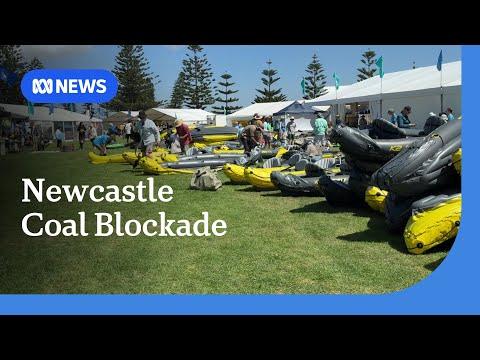
A court decision in Newcastle has put a familiar tension into sharp focus: how should governments weigh the right to peaceful political protest against the risks of disrupting a working harbour?
On Friday, 13 November, the NSW Supreme Court rejected an application by the police commissioner to prohibit a planned Rising Tide protest. Hundreds of participants intend to use kayaks and other watercraft in Newcastle Harbour on Saturday, with a temporary disruption to shipping expected.
What the court decided
Justice Edward Muston considered the likely effect on harbour operations, the risks to people on the water and the public interest in political expression. He concluded that the interests served by permitting the assembly outweighed the concerns presented by police.
The decision matters because it was not an endorsement of every action a protester might take. Rather, it concerned whether the planned public assembly should be prohibited in advance.
Police had argued that the operation posed serious dangers, including the possibility of collision, capsizing and drowning. Organisers described plans involving life jackets, safety teams and briefing participants about emergency signals.
The flotilla is expected to involve as many as 785 watercraft. Court reporting indicated organisers intended to block the shipping channel for roughly 30 to 40 minutes.
The difference between protest and unrestricted access
A democratic right to assemble does not cancel maritime safety rules or other legal obligations. Equally, a disruption to commercial activity is not automatically enough to justify preventing peaceful political expression.
The judgement concerns a particular event with specific safety plans and evidence. It does not establish that future gatherings will be approved in the same circumstances.
This distinction is important after Newcastle councillors separately moved to restrict the group's use of council land. The council decision and the court ruling involve different powers and cannot be treated as interchangeable.
Why Newcastle is central to the argument
Newcastle's port plays a large role in Australia's coal exports. That gives climate campaigners an obvious target for attracting attention, while exposing commercial operators, workers and public authorities to the consequences of disruption.
Supporters of the protest believe the costs of continued coal exports demand urgent political attention. Critics contend that harbour operations and participant safety should not be put at risk.
Readers deserve to understand both positions without being told that a court's refusal to ban a protest is an endorsement of the protest's climate claims.
What happens next
Saturday's actual operation will show how the organisers' plans work under real conditions. Any arrest, injury or disruption will need independent verification rather than assumptions based on past demonstrations.
The embedded ABC video shows an earlier protest at the port. It is background to the current dispute, not footage from the court decision.
The immediate news is that the court refused to prevent the assembly. The more enduring question is how authorities can protect public safety while leaving space for dissent that may be inconvenient or unpopular.
Further reading: Supporting report.
About this article
This article provides analysis and interpretation of available information. Sources and supporting material, where applicable, are linked within the article.
Found an error? Contact the editorial desk. See our editorial standards and corrections policy.
From the Harbour Creative Blogs archive
Keep exploring this story
Related reporting, people and places from our published coverage. These are editorial connections, not a popularity ranking.
Local coverage
Newcastle
The harbour, energy exports, regional economy and communities of Newcastle.
Organisation
Rising Tide
A climate protest organisation involved in demonstrations around Newcastle's coal port.