Why a Short Regional Flight Can Cost More Than a Long One
Airport charges, route economics and limited competition help explain expensive regional travel. The answer matters to patients, workers and families who cannot simply drive.
 Harbour Creative Team
2 min read
Harbour Creative Team2 min read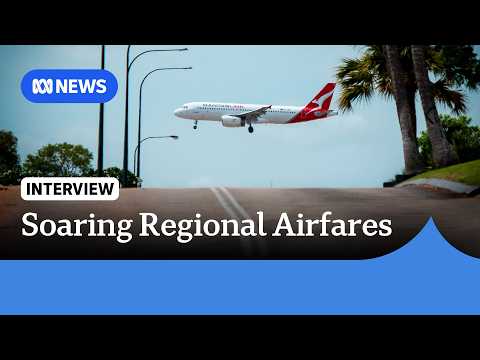
The distance alone does not set a ticket price
Regional air travellers often pay heavily for journeys that appear short on a map. In November, discussion of a Productivity Commission report renewed attention on regional fares. Airline industry advocate Graeme Samuel told ABC News that airport charges and operational constraints are part of the economics.
An airline must cover aircraft, crews, maintenance, fuel and airport use. A route with fewer passengers has a smaller base over which to spread many of those costs. A full flight on a busy corridor and a lightly loaded aircraft serving a smaller community are not directly comparable, even when their distances look similar.
The cost for people who have little choice
For some passengers, an airline ticket is not leisure spending. It is the way to reach a specialist appointment, a funeral, a job roster or family support. Long drives may be impractical because of disability, weather, road conditions or time.
When a regional route has few operators, departure choices can be limited. That makes a headline fare especially painful for people whose travel date cannot move. Government schemes and medical travel subsidies vary by jurisdiction and do not automatically cover the same costs.
Questions that policymakers still need to answer
Debate about the affordability of regional aviation should distinguish airport charges from airline pricing, and the cost of providing essential connectivity from commercial choices. Any subsidy ought to have a clear intended outcome and published evaluation.
Passengers can compare realistic total travel costs, including baggage, transfers and accommodation. But the broader policy question is whether residents of regional Australia should face an unreasonable penalty simply to reach services that capital-city residents can use nearby. See our regional migration analysis for how service access shapes relocation.
Watch the original report
The video above was published by ABC News (Australia) on 12 November 2026. It is included as source material for this independent analysis; it is not footage produced or filmed by Harbour Creative Blogs. View the broadcaster's original reporting.
About this article
This article provides analysis and interpretation of available information. Sources and supporting material, where applicable, are linked within the article.
Found an error? Contact the editorial desk. See our editorial standards and corrections policy.
From the Harbour Creative Blogs archive
Keep exploring this story
Related reporting, people and places from our published coverage. These are editorial connections, not a popularity ranking.
Local coverage
Sydney
The business, communities, housing, transport, sport and public decisions affecting metropolitan Sydney.
Subject
Regional aviation
The price, access and reliability of air transport for regional Australian communities.