Who Is Colette Kress? The Woman Leading Nvidia After Jensen Huang
From Texas Instruments and Microsoft to Nvidia's extraordinary AI boom, Colette Kress spent decades building a career in technology finance. Now she has inherited the company's most difficult leadership transition.
 Harbour Creative Team
10 min read
Harbour Creative Team10 min read
Colette Kress has spent more than three decades working inside some of America's most important technology companies. Her career is well documented; details of her childhood and private life are not. This profile draws on Nvidia's filings, its corporate announcements and reporting available on 12 November 2026.
A company that helped transform the world of computing has a new person in charge.
On 12 November 2026, Nvidia named Colette Kress as interim chief executive following the departure of co-founder Jensen Huang. Huang had led Nvidia from its establishment in 1993 through the age of computer graphics, accelerated computing and, ultimately, the global investment boom in artificial intelligence.
Kress was already one of Nvidia's longest-serving senior executives. She had overseen its finances for 13 years, explained its results to investors and helped manage the financial demands of a business whose products became essential to the world's largest technology companies.
But there is a significant difference between managing the finances of a company led by a celebrated founder and becoming the person responsible for that company.
For many people encountering her name for the first time, the obvious question is simple: who is Colette Kress?

A career built in technology before Nvidia
The public record offers little dependable information about Kress's childhood, family background or the circumstances that shaped her earliest ambitions. Those details should not be invented to make her biography more dramatic.
What is clear is the depth of her professional experience. Her career in corporate finance began well before Nvidia was founded.
Kress spent approximately eight years at Texas Instruments, the American semiconductor company, in a variety of finance positions. The experience placed her inside an industry where manufacturing costs, product cycles, research spending and long-term customer relationships shape almost every major financial decision.
She then joined Microsoft in 1997. Over the following 13 years, she took on roles involving corporate planning, financial strategy and operations. Beginning in 2006, she served as chief financial officer of Microsoft's Server and Tools division, a business focused on the software and enterprise technology used by organisations around the world.
That period is important to understanding her later career. Microsoft was deeply involved in the expansion of corporate computing, servers and the software infrastructure that large companies depended upon. Finance in such a business required more than recording earnings. It meant assessing product investment, the economics of enterprise customers and the financial implications of technologies that might take years to achieve their full commercial potential.
Her next move was to Cisco Systems in 2010. As senior vice president and chief financial officer of Cisco's Business Technology and Operations Finance organisation, Kress was responsible for financial strategy, planning, reporting and business development across major parts of the networking business.
The pattern is striking. Long before taking charge at Nvidia, she had worked in semiconductors, enterprise software and networking — three fields that would become closely connected in the infrastructure powering artificial intelligence.
These career details are documented in Nvidia's 2026 annual filing with the US Securities and Exchange Commission.
Her education
Kress holds a Bachelor of Science degree in finance from the University of Arizona and an MBA from Southern Methodist University in Texas.
Both qualifications are listed in Nvidia's official executive biography and corporate filings.
They establish the financial training behind her professional career, though they say little on their own about her management style or personal ambitions. The better evidence of how she works comes from the roles she subsequently held and her long record of communicating Nvidia's business performance.
Why Jensen Huang brought her to Nvidia
In September 2013, Nvidia announced that it had appointed Kress as executive vice president and chief financial officer. She was joining a company with a strong position in graphics processors, but the Nvidia of that period was not the AI infrastructure giant familiar to investors today.
Huang's public explanation for her appointment emphasised her financial management experience and knowledge of the technology industry.
According to Nvidia's original announcement on 16 September 2013, Kress arrived after nearly 25 years in technology finance. Her appointment followed an executive search, and she reported directly to Huang.
This was a consequential time for the company. Nvidia was competing in graphics, developing its approach to accelerated computing and investing in businesses whose future importance was not yet obvious to the wider market.
The company needed a finance leader capable of managing immediate commercial demands while supporting spending on technologies whose payoff might arrive much later.
Kress did not invent Nvidia's computing architecture or create the technical strategy that would transform the company. But the financial organisation she led became part of the machinery supporting those investments.
Thirteen years alongside Jensen Huang
A chief financial officer is often described as the person responsible for a company's numbers. At a large technology business, the job is considerably wider.
Nvidia's finance organisation has to help the company plan spending, manage supply commitments, work with auditors and investors, assess financial risks and explain performance to public markets. Decisions about manufacturing capacity, pricing, inventory and future investment have major financial consequences.
Through Kress's tenure, Nvidia moved through several distinct phases: growth in gaming and data-centre computing, rising demand for accelerated workloads, and then extraordinary demand for the processors used to build and operate generative AI systems.
She became a familiar voice on earnings calls, regularly discussing revenue, margins, supply, customer demand and expectations for coming quarters.
As Reuters reported in its 12 November 2026 profile, Nvidia's annual revenue increased from roughly US$4.13 billion around the time Kress joined to approximately US$215.9 billion in fiscal 2026.
That change is evidence of Nvidia's remarkable growth during her tenure. It would be inaccurate, however, to attribute the whole increase to Kress. The results reflect engineering breakthroughs, the work of thousands of employees, long-term business relationships and a wave of demand driven by the wider AI industry.
Her contribution was to help lead the financial side of an expansion on an almost unprecedented scale.
The quiet executive in an unusually public company
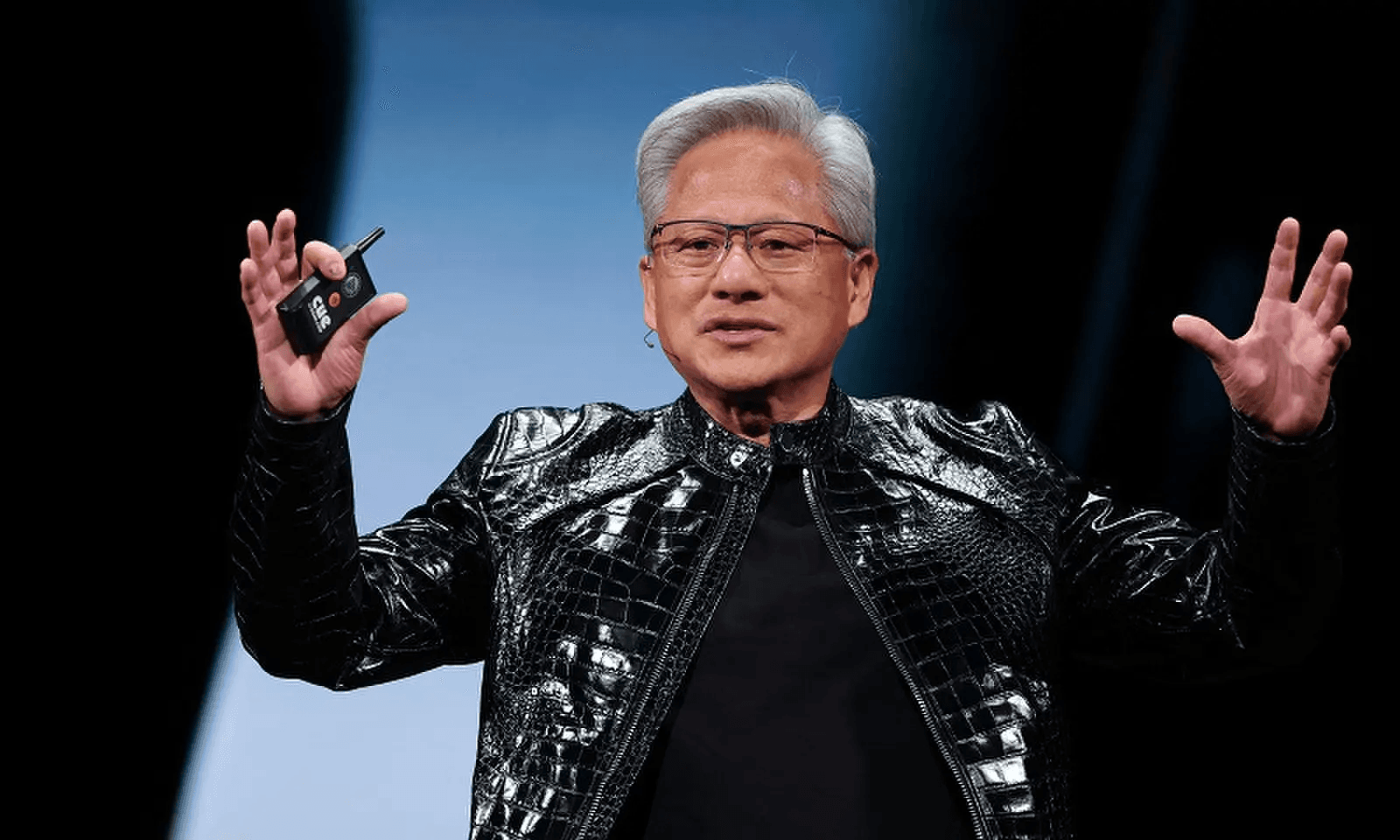
Jensen Huang became a recognisable figure far outside the semiconductor industry. His keynote appearances, distinctive clothing and detailed presentations turned product announcements into major events for developers, customers and investors.
Kress occupied a different public role.
Rather than leading Nvidia's most prominent technology presentations, she was principally associated with financial results, forecasts, operating performance and the investor community. Her work required precision and consistency, particularly when markets were looking for signs of changing demand for expensive AI infrastructure.
That difference should not be exaggerated into a personality portrait. There is insufficient public evidence to define her as a particular kind of person or infer how she makes private decisions.
It does, however, show why Nvidia now faces a transition between two different executive responsibilities. Kress is well versed in its financial operations. The chief executive must also set strategy, make difficult technology and organisational choices, represent the company to governments and keep large customers confident in the future of its products.
The two roles overlap, but they are not identical.
The money and the scale of Nvidia's rise
Nvidia's financial success has also made the wealth of its leading executives a subject of public interest.
Reuters reported in November 2026 that Forbes had included Kress among America's wealthiest self-made women that year, with an estimate of around US$750 million in Nvidia shares at the relevant reporting point.
That is an estimate of the value of shareholdings, not a verified balance of cash available to spend. Share prices move, executive equity awards may vest over time and reported holdings can change. It would be misleading to present a single estimate as a permanent statement of her personal net worth.
Nvidia's filings describe executive compensation arrangements, including equity awards, that create a financial connection between leadership and long-term shareholder performance.
For a company of Nvidia's scale, incentives and governance are important because major decisions can affect customers, workers, suppliers and investors around the world.
The day her responsibilities changed
On 12 November 2026, Kress's job changed more dramatically than any conventional promotion.
Following reports concerning Jensen Huang's conduct and an independent investigation into allegations involving a possible foreign-intelligence effort, Huang stepped down. Nvidia named Kress interim chief executive while its directors began the process of identifying a permanent successor.
The leadership change is confirmed. Allegations involving Alice Huang and Chinese intelligence are not established findings and should not be presented as though they explain every aspect of the board's decisions.
Kress inherits a business that remains technologically important but is confronting unusual uncertainty surrounding its leadership.
Her immediate work is unlikely to involve reinventing Nvidia overnight. It will involve maintaining confidence that its existing operations can continue, that customers can rely on delivery commitments, that engineers can keep building products and that the board can manage a credible succession process.
Can a finance chief replace a founder?
The better question may be whether any single person can replace what Jensen Huang represented.
Huang was a founder, a long-serving chief executive and the most prominent advocate of Nvidia's technical direction. His relationships with major cloud companies, technology leaders and government officials were built over decades.
Kress brings a different kind of institutional knowledge. She has seen the business through changing markets, knows its financial operations and has worked closely with the leadership team during an exceptionally important period of growth.
Those strengths matter in a crisis. A temporary CEO must be capable of providing continuity and credible information to customers, employees and investors.
But Nvidia still needs strategic decisions about future chip generations, software platforms, manufacturing capacity, export controls, energy requirements and the evolving economics of AI computing.
Engineering expertise and financial oversight both matter to those decisions. Neither on its own guarantees effective overall leadership.
A permanent appointment could go to Kress or another candidate. The fact that she has been selected to run the company temporarily should not be treated as proof that the board has already made its long-term choice.
Why her appointment matters beyond Silicon Valley
Nvidia's customers extend far beyond California. Cloud providers, research laboratories, universities and businesses worldwide depend on Nvidia products directly or through rented computing services.
In Australia, the country's AI ambitions are tied in part to access to computing capacity, cloud infrastructure, research funding and global semiconductor supply chains.
A leadership transition at Nvidia does not automatically interrupt those arrangements. Yet prolonged uncertainty could affect how major customers plan future spending, how suppliers negotiate commitments and how the company approaches governments.
For smaller countries and markets that do not manufacture the most advanced processors themselves, the stability of these global suppliers has wider consequences.
That is why Kress's effectiveness matters outside Nvidia's boardroom.
What comes next for Colette Kress?
There are two biographies to consider now.
The first is already documented: a finance professional educated in Arizona and Texas, with senior roles at Texas Instruments, Microsoft and Cisco, who joined Nvidia in 2013 and became its chief financial officer during its extraordinary AI-driven expansion.
The second has only just begun.
As interim chief executive, Kress must move from explaining the finances of Nvidia's strategy to helping lead the company responsible for that strategy. She will be judged not simply by the next set of quarterly figures, but by the continuity of its business, the confidence of its customers and the decisions that follow an abrupt leadership change.
Jensen Huang spent 33 years building Nvidia into a defining company of the AI era.
Colette Kress now has responsibility for leading it into the next chapter — however long her interim appointment lasts.
Reporting and sources
- Reuters: Who is Nvidia interim CEO Colette Kress? (12 November 2026)
- Nvidia: Official executive biography of Colette Kress
- Nvidia: Colette Kress appointed CFO (16 September 2013)
- US Securities and Exchange Commission: Nvidia fiscal 2026 Form 10-K
- US Securities and Exchange Commission: Nvidia 2013 CFO appointment filing
Read also: Jensen Huang Resigns as Nvidia CEO After 33 Years and The Battle for AI Power.
About this article
This article provides analysis and interpretation of available information. Sources and supporting material, where applicable, are linked within the article.
Found an error? Contact the editorial desk. See our editorial standards and corrections policy.
From the Harbour Creative Blogs archive
Keep exploring this story
Related reporting, people and places from our published coverage. These are editorial connections, not a popularity ranking.
Company
Nvidia
The chipmaker at the centre of global AI investment: its revenue, products, leadership, customers and commercial relationships.
Person
Jensen Huang
Nvidia's co-founder and former chief executive, whose leadership and departure feature in our technology reporting.
Person
Colette Kress
Nvidia's longtime finance chief and interim CEO following Jensen Huang's November 2026 departure.