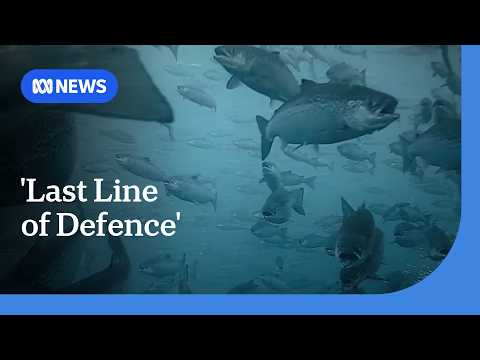
Why Salmon Farm Antibiotics Are Closing Parts of Tasmania's Wild Fishery
Restrictions on rock lobster and dive fishing are designed to protect export access. The economic burden is being disputed by fishers and salmon producers.
 Harbour Creative Team
2 min read
Harbour Creative Team2 min read
Restrictions on rock lobster and dive fishing are designed to protect export access. The economic burden is being disputed by fishers and salmon producers.
A closure with consequences beyond salmon
Tasmania's government is closing two commercial wild-fishing areas following the use of oxytetracycline at Tassal salmon farms in the D'Entrecasteaux Channel. The restrictions are expected to apply from Sunday to 14 February. Commercial rock lobster fishing and certain diving activities are affected in specified management areas. The response is intended to protect market access where trading partners impose strict limits on antibiotics in wild-caught seafood.
Why the argument is not simply about food safety
The government's restrictions are designed around trade requirements and the possibility of residues, not a declaration that all seafood from Tasmania is unsafe. Tassal says swimming and recreational fishing remain safe, and that the affected lobster fishery represents a small proportion of historical statewide catch. Some commercial fishers argue the closed grounds are especially valuable to their individual operations. Both statements can be true because a statewide percentage does not measure the effect on one boat.
Who pays for the disruption?
The policy question is whether a commercial salmon operation should bear more of the consequences when its treatment decisions restrict another industry's work. Premier Jeremy Rockliff has defended the need to balance aquaculture and wild fisheries. Monitoring, reopening criteria and any meaningful support for affected fishers will determine how fair that balance appears in practice. Our Australian business coverage follows conflicts where one industry's costs become another industry's problem.
References: Read the primary source. No video has been attached without an independently verified match.
About this article
This article is published by Harbour Creative Blogs. Sources and supporting material, where applicable, are linked within the article.
Found an error? Contact the editorial desk. See our editorial standards and corrections policy.
From the Harbour Creative Blogs archive
Keep exploring this story
Related reporting, people and places from our published coverage. These are editorial connections, not a popularity ranking.