Western Sydney Has Its Airport. Now Comes the Harder Part.
Western Sydney International Airport opened on 25 October 2026. The next test is whether jobs, transport and local business opportunities match the enormous promise.
 Harbour Creative Team
7 min read
Harbour Creative Team7 min read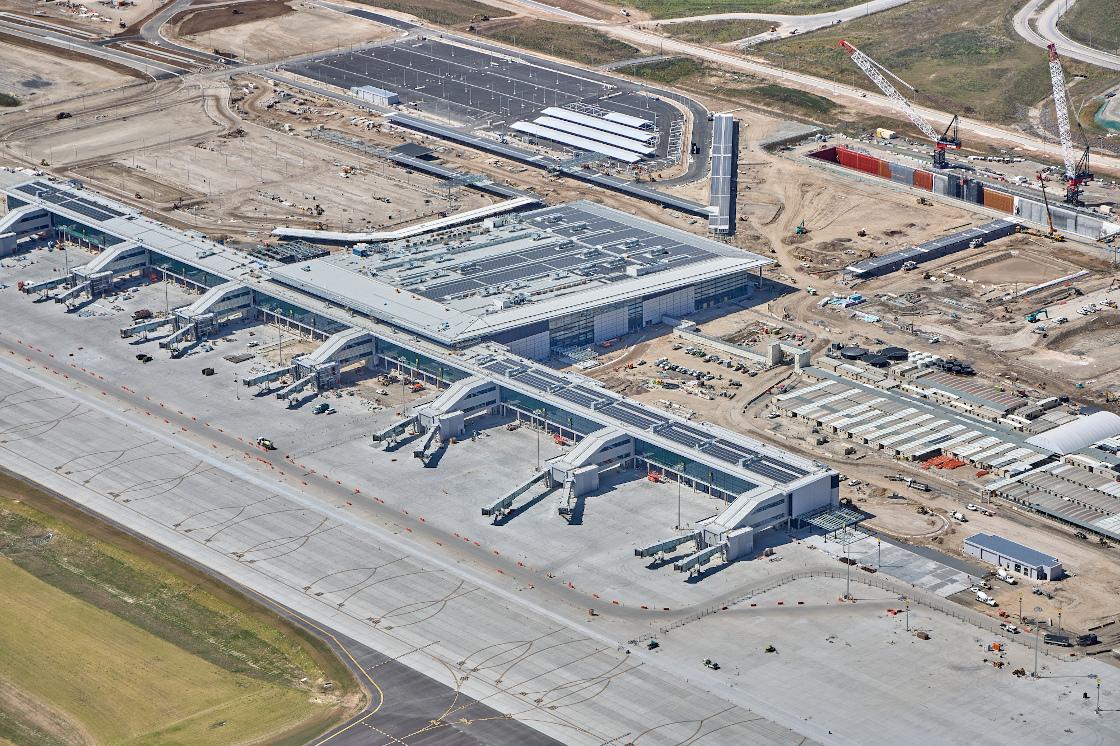
Western Sydney has spent decades being told what a second airport could mean for its future. On Sunday, 25 October 2026, that future acquired something tangible: its first passenger departure. Now the harder questions begin.
A Jetstar flight to the Gold Coast marked the opening of Western Sydney International (Nancy-Bird Walton) Airport to passengers. The airport's first international passenger service, to Auckland, followed on 26 October. Freight operations had begun in July.
The opening is a major aviation milestone. It also arrives with enormous expectations about jobs, business investment and the reshaping of Sydney's west.
Those expectations deserve more than applause. The useful measure of this airport will not simply be how many people pass through it. It will be how much opportunity reaches the communities surrounding it—and how fairly the costs and benefits are shared.
The first departure is not the economic finish line
An airport has two economies.
The first is inside its boundary: airlines, airport operations, security, freight handling, shops, maintenance and the businesses contracted to keep the terminal running.
The second is outside it: local transport, hotels, independent food businesses, professional services, distribution networks and workplaces that may develop because new connections make their location more useful.
The opening guarantees that the first economy has begun. It does not guarantee that the second will expand evenly across Liverpool, Penrith, Campbelltown and the wider region.
A business near a new transport hub can benefit from extra visitors. It can also face higher rents, new competition or more expensive staffing. Those outcomes depend on location, access, planning and commercial decisions—not simply the presence of a runway.
For Western Sydney, the question should be less how big is the airport? and more who is positioned to benefit as it grows?
What jobs and contracts have actually been delivered?
The distinction between completed work and future projections is essential.
Before passenger opening, the Australian Government reported that construction of Western Sydney International and its precinct had generated more than 12,800 jobs, with approximately half going to local workers. It also reported that more than $500 million in major construction-related spending had flowed to more than 360 Western Sydney businesses. These are government-reported construction and procurement figures, not evidence of permanent jobs created after opening.
The government's opening announcement described the broader workforce involved in delivering the airport, while the airport operator has outlined longer-term operational employment opportunities as passenger numbers grow.
Those figures should not be combined as if they all describe the same employment outcome. Construction employment, jobs required to run an airport and wider economic activity are different categories.
This is not a reason to dismiss the investment. It is a reason to establish an honest baseline.
A meaningful assessment in coming years would track how many ongoing jobs are filled by Western Sydney residents, what kinds of roles they are, whether opportunities are accessible to young people and whether local businesses continue winning contracts after construction is finished.
An airport without its metro—for now
The most immediate test is not economic modelling. It is getting to work or catching a flight.
Western Sydney International began passenger operations before its planned Sydney Metro – Western Sydney Airport line was ready. The 23-kilometre connection is under construction and will eventually link the airport with St Marys and Bradfield.
For opening-day travellers, road transport is doing much of the work.
Transport for NSW lists a fare-free temporary WSI Link bus between St Marys Station and the airport, operating every 30 minutes, alongside paid bus routes connecting the airport to Penrith, Liverpool, Campbelltown and Mount Druitt. Taxi and rideshare facilities are available at the terminal.
The new toll-free M12 Motorway provides a direct road connection to the airport precinct.
This matters for more than passengers with luggage. Airport employment includes early starts, late finishes, shifts and jobs whose workers cannot necessarily afford to drive and park every day.
A modern terminal can be impressive while still being inconvenient to reach without a car. Until the metro opens, the frequency, reliability and operating hours of buses will shape the airport's accessibility for both workers and travellers.
The practical travel options should therefore be part of any judgement about the airport's first year—not treated as a minor detail.
What could change for Campbelltown, Liverpool and Penrith?
Western Sydney is not one uniform market.
For Liverpool, the airport may offer a different set of opportunities than it does for Penrith. For Campbelltown and the Macarthur region, benefits will depend in part on transport links, visitor flows and whether local firms become suppliers to businesses serving the airport.
A hotel or hospitality business might gain from travellers who stay nearby. A logistics operator might find new freight connections valuable. An accountant, maintenance contractor or marketing agency may serve new businesses established in the surrounding precinct.
But those are plausible commercial pathways, not proof that every suburb or small business is already seeing higher revenue.
Independent businesses should also be cautious about forecasts that move directly from passenger-capacity figures to assumptions about local spending.
The airport was initially designed for a capacity of about 10 million passengers a year, with expansion possible over time. Capacity means what the infrastructure can accommodate; it does not mean 10 million people flew through it on opening day or will necessarily do so next year.
The commercial opportunity becomes real when visitors, contracts and employers arrive—and when local operators can compete for their business.
The other side of being open around the clock
Western Sydney International operates without the overnight curfew that restricts Sydney's existing Kingsford Smith Airport.
That flexibility is a major selling point for airlines and freight operators. It allows flights and cargo movements to be scheduled across a wider range of hours, creating opportunities that a curfew-constrained airport cannot offer in quite the same way.
But operating at night also has a community dimension.
Residents under or near flight paths may experience aircraft noise at hours when people expect to sleep. Late-night employment creates transport and safety questions for workers. Freight and passenger traffic can affect surrounding roads.
Airservices Australia has told nearby communities to expect aircraft operations during daytime and night-time periods and provides information about tracking flight activity.
Economic benefits and local impacts should be assessed together. A region should not have to pretend noise or access concerns are unimportant in order to support jobs and investment.
Five things worth measuring after the celebration
For Western Sydney, the most useful follow-up reporting will move beyond speeches and forecasts.
1. Local employment: How many ongoing airport and precinct jobs go to people living in Western Sydney, and at what levels of pay and security?
2. Local procurement: Do independent businesses continue winning meaningful contracts once major construction spending ends?
3. Access: How long does it actually take workers and travellers to reach the terminal from Campbelltown, Liverpool, Penrith and surrounding suburbs—especially outside ordinary commuting hours?
4. Commercial spillovers: Which surrounding centres see measurable increases in visitors, business activity and new services, rather than merely predicted development?
5. Community impact: How are aircraft noise, road traffic and neighbourhood concerns being monitored and addressed as operations expand?
These measures would not produce one simple success score. That is precisely their value. They would help separate benefits already delivered from promises that are still being tested.
The airport is open. Western Sydney's verdict is not in yet.
For decades, the airport existed mainly as a political argument, a development proposal and a collection of future-tense promises.
On 25 October 2026, it became an operating passenger airport. That deserves recognition.
But opening a major airport and building a stronger regional economy are not identical achievements.
Western Sydney's next chapter will be written in the ordinary details: a worker getting home after a late shift, a local business winning a contract, a traveller arriving without a car, and a neighbourhood asking whether the noise is being managed fairly.
The runway is complete. The economic test has only just begun.
Harbour Creative Blogs editorial desk. Published 26 October 2026. This news analysis uses government, airport and Transport for NSW information available around passenger opening. Construction employment and procurement figures are attributed to government reporting; projected benefits are not presented as achieved outcomes.
About this article
This article is published by Harbour Creative Blogs. Sources and supporting material, where applicable, are linked within the article.
Found an error? Contact the editorial desk. See our editorial standards and corrections policy.
From the Harbour Creative Blogs archive
Keep exploring this story
Related reporting, people and places from our published coverage. These are editorial connections, not a popularity ranking.
Local coverage
Western Sydney
Coverage of Western Sydney's suburbs, infrastructure, property, workplaces and communities.
Local coverage
Sydney
The business, communities, housing, transport, sport and public decisions affecting metropolitan Sydney.