When a Big Retailer Enters Administration, Its Small Suppliers Face a Different Crisis
David Jones suppliers are seeking clarity on unpaid invoices as store closures loom. The experience shows how retailer distress spreads into smaller businesses.
 Harbour Creative Team
2 min read
Harbour Creative Team2 min read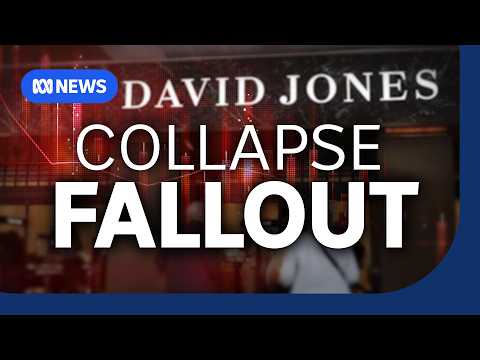
The collapse reaches well beyond department-store employees
David Jones entered administration in November, with receivers announcing the closure of 19 of the chain's 38 stores across Australia and New Zealand. ABC's The Business reported suppliers trying to understand whether invoices would be paid and what would happen to stock already supplied. One of the affected business owners was a descendant of the original retailer, whose footwear brand was owed money.
The chain's difficulties are already a story about employment and shopping centres. The supplier story is different. A smaller firm may have invested in production, freight, wages and materials long before the retailer's payment date. An unpaid invoice can therefore affect its ability to meet obligations elsewhere.
What administration changes for invoices
The legal treatment of outstanding amounts depends on the particular company's arrangements, the administrator's decisions and applicable insolvency law. A business may be an unsecured creditor, or it may have contractual or security rights that need professional assessment. None of those outcomes can be assumed from news of the administration alone.
Suppliers should preserve purchase orders, delivery confirmations, payment terms and correspondence, and use the formal creditor communications supplied by the appointed administrators. This article is general information, not insolvency or legal advice for a particular contract.
Why a shop closure date is not the whole story
Store closures may be staged and employees may face uncertainty while stock and leases are dealt with. Suppliers can face the parallel challenge of stock ownership, outstanding invoices and finding new customers. Even businesses with no direct contract with David Jones may be affected if retailers or distributors they supply lose revenue.
The underlying lesson for Australian small businesses is customer concentration. Large buyers can provide enormous sales opportunities, but dependence on a single account can turn a corporate failure into a cash-flow emergency. The accompanying ABC video documents the November supplier concerns; it is not a final accounting of who will recover money.
The original video
The accompanying ABC News video covers the reported event in 12 November 2026. This independent explanatory article does not present the broadcaster's footage as Harbour Creative Blogs' own or suggest it was recorded today. Source information.
About this article
This article provides analysis and interpretation of available information. Sources and supporting material, where applicable, are linked within the article.
Found an error? Contact the editorial desk. See our editorial standards and corrections policy.
From the Harbour Creative Blogs archive
Keep exploring this story
Related reporting, people and places from our published coverage. These are editorial connections, not a popularity ranking.
Local coverage
Sydney
The business, communities, housing, transport, sport and public decisions affecting metropolitan Sydney.
Company
David Jones
The Australian department store chain and its restructuring, stores, staff and suppliers.