Can Anabolic Steroids Make You Look Older? What the Evidence Shows
Anabolic steroid misuse can affect skin, hair, hormones and cardiovascular health. But looking older is not the same as proven accelerated biological aging.
3 min read
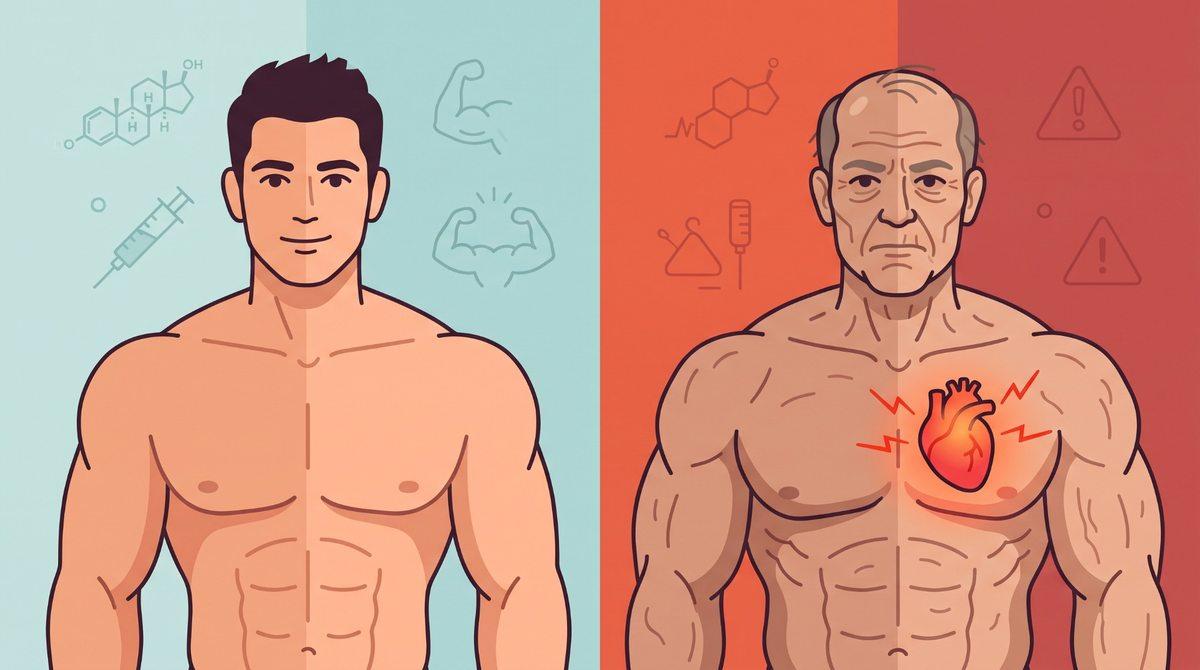
Image: Illustration. Appearance alone cannot establish anabolic steroid use or its effects on an individual.
There is something rather fascinating about how we treat our bodies. We spend years trying to make them stronger, bigger, and more aesthetically pleasing, yet sometimes, in that relentless pursuit of physical perfection, we end up compromising the very biology that keeps us healthy and thriving.
Just look at the culture surrounding bodybuilding today. Many young adults, eager to pack on muscle quickly or achieve the kinds of jaw-dropping physiques they see online, find themselves tempted by anabolic steroids. And this isn't just confined to anonymous corners of gym culture: actor and former competitive bodybuilder Arnold Schwarzenegger has openly talked about using anabolic steroids during his own competitive days. His experience serves as a reminder that this is a long-standing issue in the sport—not absolute proof that any single person's individual appearance or health issues were directly caused by steroids.
To understand why this happens, we have to look at what these substances actually are. Anabolic-androgenic steroids are synthetic substances related to testosterone. They can increase muscle growth by promoting protein synthesis. But using them at high, non-medical doses can disrupt the body's normal hormonal balance. These are not the same as corticosteroid medicines, and the risks of misuse should not be confused with properly supervised medical treatment.
That excess androgen activity stimulates the skin's oil-producing glands, making severe acne far more likely. In people who are genetically susceptible, it can also speed up the miniaturization of hair follicles, contributing directly to male-pattern baldness. Over time, persistent inflammation and acne scarring can leave the skin looking noticeably rougher and much more weathered than it should.
However, the more serious consequences are often hidden out of sight. Long-term anabolic steroid misuse can lower protective HDL cholesterol, raise LDL cholesterol and blood pressure, and contribute to harmful changes in the heart muscle. These changes quietly ratchet up the risk of cardiovascular disease, even in people who are still relatively young. On top of that, anabolic steroid use can suppress the body's natural testosterone production and disrupt normal hormonal function.
While ongoing research is actively examining the complex links between chronic exposure, oxidative stress, and cellular health, it would be an overstatement to claim that steroids simply speed up every single aspect of biological aging. The actual effects vary depending on the specific drug, dosage, duration of use, individual genetics, and other lifestyle and health factors.
Ultimately, we arrive at a rather striking irony: in trying so hard to build a body that looks extraordinary on the outside, some people unknowingly place their long-term health on the line. At the end of the day, a remarkable physique means very little if the ultimate price is paid by your heart, your hormones, and your overall health within.
Sources and further reading
- NHS — Anabolic steroid misuse — overview of medical uses, side effects and risks.
- Windfeld-Mathiasen and colleagues, Circulation (2025) — population-based research on cardiovascular outcomes associated with anabolic-androgenic steroid use.
- Buhl and colleagues, JAMA Network Open (2025) — research on cumulative exposure and cardiovascular findings.
- Men's Health (2023) — Arnold Schwarzenegger on his past steroid use — source for the historical example mentioned above.
About this article
This article is published by Harbour Creative Blogs. Sources and supporting material, where applicable, are linked within the article.
Found an error? Contact the editorial desk. See our editorial standards and corrections policy.
From the Harbour Creative Blogs archive
Keep exploring this story
Related reporting, people and places from our published coverage. These are editorial connections, not a popularity ranking.